AI Monitors: Why Skeptical Gamers Might Decide They’re Actually Not So Bad
Imagine a gaming monitor that watches your gameplay, adjusts colors on the fly, and even helps catch cheaters, all without a separate app running in the background. At Computex 2026, that future...

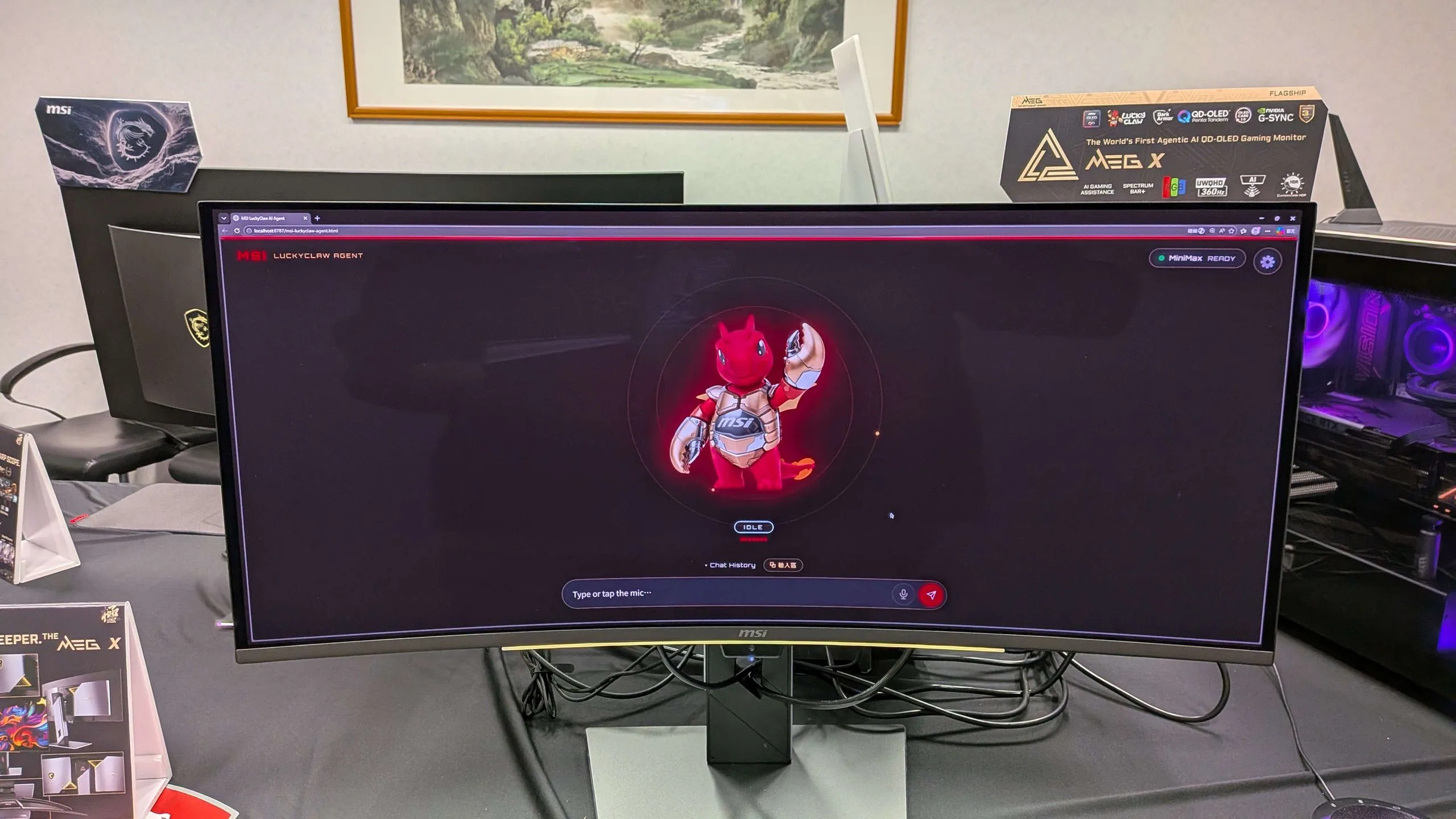
Imagine a gaming monitor that watches your gameplay, adjusts colors on the fly, and even helps catch cheaters, all without a separate app running in the background. At Computex 2026, that future arrived with MSI's "agentic AI monitor" and MediaTek's first 5K AI upscaling chip. For years, gamers have been wary of AI snooping into their systems, but what if the tools designed to monitor you also make your games fairer, more accessible, and better looking? This article takes a skeptical-but-open-minded look at the four biggest ways AI monitoring is already being baked into gaming, and why even the most reluctant player might find a use for it.
The AI Inside Your Monitor, Not Just a Gimmick
It's easy to dismiss AI features in gaming hardware as marketing fluff. But Computex 2026 revealed a wave of hardware-level AI integration that goes far beyond software patches. MSI unveiled what it calls the "world's first agentic AI monitor," paired with its AI Jinni ecosystem, an on-device AI that optimizes brightness, contrast, and upscaling in real time based on exactly what's on screen. No cloud processing, no data leaking to a server. The intelligence is baked directly into the monitor's silicon.
MediaTek doubled down with the MT9820, the industry's first 5K AI upscaling monitor scaler chip. This chip brings neural network processing right into the monitor's scaler, meaning every PC or console connected to the display can benefit from smarter image reconstruction. Meanwhile, LG introduced a native 1000Hz Full HD gaming monitor that uses AI to reduce response time and ghosting. These are not software gimmicks, they are fundamental hardware shifts.
The key argument for the privacy-conscious gamer? On-device AI monitoring is inherently more private than cloud-based alternatives. Your data stays local. No telemetry, no background uploads. If you're already worried about surveillance, having an AI that never talks to the internet is a meaningful improvement.
The Great Anti-Cheat Debate, Kernel Monitoring vs. Privacy
No conversation about AI monitoring in gaming can avoid the elephant in the room: kernel-level anti-cheat. Systems like Riot Vanguard and the new solution being tested by Embark for Arc Raiders scan system memory and processes to detect cheating software. They run at the deepest level of your operating system, which is precisely what makes them both effective and controversial.
The concerns are valid. Deep system access could be abused, could slow down PCs, and some gamers worry about "bricking" their hardware. But developers argue that modern cheating has escalated far beyond simple memory hacks. Consider the 2024 crackdown on bot-farmed RuneScape gold, traditional detection methods missed it for years, costing the game's economy millions. Today's threats include bot-driven MMO economies, sophisticated aimbots with machine learning, and undetectable wallhacks. These advanced exploits require equally deep countermeasures. Lighter approaches simply fail against them.
There is no easy resolution. But regulatory frameworks are starting to step in. The EU AI Act, which takes full effect on August 2, 2026, classifies many gaming AI monitoring tools as "high-risk." That means mandatory transparency, human oversight, and data minimization. The Australian Cyber.gov.au guidance on agentic AI adds further pressure for clear privacy policies and user consent. For the skeptical reader, the trade-off is real: anti-cheat monitoring directly improves the fairness of online play, something most gamers genuinely want.
Beyond policing player behavior in-game, AI moderation is also reshaping how we interact with each other before the match even begins.
Cleaning Up Chat, AI Content Moderation's Surprising Impact
Toxic chat has plagued online gaming for decades. AI-powered moderation systems now scan real-time chat and voice to detect harassment and abuse before it reaches other players. It is monitoring, yes, but monitoring with a clear benevolence: protecting the community from its worst actors.
The numbers back this up. PwC's 2024 Gaming Operations Benchmark found that AI-assisted moderation cut compliance overhead by 23% and customer service handling by 31% in gaming operations. Studios using these tools see faster ban times, reduced moderator burnout, and measurably friendlier communities.
The counterargument is the risk of false positives or censorship. Tools like ToxMod and Community Sift have faced backlash for silencing marginalized voices, a risk that developers must actively mitigate with human review systems. But context-aware AI models are improving rapidly, and many systems now include appeal processes. The monitoring here is a service to players, not surveillance, but protection. For a gamer who has ever been shouted at in a lobby, that is a tangible benefit worth considering.
If AI moderation monitors what we say, another category of AI monitoring monitors what we need, and this reframing may be the most persuasive argument of all.
Monitoring for Good, Accessibility Tools That Redefine Surveillance
Perhaps the most compelling case for AI monitoring comes from an unexpected direction: accessibility. AI-powered tools now use facial tracking, voice control, eye-gaze detection, and expression monitoring to allow disabled gamers to play without traditional controllers. These systems watch the player's face, voice, and movements, exactly the kind of data that raises privacy flags. But here the purpose is assistive, not punitive.
For a gamer with limited mobility or a chronic condition, AI monitoring can be the difference between playing and not playing. These features are almost always opt-in and process data locally, minimizing privacy risks while maximizing inclusivity. It forces a reframing of "monitoring" itself, not as a threat, but as a bridge to participation.
The Rules Are Coming, How Regulation Could Change the Game
The AI in gaming market is projected to grow from roughly $3.1 to $4.5 billion in 2025 to somewhere between $51 and $81 billion by the early 2030s. That investment isn't reversing regardless of sentiment. But regulation is catching up. The EU AI Act's full enforcement later this year will force developers to be transparent about what their tools monitor and why, a framework that offers skeptical gamers tangible protections.
Gamer sentiment today is split. A PC Gamer survey found that 47% of readers say they don't use AI at all, while Windows Central readers expressed cautious optimism that "AI definitely has a place in gaming." That leaves a large persuadable middle, and regulation may tip the balance. When monitoring tools are forced to be transparent, local, and limited in scope, the benefits become harder to dismiss.
Choosing the Kind of Monitoring We Deserve
AI monitoring in gaming is inevitable, the hardware, software, and market forces are already in motion. But as Computex 2026 and the EU AI Act make clear, not all monitoring is created equal. The tools that catch cheaters, clean up chat, optimize displays, and open doors for disabled players offer tangible benefits that even the most skeptical gamer can appreciate. Instead of fighting every instance of AI, perhaps the smarter strategy is to demand the right kind of monitoring: transparent, local, accountable, and designed to improve the experience. If you could choose which monitors stay and which ones go, what would you keep?