Xbox’s Reset: Inside Asha Sharma’s Plan for Significant Layoffs, Budget Cuts, and a Hardware Crisis
In a stark internal memo titled “Next 100 Days: XBOX Reset,” Xbox’s new CEO told employees what many had feared: the division is “over extended” and drastic cuts are coming. On June 10, 2026, Sharma...

In a stark internal memo titled “Next 100 Days: XBOX Reset,” Xbox’s new CEO told employees what many had feared: the division is “over extended” and drastic cuts are coming. On June 10, 2026, Sharma and content chief Matt Booty published the memorandum on Xbox Wire, acknowledging that years of heavy spending without corresponding revenue growth “cannot continue.” Hours later, reports confirmed that Xbox is planning significant layoffs in July, immediately after Microsoft’s fiscal year closes.
The memo did not explicitly mention job cuts, but it laid bare the financial and structural crisis that makes them inevitable. A razor-thin 3% profit margin, a hardware component cost explosion that threatens the next console generation, and a studio system stretched across too many conflicting strategies have all converged. Here is a breakdown of the five critical pillars of Sharma’s reset plan, and what they mean for Xbox’s future.
The Numbers That Forced a Reset
Xbox will end fiscal year 2026 at approximately a 3% accountability margin, or profit margin, according to the memo. That figure is down year over year and unsustainably low for a Microsoft division that competes with the company’s cloud and productivity units, which routinely post margins above 30%.
The memo reveals that, excluding Activision Blizzard King, Xbox spent over $20 billion on content, platform, and hardware subsidies over the past five years. During that same period, annual revenue declined by nearly half a billion dollars. The division has not adequately funded its “industry-defining franchises” to compete and win, Sharma and Booty admitted, despite the enormous investment.
One bright spot: Game Pass has returned to growth after a painful period. The subscription service lost millions of subscribers following an October 2025 price hike, but under Sharma’s first 100 days the team “set to work fixing our offering” and subscriber counts have climbed back. The financial reality is unforgiving, and nowhere is that more visible than in Xbox’s hardware supply chain.
The Hardware Crisis and Project Helix
Perhaps the most alarming revelation in the memo concerns Xbox’s hardware supply chain. Console storage component prices are over two times higher than last fall, have doubled again since, and are projected to reach five times current costs by the 2027 holiday season. Xbox cannot currently manufacture enough consoles to meet demand, the memo states bluntly.
This situation has forced Microsoft to rethink its next-generation console, codenamed Project Helix, which targets a Holiday 2027 release. The memo confirms that the current hardware subsidy model, in which Microsoft sells consoles at or near cost and recoups through software and services, is no longer viable. Project Helix will require “a new business model and strategic partnerships” to become sustainable.
The exact nature of those partnerships remains unclear, but the implication is significant. Xbox may need to collaborate with other hardware manufacturers, adjust pricing models, or explore cloud-only variants to keep its next console viable. For a company that has treated console sales as a volume game for two decades, this marks a fundamental shift. But hardware alone won’t save Xbox; it also needs a reason for players to choose its ecosystem over Sony’s. That’s where Sharma’s most controversial reversal comes in.
Reversing the Multiplatform Strategy, Exclusives Return
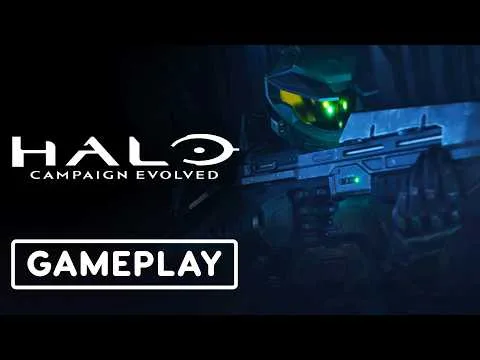
In a move that signals a sharp departure from the previous administration, Sharma is reportedly reversing much of Phil Spencer’s late-era multiplatform push. Gears of War: E-Day and Clockwork Revolution will remain Xbox console exclusives, with no PlayStation 5 release planned. The decision extends to Halo: Campaign Evolved, a trailer for which Sharma personally pulled from Sony’s State of Play broadcast.
This reversal aims to rebuild the value proposition of Xbox hardware and Game Pass. Under Spencer, titles like Hi-Fi Rush, Sea of Thieves, and Indiana Jones and the Great Circle eventually made their way to PlayStation, diluting the appeal of owning an Xbox. Sharma’s strategy returns to a classic console-war framework: exclusives drive hardware sales.
The gamble carries risk. Some fans who had embraced a more open Xbox may feel alienated by the retreat from multiplatform releases. Short-term revenue from PlayStation ports will also be forfeited. But the message is clear, Xbox hardware needs a reason to exist, and that reason is exclusive content.

The Human Cost, Layoffs, Marketing Cuts, and Studio Uncertainty
The most painful pillar of the reset plan is the human cost. Layoffs are expected in July 2026, after Microsoft’s fiscal year ends on June 30. The exact number of impacted employees has not been disclosed, but the cuts are described as “significant” by sources familiar with the plans.
Alongside staffing reductions, Xbox is reducing marketing budgets. The memo’s admission that the division is “over extended” extends to its studio lineup, which was expanded under Spencer to serve multiple strategies simultaneously, subscription, streaming, mobile, and traditional console sales. A studio closure or consolidation of the Xbox Game Studios roster is possible according to reports.
This would follow a grim pattern. Microsoft has already conducted multiple rounds of gaming layoffs: 1,900 in early 2024 across Activision Blizzard, Bethesda, and Xbox; approximately 650 more in September 2024; and high-profile studio closures including Arkane Austin and Tango Gameworks in May 2024. The industry-wide bloodletting has seen over 30,000 gaming jobs eliminated since 2022, and Microsoft has been one of the most aggressive cutters. These latest layoffs will deepen that toll and raise questions about which studios survive the reset.
Outlook, Can Sharma’s Reset Work?
Asha Sharma took the reins unexpectedly. She was appointed Xbox CEO in February 2026 after Phil Spencer’s retirement, moving from Microsoft’s CoreAI division, a background that raised eyebrows in gaming circles. Her early moves have been decisive: Game Pass is growing again, the multiplatform policy has been reversed, and the memo signals a willingness to publicly confront hard truths.
Yet the challenges are formidable.