Steam Week in Review: The Unstoppable Flood of Janky Retail Sims - And Why There's No End in Sight
If you have browsed Steam's "New & Trending" section lately, you have likely encountered a strangely specific pattern: a game about stacking cereal boxes, another about restocking video shelves, and...

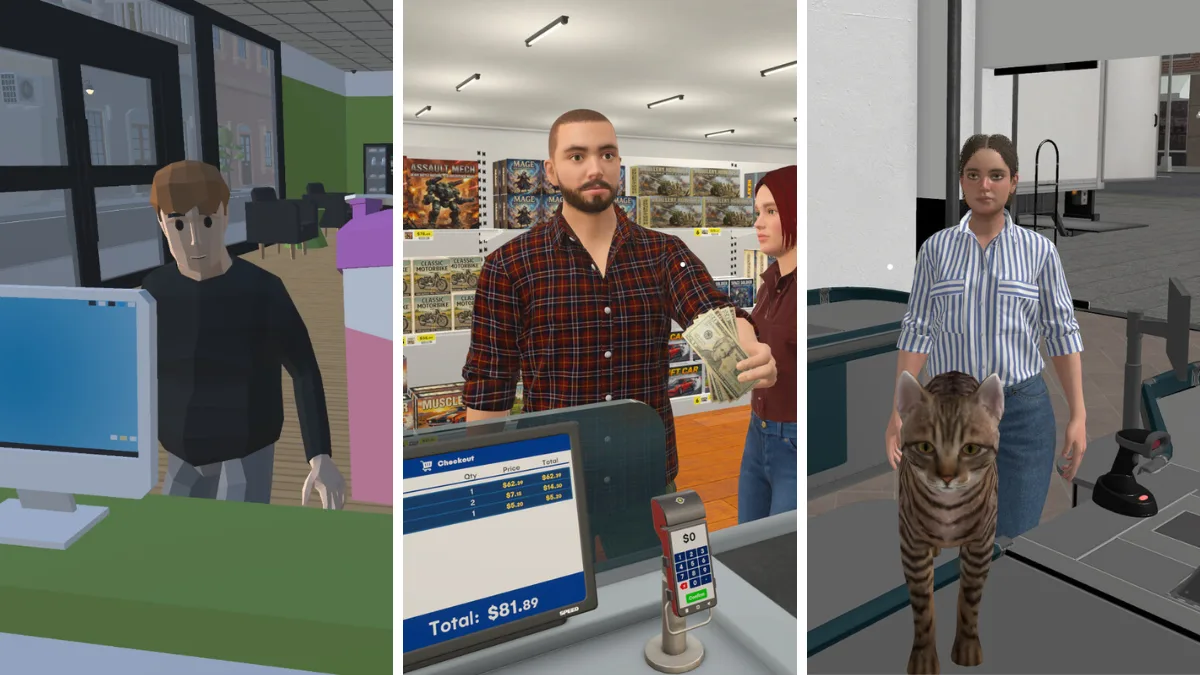
If you have browsed Steam's "New & Trending" section lately, you have likely encountered a strangely specific pattern: a game about stacking cereal boxes, another about restocking video shelves, and yet another about brewing virtual boba tea. The retail simulator trend - which erupted with torrential force in late 2024 - shows no sign of abating in mid-2026. This week alone saw the launch of Bookshop Simulator and Boba Cafe Simulator, two more entries in a genre that has become a bizarre, unstoppable force on Valve's platform. But these janky sims are not just a niche curiosity. They represent a deeper crisis of discoverability, an explosion of AI-generated content, and a platform that continues to break its own release records - while three-quarters of its catalog vanish into a ghost market of zero visibility.
Another Week, Another Shelf-Stocker, The Retail Sim Onslaught
The retail simulator phenomenon began accelerating in late 2024 and now produces multiple new releases every week, continuing unabated into July 2026. This week's contributions include Bookshop Simulator and Boba Cafe Simulator, both launched during the week of July 20-26. They join a growing stable of existing heavy-hitters such as Supermarket Simulator, Retail Hell, Retro Rewind, Video Store Simulator, and Retail Company Simulator. Each follows a familiar template: the player manages a store, stocks shelves, serves customers, and expands their business - often with rudimentary graphics and repetitive mechanics.
Despite their rough appearance, many of these games still find an audience on Steam. The platform's user base, now estimated at over 200 million monthly active users according to GameDiscoverCo analyst Simon Carless, is vast and niche-hungry. A significant portion of those users actively seeks out low-fidelity, cozy simulations that offer a comforting loop of organizing, cleaning, and serving. Publishers like PlayWay and Coffeeshake Games have become prolific in this space, churning out variations on the formula with remarkable speed.

20,000+ Games a Year, And 75% Are Ghosts
This retail sim deluge is part of a larger pattern: the number of games hitting Steam each year continues to break records, and the vast majority sink without a trace. Steam released 20,017 games in 2025, up from 18,506 in 2024, and 2026 is on pace to surpass that record. According to GameDiscoverCo's analysis of SteamDB data, approximately three-quarters of those annual releases are ghost market titles: student projects, asset flips, AI-generated content, and hobby games that receive zero views or ratings. This creates a severe discoverability problem - genuine indie gems are buried under an avalanche of low-effort content.
Management sims, including retail sims, are among the genres most heavily reliant on generative AI. Many developers in this space use AI for both capsule art and in-game assets, further accelerating the pace of production. The ghost market is not just a nuisance; it actively harms the browsing experience and devalues the storefront. As Simon Carless noted in a recent newsletter, "When three out of four games on Steam fail to attract any audience at all, the platform's vaunted catalog becomes more noise than signal."
AI Slop and the New Normal, Disclosures, Capsule Art, and Meta-Memes
A growing share of new Steam games carry mandatory AI-use disclosures. According to industry projections, over half of all new releases may require such disclosures by 2027 or 2028. AI-generated capsule art has made browsing feel like wading through spam, and the retail sim trend, already prone to formulaic presentation, has embraced this practice enthusiastically.
The genre has even spawned its own meta-phenomenon: a Steam Summer Sale Simulator - a fake dopamine site that lets users simulate the thrill of buying games without spending real money. This meta-layer highlights how the platform's culture is bending under its own abundance. Even the act of shopping has become a genre to simulate. The line between playing a game about retail and experiencing the actual retail experience of Steam's storefront grows increasingly blurry.

Why the Flood Won't Stop, Economics, Discovery, and the Platform's Dilemma
The barrier to entry on Steam remains incredibly low, especially for asset-flip and AI-assisted projects. Steam Direct's $100 fee is easily recouped on even a single sale, encouraging volume over quality. The platform's sheer scale - 200 million monthly active users - means that even ghost titles occasionally find a few customers, perpetuating the cycle. Developers can throw a dozen low-effort sims at the wall, and if one sticks, they have more than made back their investment.
Meanwhile, the retail sim genre itself taps into a universal, relatable fantasy: the simple satisfaction of organizing, cleaning, and serving. This cozy loop appeals to a wide audience, regardless of production value. For many players, the appeal lies not in graphical fidelity but in the comforting rhythm of restocking shelves and ringing up customers.
Unless Valve changes its submission model - raising the fee, requiring reviews, or implementing algorithmic filtering - the torrent will continue to swell. The current system passively rewards quantity, and the economics of low-cost development are too favorable for the trend to reverse on its own.
A Haunted Storefront
The retail simulator flood is a symptom, not a cause. It reflects Steam's fundamental tension: a platform that prides itself on openness and massive scale, yet struggles to maintain discoverability and quality control. This week's new sims - a bookshop, a boba cafe - are just the latest tiny waves in an ocean of content, but they also carry a warning. If three-quarters of new releases are ghosts, even a functional storefront begins to feel haunted. Valve may have 200 million monthly users, but those users are increasingly lost in a sea of jank, AI slop, and a simulation of the very act of shopping itself. Raising the Steam Direct fee or introducing algorithmic filtering would be controversial moves, but without such changes, the storefront's signal will only grow weaker.