Valve's Steam Controller Orders Pushed to 2027: A Triumph Haunted by Component Shortages
When Valve launched its second-generation Steam Controller on May 4, 2026, history suggested it would be a niche curiosity, a belated sequel to a product discontinued in 2019. Instead, it sold out in...

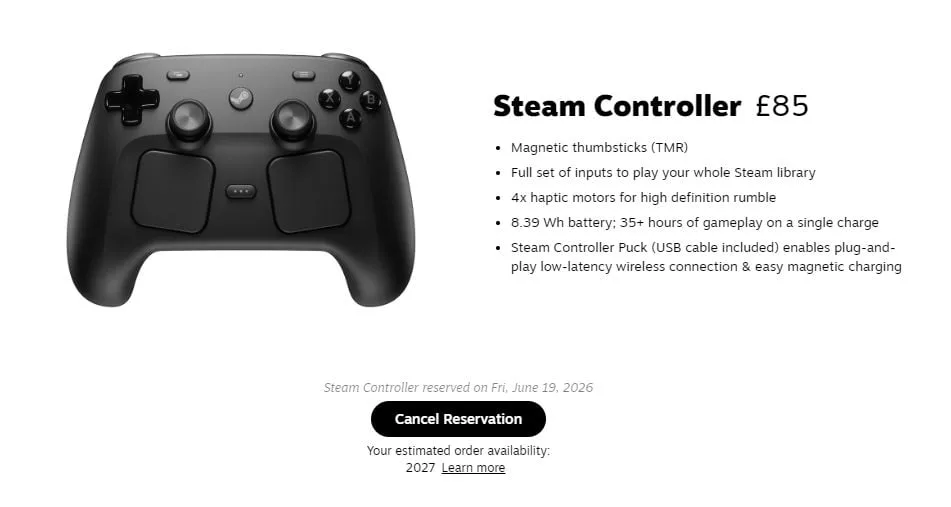
When Valve launched its second-generation Steam Controller on May 4, 2026, history suggested it would be a niche curiosity, a belated sequel to a product discontinued in 2019. Instead, it sold out in 30 minutes. Scalpers immediately listed units at $249 on eBay within hours, more than double the $99 price. And on June 18, Valve updated its reservation system with a sobering reality: any new order placed now won't ship until 2027.
This is a remarkable reversal for a company whose original Steam hardware efforts flopped. But beneath the headline of "overwhelming demand" lies a deeper concern: Valve's wider hardware ecosystem, the Steam Machine PC and Steam Frame VR headset, remains delayed, caught in the same component crunch that makes this "good problem" a troubling omen. To understand how Valve got here, we need to revisit the original controller's rocky history.
From Flop to Sellout: How the Steam Controller Found Its Second Life
The original Steam Controller debuted in November 2015 at $49.99, alongside the ill-fated Steam Machines. Both were commercial failures. By 2018, Steam Machines had been effectively discontinued, and Valve pulled the plug on the controller in November 2019. For years, the idea that PC gamers wanted Valve-specific hardware seemed dead.
Everything changed with the Steam Deck's launch in 2022. The handheld PC proved there was massive appetite for Valve's take on portable gaming. Its control layout, twin thumbsticks, haptic trackpads, grip buttons, and gyroscopic aiming, became the new standard for PC gaming input.
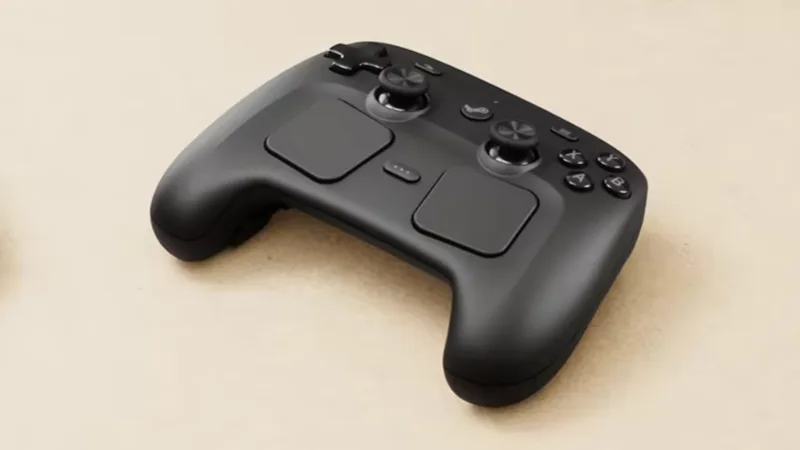
The second-generation Steam Controller, announced in November 2025 and released May 4, 2026 at $99, is essentially a Steam Deck without the screen. It features TMR thumbsticks, the same trackpad technology, four grip buttons, and gyro controls. It's the controller the original should have been.
Demand was immediate. Within 30 minutes of going live, every unit was gone. Scalpers swarmed, listing controllers at $249 on eBay within hours. Valve, having learned from the Steam Deck's rocky rollout, quickly pivoted to a reservation system. On June 18, the company introduced three distinct delivery windows: by September 2026, by December 2026, or sometime in 2027. Any new reservation placed now defaults to 2027.
The Component Crisis: Why Valve Can't Keep Up
Valve acknowledged the situation in a post on the Steam Hardware community group. "Initial demand exceeded our expectations," the company wrote, "and we're working as hard as we can to increase production, but component allocation remains the primary constraint." The company stressed it has "no plans to stop making Steam Controller."
The issue is not a lack of will, but a brutal reality of the global semiconductor market. The controller relies on a custom wireless chip also used in automotive lidar systems, a component that AI companies have been hoarding to power autonomous driving and data center infrastructure. That single part has become a severe bottleneck, compounded by rising prices and squeezed supply for the RAM, GPUs, and CPUs that share the same fabrication lines.
Valve's hardware team is already stretched, producing the Steam Deck, the new controller, and two additional devices, the Steam Machine and Steam Frame, that were announced alongside the controller but delayed from early 2026 with no confirmed release dates. If a relatively simple controller, a device with far fewer components than a full PC or VR headset, can't be built fast enough to meet demand, what does that imply for the more complex products Valve has in the pipeline? Valve could look to alternative suppliers or diversify manufacturing to different fabs, but these measures take months to secure.
A Good Problem With Darker Implications
On one hand, this is validation. Valve finally cracked the code on what PC gamers want in a controller. The Steam Deck's layout was a hit, and extending that design to a standalone peripheral was a logical move. The sellout proves that the audience exists and is eager.
On the other hand, manufacturing inability risks squandering that momentum. Gamers who reserved a controller in 2026 may lose interest by 2027, especially if they turn to alternatives from 8BitDo, Xbox Elite, or other established competitors. Scalper culture and prolonged unavailability could create resentment, reminiscent of the PS5 and GPU shortages that plagued the early 2020s. The reservation system is a reasonable solution, but a $99 peripheral with a shipping estimate over a year away tests patience.
Valve's statement that it has "no plans to stop making Steam Controller" is reassuring, but production numbers will need to increase dramatically to make a dent in the backlog. The company has not shared production targets or timelines for ramping up capacity.
What This Means for the Steam Machine and Valve's Hardware Future
While the customer experience is one challenge, the strategic implications for Valve's broader ecosystem are just as pressing. The Steam Machine is Valve's bid to bring SteamOS to the living room, a dedicated PC console designed to compete with PlayStation, Xbox, and Nintendo. The controller was supposed to be its essential companion, the primary input device for a living room experience. If the controller cannot ship in volume until 2027, Valve likely needs to launch the Steam Machine with or after the controller becomes widely available. That pushes the entire ecosystem into late 2027 or even 2028.
Valve has a history of patience, the Steam Deck took years from rumor to release, but the AI-driven component shortage is a new external variable beyond the company's control. Meanwhile, competing consoles are already shipping, and PC handhelds like the ASUS ROG Ally and Lenovo Legion Go continue to iterate. Valve risks losing its first-mover advantage in the "PC console" space if it cannot deliver a complete, accessible package.
The Steam Frame VR headset, announced alongside the Steam Machine, faces an even more uncertain future. VR hardware is notoriously complex and component-hungry. If a relatively simple controller is delayed by over a year, a full VR headset could be years away.
A Triumph That Tests Patience
Valve has finally created hardware that players truly want. The second-generation Steam Controller is a legitimate hit, a testament to the Steam Deck's design DNA and the company's willingness to learn from past failures. But the 2027 shipping reality is more than a minor inconvenience. It is a canary in the coal mine for the entire Valve hardware lineup.
The component shortage, driven by AI's insatiable appetite for silicon, shows no signs of easing. If a simple controller cannot reach customers for over a year, how long will we wait for the Steam Machine? The triumph of demand may be soured if Valve cannot solve its supply problem before gamers' patience runs out.
For now, anyone placing a new reservation must accept a 2027 delivery date. The controller itself is excellent, that much is clear from early impressions. But the wait, and the uncertainty it signals for Valve's broader ambitions, casts a long shadow over an otherwise remarkable success story.