The cube was a lie: Up close with Dbrand’s Companion Cube before Valve forced its destruction
On June 19, 2026, I held a piece of gaming history in my hands, a product that had consumed seven months, over a thousand engineering hours, and more than a million dollars of a Toronto accessory...

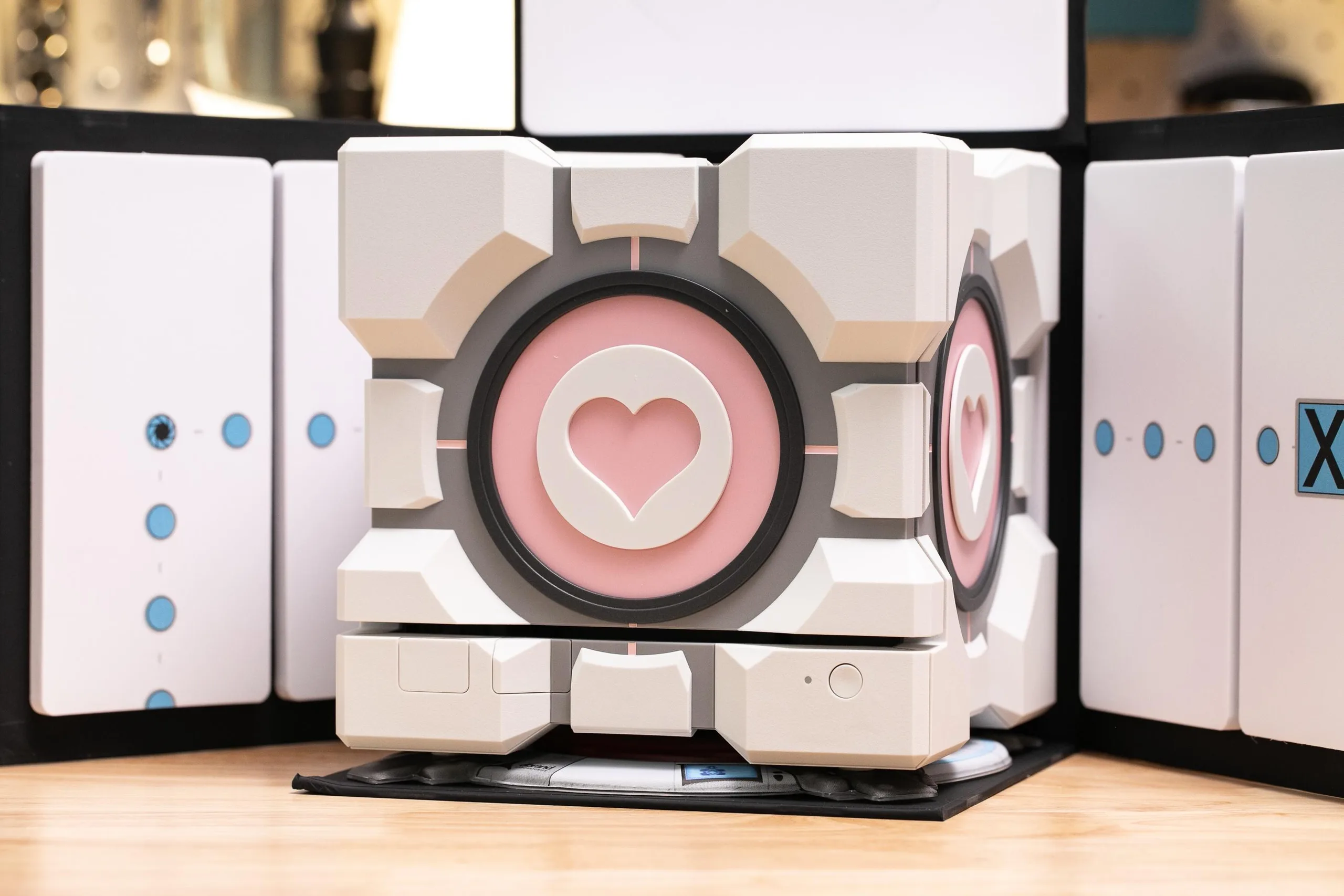
On June 19, 2026, I held a piece of gaming history in my hands, a product that had consumed seven months, over a thousand engineering hours, and more than a million dollars of a Toronto accessory company’s money. It was real, solid, and absolutely gorgeous. By June 29, every single unit was ordered destroyed. Now, with exclusive photos and the untold backstory, here’s the full saga of the cube that was, fittingly, a lie.
The Cube That Almost Was, An Exclusive Look
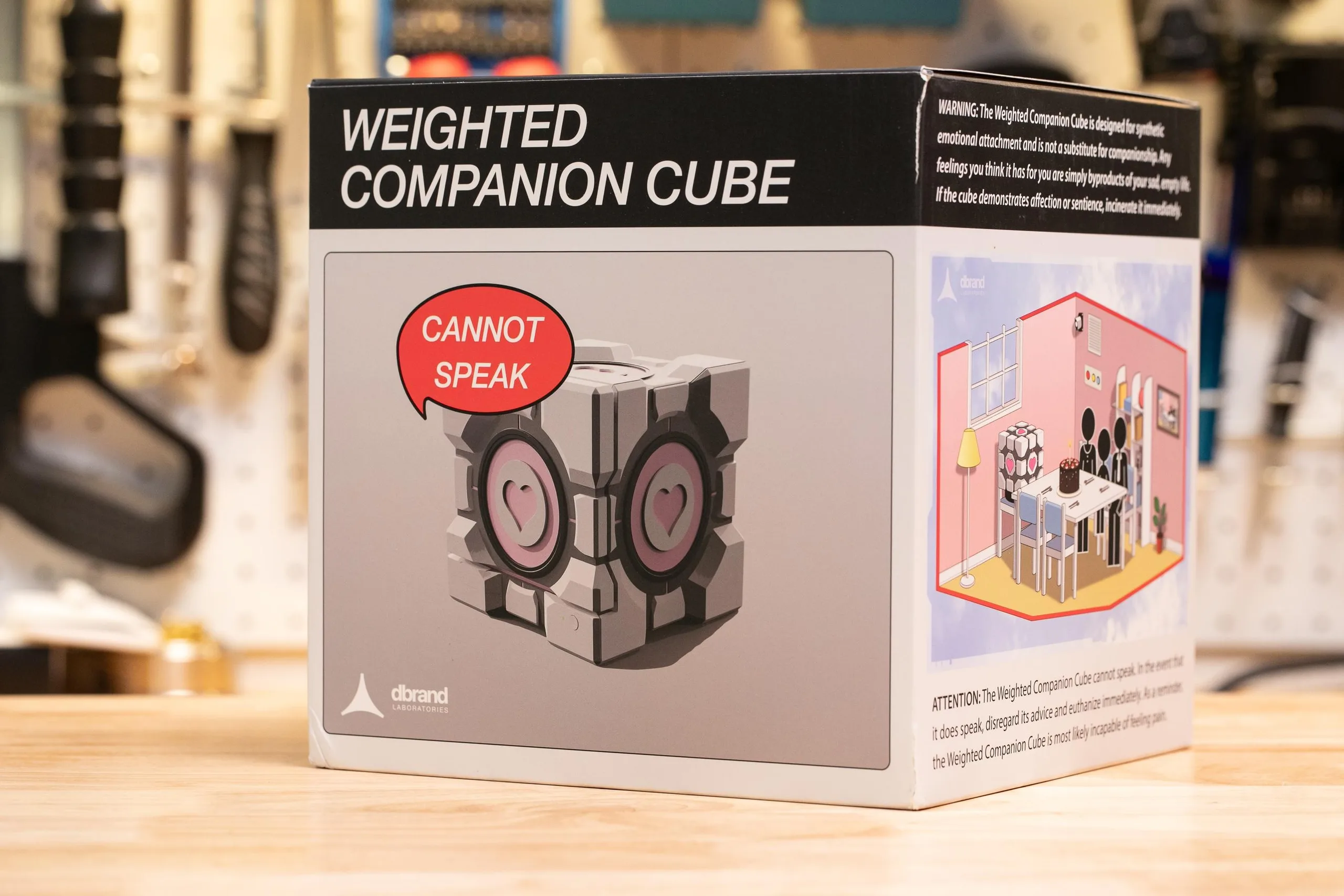
From the outside, the Companion Cube looks exactly like you remember it: a pinkish-grey cube with rounded corners and the iconic heart-shaped indent on each face. But this is no foam prop or 3D-printed novelty. Dbrand’s version is an injection-molded hard shell enclosure for Valve’s Steam Machine, built from 44 separate sub-components and held together by N52 neodymium magnets and M3 hex socket head cap screws. The engineering is obsessive. Every panel is removable. The hex key needed to unscrew the back cover slots neatly inside the case when not in use. A barcode printed on the surface reads “THE CAKE IS A LIE”, a nod to Portal’s most famous meme.
The case makes the Steam Machine roughly 25% bigger, but it’s not just cosmetic. Rock Paper Shotgun’s thermal testing found no meaningful increase in CPU, GPU, or RAM temperatures while the system was inside the cube. The design was functional, not just a hollow tribute. Dbrand offered two versions: the “Poverty Cube” at $99.95 (they were losing money on every one sold) and the standard edition at $129.95. Early review units had silicone rails that left oil marks on the Steam Machine’s metal chassis, a problem Dbrand promised to fix in production. That production never came.
A Passion Project Without Permission, The 7-Month Gamble
The Companion Cube didn’t happen overnight. Dbrand spent seven months developing the case, creating 44 sets of injection molding tools, the kind of capital-intensive process that usually only makes sense for licensed products. But Dbrand never asked Valve for a license. CEO Adam Ijaz later admitted the company assumed Valve would say no, so they didn’t bother trying. Instead, they built the entire product in secret, banking on the hope that a finished, high-quality enclosure would persuade Valve to look the other way.
The gamble nearly paid off. When the concept was revealed in November 2025, over 15,000 people signed up to be notified on the first day. Pre-orders launched seven months later, on June 22, 2026, and the Companion Cube immediately became Dbrand’s second-fastest-selling product in 15 years, trailing only the Switch 2 Killswitch. The momentum was real. But Valve’s legal team contacted Dbrand shortly after pre-orders went live. The request was “direct, fair, and respectful,” according to Dbrand’s own statement, and they made no attempt to fight it. The company appealed for a proper license, but Valve declined. By June 29, the entire project was cancelled. CEO Adam Ijaz confirmed that every single manufactured unit will be physically destroyed. Dbrand cannot even incinerate them for “thematic appropriateness”, they must be crushed and disposed of.
History Repeats Itself, Dbrand's IP Track Record
This isn’t Dbrand’s first rodeo with intellectual property law. In 2021, Sony sent a cease-and-desist over the company’s PS5 Darkplates. Dbrand complied but publicly griped about it. The company also famously shipped a Nintendo Switch skin product with a message telling Nintendo’s legal team to “go fuck yourself.” Those were minor skirmishes, vinyl wraps and faceplates that could be easily sunset. The Companion Cube was a different beast: a full injection-molded enclosure that required months of tooling and five figures in pre-order revenue. The decision to launch without a license, a high-risk move given past run-ins with Sony and Nintendo, reflected Dbrand’s characteristic confidence.
This time, the company seems genuinely contrite. Dbrand’s official statement said “Valve didn’t do anything wrong here.” There’s no talk of appealing or fighting back. The contrast with the Sony and Nintendo incidents is striking. Perhaps the scale of the loss, over a million dollars in development, plus destroyed inventory, has humbled the company. Or perhaps it’s the fact that Valve played fair. They didn’t sue. They didn’t threaten. They simply asked Dbrand to stop, and they said no to a license request. Dbrand has no grounds to complain, and they aren’t complaining.

The Destruction and Its Thematic Weight
The irony is biblical in proportion. In Portal (2007), players are forced to incinerate the Weighted Companion Cube to proceed through the final test chamber. GLaDOS’s cold reassurances, “The Companion Cube will be incinerated, after which, the enrichment center is required to remind you that the Weighted Companion Cube will never threaten to stab you and, in fact, cannot speak”, have echoed through gaming culture for two decades. Now Dbrand’s real-world cubes face the same fate: not by choice, but by legal order. The difference is that Portal’s cube had symbolic emotional weight; this one has actual manufacturing cost. Every destroyed unit is a small monument to the gap between fan enthusiasm and corporate ownership.
But the destruction itself is a grim process. Ijaz confirmed that the cubes cannot be incinerated for “thematic appropriateness”, instead, each unit will be physically crushed by industrial machinery and mulched into scrap plastic. Dbrand did not preserve any units for archival purposes; the Verge’s photos, taken on June 19, are now the only detailed visual record of the product. All product pages, launch videos, and social media mentions have been scrubbed from Dbrand’s channels. The loss has hit the community hard, on Reddit, fans who signed up for notifications have posted tributes and angry reactions, calling it “the most Portal thing that ever happened.” But Dbrand’s CEO offered little public emotion: in internal communications, he described the situation as “a hard lesson in asking first.”
One element that vanished along with the product: the launch video contained a teaser with the lambda symbol, the number 3, and the text “Beta v3.14”, an apparent Half-Life 3 reference that, given current circumstances, feels like a final taunt. Dbrand posted the video, then promptly made it private when the legal trouble hit. It’s a footnote now, but a telling one: even in a sincere fan project, the compulsion to wink at the audience never goes away.
The Cube That Was
The Dbrand Companion Cube is a perfect microcosm of the tension between fan-driven creativity and corporate ownership. A company poured a million dollars and a thousand hours into something that delighted thousands. They didn’t harm Valve. They celebrated Valve’s legacy with obsessive detail. But they forgot to ask permission first. Now the cubes will be pulverized, the photos will live on as digital artifacts, and Portal’s most famous meme gets one last bitter laugh. The lambdas are dark now, the hex key tucked away forever. But for one glorious week, the cube was real, and the lie was worth it.