Saros Isn’t Returnal 2—Here’s Why Housemarque’s New IP Feels Familiar but Plays Completely Differently
When Housemarque unveiled Saros during a State of Play broadcast, the internet did what it always does: it screamed " Returnal 2 ." The sleek-suited protagonist, the alien architecture drenched in...

When Housemarque unveiled Saros during a State of Play broadcast, the internet did what it always does: it screamed "Returnal 2." The sleek-suited protagonist, the alien architecture drenched in yellow light, the dodge-roll-death loop—it all looked familiar. But after spending 10 hours with the game and speaking with creative director Gregory Louden and associate design director Matti Häkli, I'm here to tell you: that instinct is wrong. Saros is built on Returnal's foundation, but it's a deliberate departure—a shift in philosophy from survival horror to aggressive, rhythmic action. Here's exactly where Saros diverges from its predecessor and why those changes matter.
Same Loop, Different Philosophy
At its core, Saros retains the DNA that made Returnal a sensation. The DualSense-driven shooting, the dodge rolls, the death-and-retry loop—this is unmistakably Housemarque. But the combat philosophy has undergone a fundamental transformation.
The key change is the Soltari Shield. Instead of pure evasion, Saros introduces an energy-absorbing shield that lets players tank blue projectiles to charge a Power Weapon. Red projectiles must still be dodged or parried, creating a layered risk-reward system. Louden describes the new combat as a "bullet ballet" emphasizing rhythm over accuracy—more like a rhythm game than Returnal's pure "obstacle course" of evasion. The shield makes aggression the default, not avoidance.
This shift is reinforced by the Eclipse System, a player-triggered biome transformation mid-run. During an Eclipse, enemies become more aggressive, and their projectiles turn yellow—corrupted. These yellow projectiles cannot be absorbed, and they reduce max armor integrity. The only way to cleanse the corruption is by firing your Power Weapon, creating a tense loop that forces players to engage rather than retreat. The result: combat that feels less like survival and more like a choreographed dance of offense and defense.
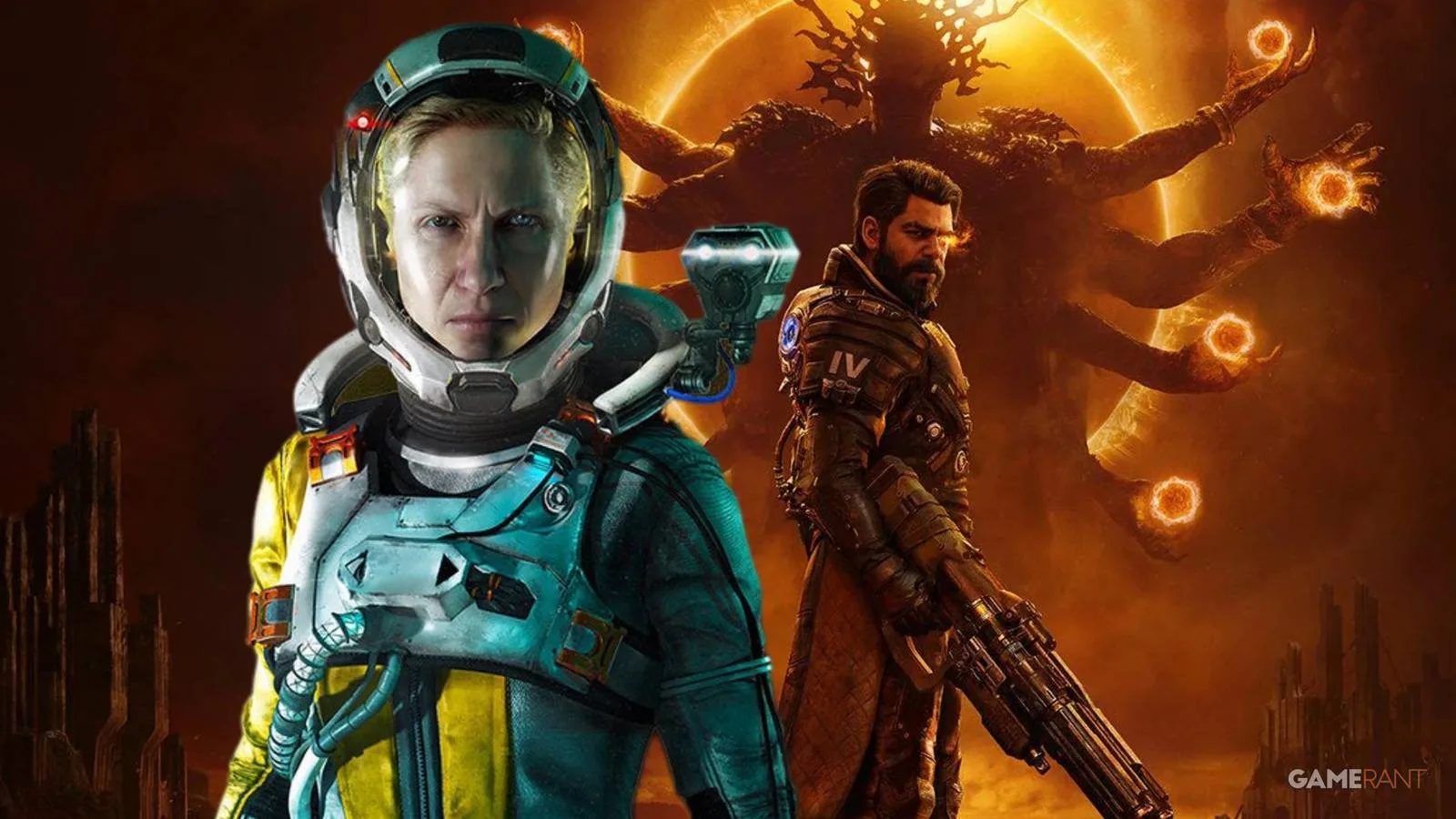
Arjun Devraj vs. Selene—Two Very Different Protagonists
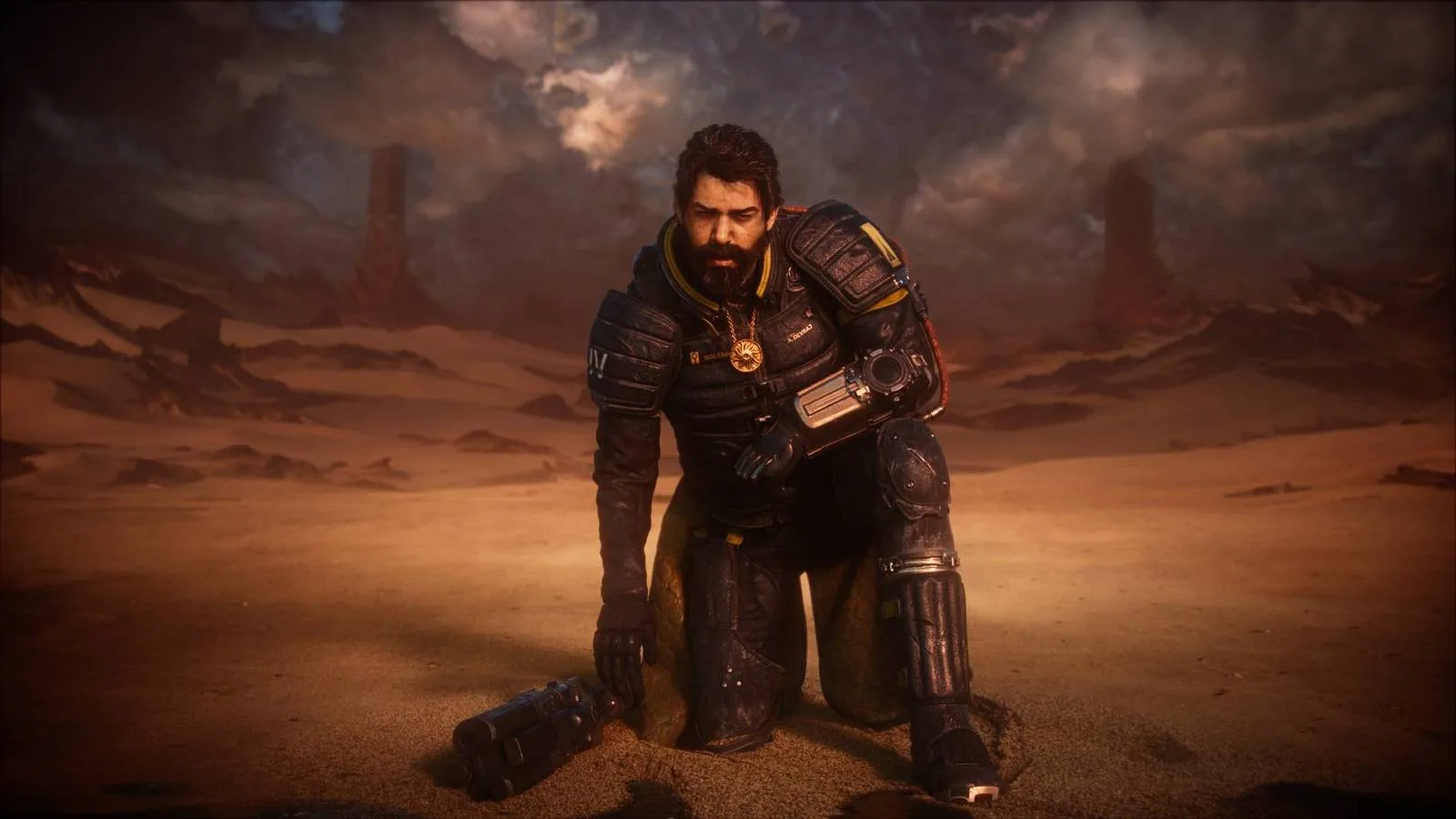
The tonal shift extends to the protagonists themselves. Arjun Devraj, voiced by Rahul Kohli, is a soldier with an aggressive playstyle, driven by a forward-pushing goal of reaching a destination. Selene, Returnal's protagonist, was a scientist trapped in a trauma loop, trying to escape a cycle of psychological horror.
The narrative approach reflects these differences. Saros establishes Arjun's motivation early on, making the story more accessible and forward-moving. Returnal was deliberately cryptic, with story emerging slowly through environmental storytelling and fragmented logs. The result is a tonal shift: the aggressive protagonist and clearer narrative goals make Saros feel less like a psychological horror and more like a determined action game—even though both games share a similar visual language.
Progression That Rewards Persistence, Not Punishment
Perhaps the most significant departure from Returnal lies in the progression system. Saros introduces a permanent Armor Matrix skill tree with three branches—Resilience, Command, and Drive—using Lucenite currency. Players can upgrade stats and unlock a second wind revive, a major departure from Returnal's total reset on death.
But the biggest quality-of-life improvement is weapon retention. In Saros, weapons collected during runs are kept on death. In Returnal, dying meant losing everything back to the pistol—a punishing mechanic that could turn a promising run into a frustrating grind. Housemarque has listened to feedback and made a bold concession to player persistence.
The difficulty concessions don't stop there. Saros features more generous checkpoints, optional high-risk/high-return encounters, and adjustable settings such as aim magnetism and fall damage reduction. There are no traditional difficulty modes, but "Unlimited Protection Modifiers" unlock after the second biome, allowing players to apply only buffs without debuffs. As Housemarque states: "Saros was designed to provide a challenging action experience, so this setting is off by default. Please change this setting if you want extra support, or if you would like to enjoy the world and narrative with reduced challenge."
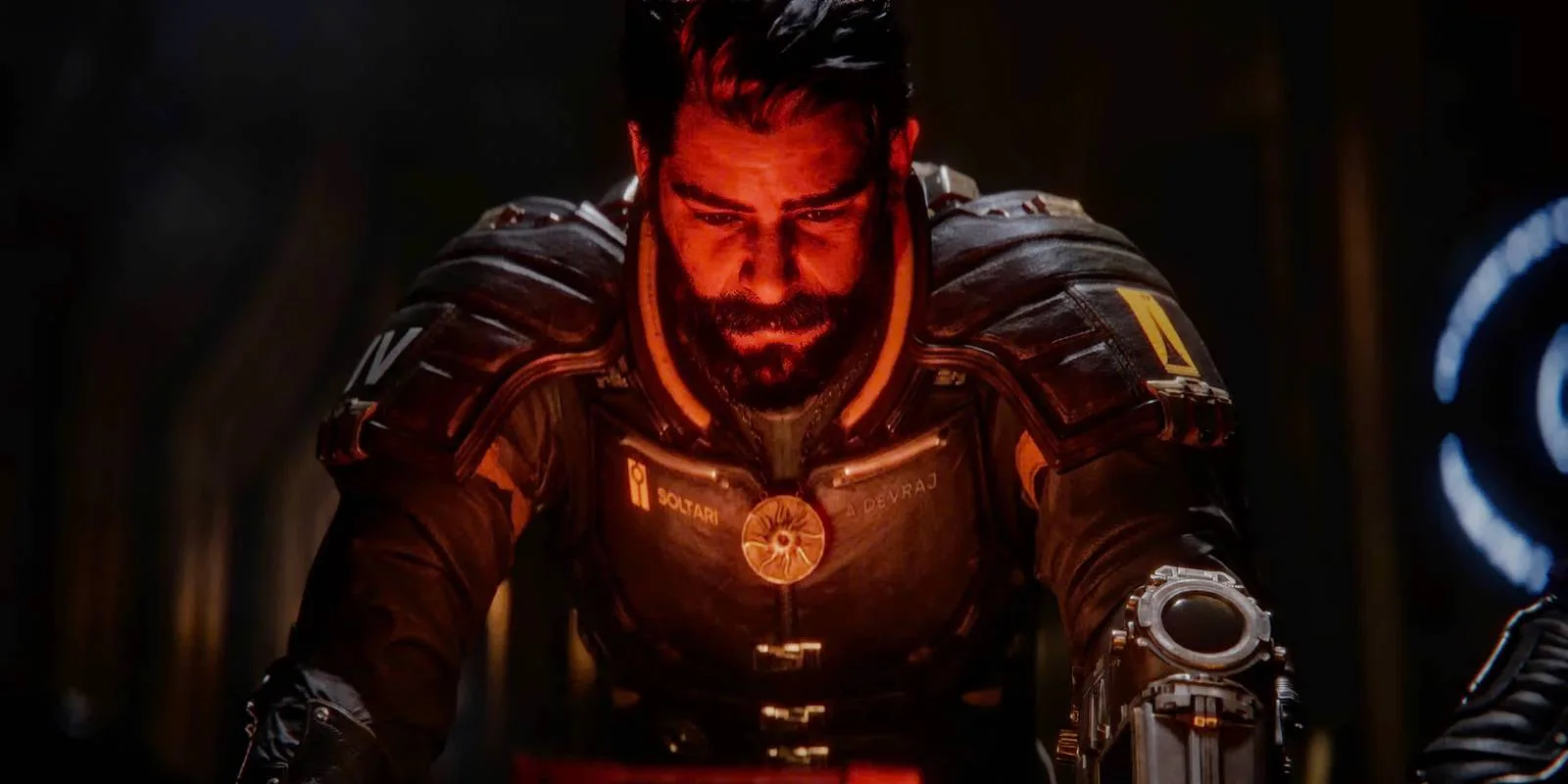
A Bigger, More Expressive World
Saros also expands the scope of Housemarque's world-building. The setting is Carcosa, inspired by The King in Yellow (Robert W. Chambers, 1895), with a yellow color motif, Italian futurist architecture, and Icelandic photography. Returnal was more abstract and alien, with environments that felt organic and decaying. Saros feels deliberate and constructed, with a visual identity that separates it from its predecessor.
The scale is noticeably larger: 8 biomes and 8 boss fights compared to Returnal's 5 biomes and 6 bosses. The estimated main story length is approximately 30 hours, versus Returnal's 20-25 hours. The file size of 83.4 GB (versus Returnal's ~56 GB) hints at the additional content and visual fidelity.
Who Should Play Saros?
If you loved Returnal's combat but hated losing your gear on death, Saros is your redemption arc. The weapon retention and permanent skill tree mean every run contributes to your character's growth, not just your personal skill. If you craved a story you could follow without piecing together audio logs, Arjun's journey delivers a clearer narrative arc from the start.
But if you're a masochist who loved Returnal's brutal purity—the total reset, the cryptic storytelling, the sense of being utterly alone in a hostile world—the optional difficulty modifiers might feel like a concession. Housemarque has made Saros more accessible without sacrificing challenge, but the trade-off is that the game's edge is slightly blunted for those who thrived on Returnal's unforgiving nature.
Studio Roots Remain, but the Vision Evolves
Housemarque's arcade DNA persists in Saros. The overdrive ability from Resogun (2013) returns, and proprietary VFX built since then power the game's visual effects. Creative continuity is ensured by the return of Gregory Louden and Matti Häkli, the same creative minds behind Returnal. The gameplay feel is intentional—but the design philosophy has evolved.
Saros launches April 30, 2026, exactly five years after Returnal, exclusively on PlayStation 5. Early critical reception is strong, with an OpenCritic score of 88/100 and a 94% critic recommendation. The ESRB rating is Teen for Blood, Language, Mild Suggestive Themes, and Violence.
Saros isn't a sequel—it's a statement. Housemarque listened, learned, and built a game that respects your time without sacrificing their signature intensity. The Soltari Shield, the permanent skill tree, the weapon retention, and the Eclipse System all point to a studio that wanted to make a game that feels like Returnal but plays like something new. Whether Saros lands as a worthy evolution or a softened compromise will depend on what you want from a roguelike. But one thing is certain: this is not Returnal 2. It's something new—and that's exactly why it's worth watching.