God of War Laufey: Why Faye and a Jelly Cube Are the Franchise's Boldest Gamble
This article is based on a hypothetical scenario and should not be taken as confirmed news. The following analysis examines what a potential God of War Laufey could look like based on developer...


This article is based on a hypothetical scenario and should not be taken as confirmed news. The following analysis examines what a potential God of War Laufey could look like based on developer statements, industry trends, and fan speculation.
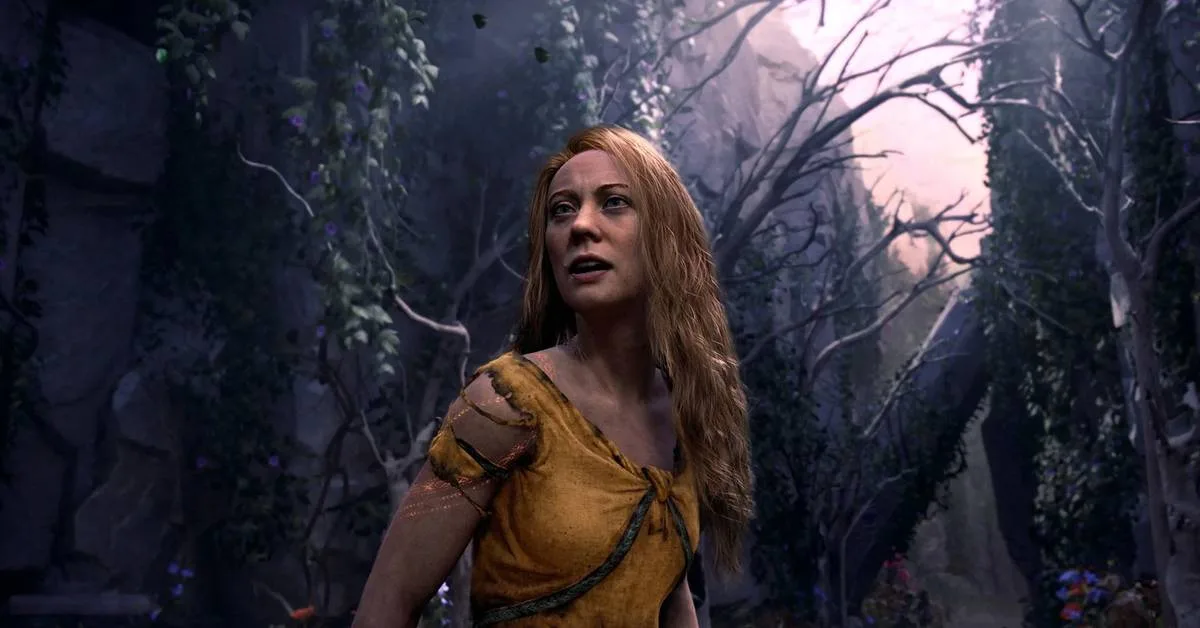
For over a decade, the God of War franchise has been synonymous with one man: Kratos. The Ghost of Sparta has carved a path through Greek and Norse pantheons, his rage shaping the very identity of the series. But at a hypothetical June 2026 State of Play, Santa Monica Studio would shatter that expectation. They would announce the next mainline entry, and it would not star Kratos. Instead, players would take on the role of Faye (Laufey the Just), Kratos' late wife, as she navigates a chaotic multi-pantheon afterlife called the Everywhen with a talking gelatinous cube named Phranque at her side.
This would be the biggest risk the series has ever taken. And early footage suggests it might be its most inventive leap yet.
A Protagonist Swap for the Ages, Faye Takes the Spotlight
For players who have only known Faye as a memory in God of War (2018) and a brief flashback in Ragnarök, the announcement would be seismic. Deborah Ann Woll would reprise her role as Faye, now the fully realized protagonist of a mainline God of War title. The game would open at the exact moment of her funeral pyre from the 2018 game, an emotionally charged callback that immediately reconnects the player to the story's roots.
Cory Barlog, Santa Monica Studio's Head of Creative, has stated that he has wanted to tell Faye's story since 2018. In a past interview with IGN,1 Barlog described Faye as a character whose impact ripples through the entire Norse saga, yet she remained a mystery. God of War Laufey would finally explore her past as a frost giant from Jötunheim, her power of foresight, and the plans she set in motion to protect Kratos and Atreus, plans that are now at risk within the Everywhen.
The shift in protagonist also means a fundamental change in play style. Where Kratos is brute force and heavy strikes, Faye's combat would be more agile and movement-based. She would blend the fluidity of the Greek-era games with the character-driven world-building of the Norse era. Her signature ability, the "Golden Hand of the Jötnar," would allow her to manipulate souls, turning the battlefield into a strategic puzzle rather than a slugfest. This is not just a new character; it is a new way of experiencing God of War.
The Everywhen, A Multi-Mythology Afterlife Playground
The setting of God of War Laufey is the Everywhen, an afterlife realm where gods from across cultures and timelines coexist. No longer are we confined to Greek or Norse mythologies. The Everywhen is a transcendent space where deities from Egyptian, Mongolian, and other traditions vie for power. Two confirmed antagonists are Sekhmet, the Egyptian goddess of war and plague, and Begtse, the Mongolian war god, signaling a deliberate expansion into less explored mythological systems.
This is a huge narrative risk. The intimate, character-focused storytelling of the Norse saga could easily be diluted by a "multiverse of deities." But Santa Monica Studio seems aware of this challenge. The Everywhen is not just a location; it is a narrative device that explains how Faye can interact with gods across cultures and timelines. It allows the writers to preserve the emotional core of the story, Faye's desire to protect her family, while opening the door for a wider, more ambitious mythological scope.
The inclusion of Sekhmet and Begtse also hints at a deliberate choice to move beyond the well-trodden Greek and Norse paths. Egyptian and Mongolian mythologies offer a rich tapestry of stories and themes that have been largely unexplored in mainstream action games. If successful, this could pave the way for future entries set in even more diverse pantheons.
What Could Go Wrong?
Despite its ambitions, God of War Laufey carries real risks that deserve scrutiny. The "multiverse" premise, however elegantly framed, may trigger fatigue among fans weary of cross-pantheon crossovers in games and film. The tonal whiplash between Faye's grounded, tragic backstory and Phranque's whimsical presence could feel mismatched if not handled with care. Most critically, the absence of Kratos raises a fundamental question: can the franchise maintain its identity without its gruff, iconic anchor? Past attempts to sideline beloved protagonists (e.g., Metal Gear Solid 2's Raiden debacle) show that even the most artistically valid decisions can alienate core audiences. Santa Monica Studio must prove that Faye can carry more than emotional weight, she must carry a whole franchise.
Combat, Companions, and the Curious Cosmic Cube
Faye's new fighting style is complemented by two distinctive companions. The first is Phranque, a "curious cosmic cube" voiced by Jack Quaid. Outlets have affectionately nicknamed him a "jelly cube," and early reactions suggest he brings a sense of levity and mystery to the journey. His role appears to involve puzzle-solving and lore delivery, offering a counterpoint to the weighty mythological drama.
The second companion is Rue, a sentient ribbon guardian attached to a powerful sword, voiced by Perlina Lau. This suggests a deeper weapon-narrative integration reminiscent of the Leviathan Axe, but with a living personality. Rue may act as both a tool and a character, creating a bond that evolves over the course of the game.
The inclusion of Phranque and Rue marks a departure from the Kratos-Atreus-Mímir dynamic. They are not human nor semi-human mentors; they are magical beings that inject a fresh sense of wonder and weirdness into the franchise. For a series that has often been defined by its grim, heavy tone, this shift toward whimsical curiosity could be exactly what it needs to feel new again.
What This Means for the Future of God of War
Officially, Santa Monica Studio has labeled God of War Laufey as the next mainline entry, not a spin-off. Despite some outlets calling it a spin-off due to the protagonist change, the developer's classification is clear: this would be the next core God of War game. It is exclusive to PlayStation 5, with no release date yet. Based on the reveal trailer's lack of a release window and typical 2, 3 year development cycles for major PS5 exclusives, a 2027 launch seems likely.
By building on established lore, Faye's foresight, the Leviathan Axe's origins (it was originally crafted for her by Brok and Sindri), her role as a frost giant, the game honors the past while boldly stepping into uncharted territory. If God of War Laufey succeeds, it could pave the way for an anthology series exploring different gods and protagonists, freeing the franchise from its reliance on Kratos.
A New Saga Dawns in the Everywhen
God of War Laufey is not just a sequel, it is a declaration that the franchise is willing to evolve beyond its iconic protagonist. By centering the narrative on a character we have only mourned, giving her a whimsical cube ally, and throwing her into a chaotic afterlife of gods from cultures around the world, Santa Monica Studio is taking the kind of creative risk that could either divide the fanbase or deliver the freshest God of War experience in years.
With Faye's soul-manipulating combat, Jack Quaid's cosmic cube, and a story that ties directly into the 2018 game's opening, Laufey promises emotional weight, mechanical novelty, and a mythological scope unlike anything we have seen. The question is not whether it will work, it is whether we are ready to let go of Kratos for a while.
- Quote adapted from developer comments about Faye's role in the series; see IGN's God of War Ragnarök coverage for context. ↩