Final Fantasy 7 Revelation Leak Suggests the “Final” Chapter Isn’t Really the End - Here’s What We Know
Square Enix has spent months positioning Final Fantasy VII Revelation as the triumphant conclusion to the Remake trilogy. The marketing language is deliberate: “the final chapter,” “the end of an...

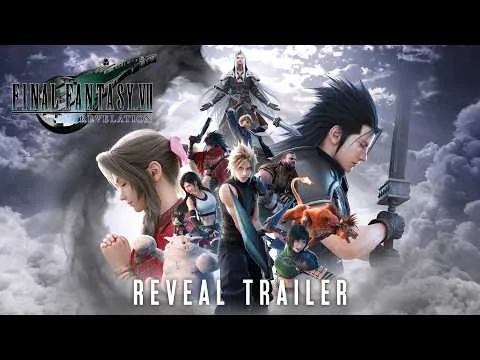
Square Enix has spent months positioning Final Fantasy VII Revelation as the triumphant conclusion to the Remake trilogy. The marketing language is deliberate: “the final chapter,” “the end of an era,” “the culmination of a 30-year journey.” But a newly uncovered Epic Games Store database listing tells a very different story. The entry reveals that Revelation may launch with a “Story Expansion Pass” and up to nine DLC packs, while director Naoki Hamaguchi has publicly stated the team would “actively consider” post-launch narrative content exploring the wider FF7 universe. The result is a fascinating contradiction: a game sold as an ending that might actually be a beginning.
Let’s break down the evidence, the director’s own words, and what this means for players waiting for Spring 2027.
The Leak, What the Epic Games Store Database Reveals
On July 1, 2026, third-party database tracker EpicDB flagged a series of storefront entries for Final Fantasy VII Revelation. The most eye-catching item is a “Story Expansion Pass”, a name that strongly implies narrative content beyond the main campaign. Alongside it, the database lists nine numbered DLC packs (DLC1 through DLC9), a “Digital Contents Pack,” Premium and Premium Plus Editions, and a pre-purchase bonus.
The database entry was last modified on June 2, 2026, days before Revelation’s official reveal at Summer Game Fest. This suggests the listings were prepared well in advance as part of the game’s storefront setup, not as late additions.
Director Hamaguchi’s Open Invitation, DLC “Actively Considered”
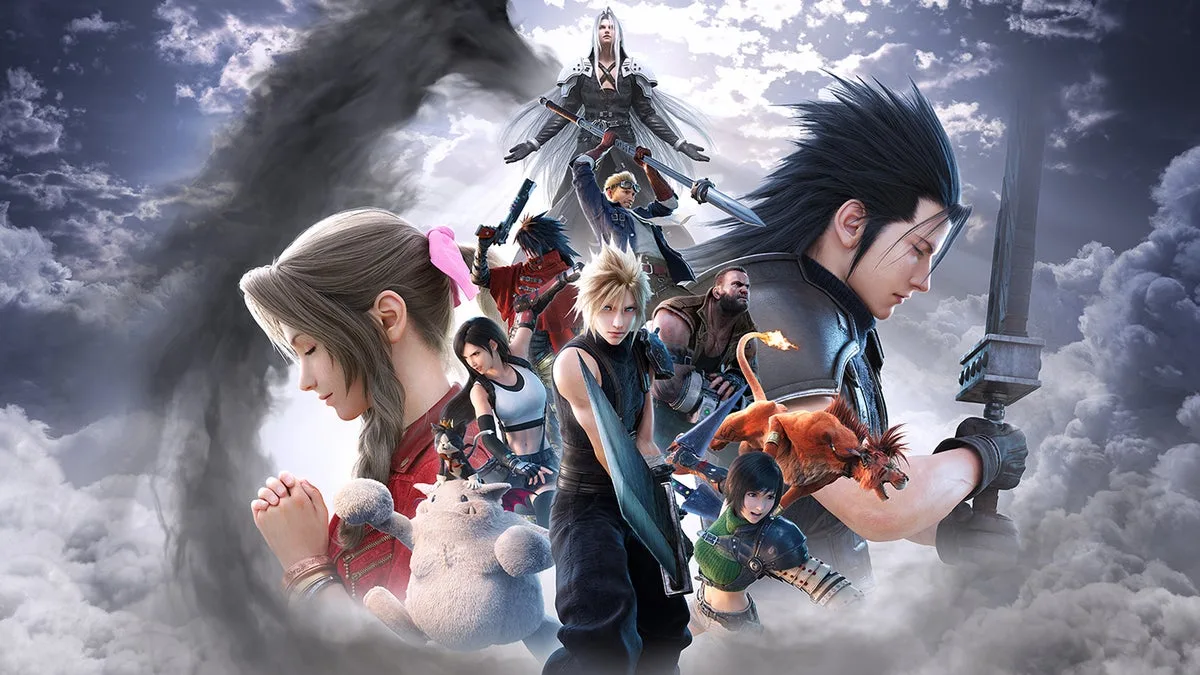
What makes the leak particularly credible is its alignment with public statements from the game’s director. In recent interviews with Famitsu and other outlets, Naoki Hamaguchi revealed that the team would “actively consider” post-launch story DLC, and specifically name-dropped spin-off titles like Dirge of Cerberus and Advent Children as potential material.
This represents a notable shift. Hamaguchi had previously explained that Rebirth received no major story DLC because the team prioritized shipping Revelation as quickly as possible. Now, with Revelation’s development cycle stretching across 2026 and into 2027, the team appears to have built room for expansion content from the start. It is worth noting that Square Enix has not officially confirmed any of the database listings, leaving open the possibility that some entries are placeholders or refer to minor cosmetic bundles rather than substantial story expansions. But the naming “Story Expansion Pass” is difficult to dismiss as a simple error, and Hamaguchi’s openness forms a consistent picture: Square Enix is preparing the infrastructure for narrative DLC, even if it waits for fan demand to justify a full greenlight.
History Repeating? Comparing to Remake’s INTERmission and Rebirth’s Silence
This is not the first time the Remake project has experimented with story expansions. Final Fantasy VII Remake (2020) received Episode INTERmission, a 4 to 6 hour DLC starring Yuffie that bridged directly into the events of Rebirth. It set a clear precedent: the development team was willing to create meaningful narrative extensions that expanded the world beyond the core game.
Rebirth, by contrast, had no equivalent. The stated reason, speed, made sense given the pressure to complete the trilogy. But with Revelation now in the final stretch, the team seems to be returning to the Remake model, only on a dramatically larger scale. Nine DLC packs and a Story Expansion Pass suggest something far more ambitious than a single character episode. For a visual breakdown of the leak and its implications, see our companion video below.
The question becomes whether Square Enix intends to launch a separate spin-off series using the same engine and assets, essentially turning the Remake trilogy into a sustained platform for FF7 universe content beyond 2027.

What Could the DLC Cover? Fan Speculation and Likely Candidates
The community has been quick to connect the dots. Hamaguchi’s direct mention of Advent Children and Dirge of Cerberus has fueled speculation that DLC could revisit those stories with modern graphics and gameplay. An Advent Children expansion would allow players to explore the movie’s events in a playable format, perhaps as an epilogue set after Revelation’s ending. A Dirge of Cerberus campaign would put Vincent Valentine in the spotlight, transforming his third-person shooter roots into a more action-oriented experience within the Remake combat system.
Another popular theory involves Genesis Rhapsodos, the enigmatic antagonist from Crisis Core. Genesis was notably absent from the Remake trilogy so far, leaving fans to wonder if his role is being saved for post-launch content. With nine DLC slots, Square Enix could blend cosmetic packs with character episodes, side stories, and timeline-altering additions.
The sheer number of packs, nine, invites comparison to a season pass structure. It is plausible that the Story Expansion Pass covers five to six narrative pieces, while the remaining packs include costumes, summons, or music tracks. But the naming leaves room for more.
The Marketing Tension, How Square Enix Is Playing Both Sides
The most interesting angle here is the deliberate ambiguity. Square Enix officially bills Revelation as the “final chapter” of the Remake trilogy. The core narrative will conclude the story of Final Fantasy VII itself. For players who want resolution, that is the promise.
But the leaked DLC and director comments suggest that “final chapter” only applies to the main game. The FF7 universe is far from closed. Square Enix is hedging its bets: marketing a definitive ending drives launch sales, while keeping expansion content in reserve allows the team to gauge fan reaction and extend engagement after release.
This is not a contradiction, it is a strategy. By leaving the door open without committing publicly, Square Enix can react to what players actually want. If demand for Advent Children or Dirge of Cerberus content is high, the expansions will materialize. If interest fades, the Story Expansion Pass can be quietly scaled back.
The real story is the deliberate tension: an ending that is also a beginning, a conclusion that is also a launchpad.
The Real End May Be Just the Start
Whether the Story Expansion Pass delivers on the promise of more Advent Children or Dirge of Cerberus content, or turns out to be a collection of minor cosmetic packs, the evidence points to a clear intention: Square Enix is positioning the FF7 Remake series to extend well beyond 2027. The 30th anniversary of the original game might not mark the end of a trilogy, but the start of a much larger, interconnected universe. If the “final chapter” of a beloved trilogy is actually a launchpad for expanded universe content, what does that mean for how we define a “complete” game in the modern era?