Epic Games Launcher V2: Ground-Up Rebuild Promises 5x Faster Boot, User Reviews, and Social Features - But Is It Enough?
The “It Sucks” Admission and the Rebuild Origin Story The path to Launcher V2 began in February 2026, when Allison gave a remarkably candid interview. He admitted the current launcher is slow because...

The “It Sucks” Admission and the Rebuild Origin Story
The path to Launcher V2 began in February 2026, when Allison gave a remarkably candid interview. He admitted the current launcher is slow because it makes calls to backend services on every single user navigation. “It sucks,” he said plainly. Work on a fix started in late 2025, with Allison describing the effort as “pulling the guts out, putting new guts in.”
Three months later, at Unreal Fest Chicago, Epic revealed the full scope of that overhaul. Presentation slides, shared on X by user LuKaOnIndeed and on Reddit by u/ImAnthlon, laid out a detailed plan for Launcher V2. Notably, Epic did not issue an official press release or blog post. The news spread through attendee slides and coverage of the event, hinting at a company cautious to overpromise after years of underwhelming its own users.
Speed Benchmarks, 5x Faster, But on What Hardware?
The headline numbers are impressive. Epic claims Launcher V2 achieves an average 5x faster cold start and a 6.5x faster systray restore to library. In plain terms, the launcher should spring to life in seconds rather than the sluggish multi-second wait that has frustrated players since 2018.
But there is an important caveat. Epic ran those benchmarks on a high-end workstation: a 32-core AMD Threadripper, an RTX A6000, and 128GB of RAM. That machine represents an enthusiast or professional setup, not the average gaming PC. Real-world performance on consumer hardware will almost certainly be lower. Epic’s estimates may be aspirational, and the actual improvement will depend on the system’s specs and the efficiency of the rebuilt code.
The root cause of the current launcher’s sluggishness is being eliminated. Instead of making redundant backend service calls every time a user clicks a different section, the new architecture caches data locally and fetches only what is needed. That fundamental change should benefit all users, even if the 5x figure is only achievable on a top-tier rig. Still, independent tests on common hardware are needed before drawing firm conclusions.
Long-Awaited Social and Storefront Features
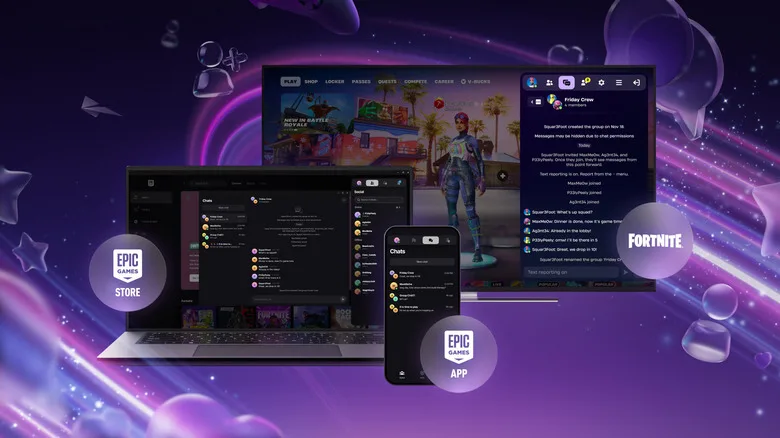
Beyond raw speed, Launcher V2 addresses the feature gap that has plagued Epic since launch. The new social tools include user-written reviews, player profiles with customizable avatars, private messaging, cross-platform text and voice chat, game-independent parties, and community forums. These bring Epic closer to parity with Steam’s social ecosystem, something developers and players have demanded for years.
The storefront itself is also getting a redesign. Epic promises personalized game recommendations, quick-access categories (like “recently played” or “free games”), tailored product detail pages, and in-store patch notes. The goal is to make browsing feel less like a barebones storefront and more like a curated discovery experience.
Longer-term roadmap items hint at even bigger ambitions. Epic is exploring a multi-platform store, potentially tied to Xbox’s Project Helix, and universal controller support. These features fall under the “On Deck” phase, which could be months or years away. But they signal that Epic sees Launcher V2 as more than just a speed-up: it wants to build a platform that competes on features, not just freebies.
12-Month Roadmap and the Steam Competition
Epic outlined a three-phase rollout for Launcher V2. The “Up First” phase includes a private beta testing chunked Fortnite installs (so players don’t have to download the entire game at once) and cross-region gifting. “Up Next” is the public release, expected in the summer 2026 window. “On Deck” covers longer-term features like the multi-platform store and universal controller support.
No specific dates have been given beyond that summer 2026 target. That is a long wait for users who have been frustrated since 2018. And while Epic has spent billions on exclusives and free games to build its user base to 78 million monthly active users, those deals are now declining as developers return to Steam’s larger audience. The software experience, the launcher itself, was always the weak link.
Steam’s dominance is not just about features. It is about network effects: friends lists, reviews, community hubs, workshop support, and a massive library of games. A faster launcher with user reviews does not automatically make Epic the second choice. It might stop the bleeding, but it does not give players a compelling reason to switch if they already have everything they need on Steam.
Can a Faster Launcher Save the Epic Games Store?
Launcher V2 is Epic’s most serious attempt to fix its software problem. After years of executives admitting the launcher “sucks,” the company is finally doing something drastic. The performance targets are ambitious, the social features are welcome, and the roadmap shows real commitment.
But the mountain to climb is steep. The benchmarks come from an unrealistic test bench. The full public release is still months away. And even when it arrives, Epic will still lack Steam’s ecosystem depth, workshop mod support may not come, community hubs may not be as vibrant, and the store’s catalog remains smaller. The exclusivity era is fading, and free games alone have not converted users into loyal customers who spend money.
The real question is whether users will care about a faster launcher if the store’s catalog and community still lag behind. If Launcher V2 delivers on its promises, it could make Epic a viable second store for PC gamers, a place to claim free games and maybe buy a few exclusives. But to challenge Steam’s throne, Epic needs more than speed. It needs an ecosystem that players want to inhabit. Launcher V2 is a critical first step, but it may take years to see if it pays off. For now, the gaming world waits to see if Epic can finally turn its launcher from a punchline into a genuine competitor.