Swordflight: The One-Man D&D Epic That Rivals Baldur’s Gate 3
In a year where Baldur’s Gate 3 continues to dominate conversations about Dungeons & Dragons video games, a quieter, more personal revolution has been unfolding inside a twenty-year-old engine....

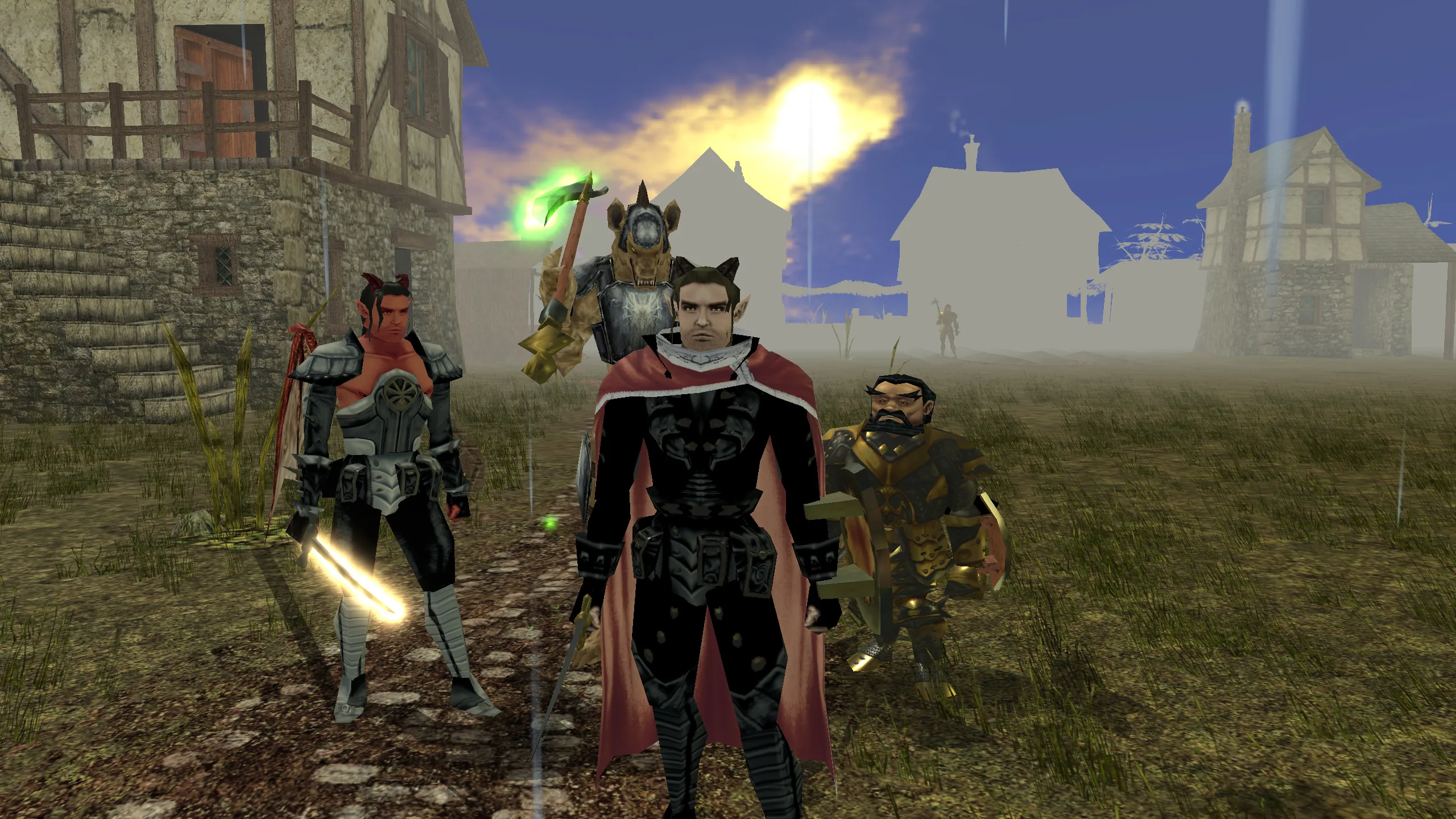
In a year where Baldur’s Gate 3 continues to dominate conversations about Dungeons & Dragons video games, a quieter, more personal revolution has been unfolding inside a twenty-year-old engine. Swordflight, a sprawling, single-author campaign module for Neverwinter Nights, has been quietly earning a reputation as one of the finest D&D role-playing experiences ever made, and it was built by one person, over many years. PC Gamer recently hailed it as “the best D&D videogame you’ve never played.” This is not a mod in the traditional sense; it is a full-fledged epic, a handmade “Baldur's Gate saga” that exists as outsider art in the digital nooks of the Neverwinter Vault.
The Shadow of Baldur’s Gate 3, Why We Needed Swordflight
Baldur’s Gate 3 set a new benchmark for AAA D&D gaming. Its cinematic presentation, deep roleplaying mechanics, and branch-and-consequence storytelling have rightfully earned it a place in the pantheon of great RPGs. But that studio-driven polish comes with a cost. Every story beat, every character, every line of dialogue passes through layers of committees, focus groups, and market analysis. The result is a brilliantly cohesive product, but it also creates a distance between creator and player.
Swordflight offers the opposite: intimacy. It is the unmediated vision of a single developer who spent years crafting a campaign that reflects their own love for the Forgotten Realms. In an era where blockbuster productions often feel designed by algorithm, that raw personal touch is both rare and precious.
What Is Swordflight?, One Person’s Baldur’s Gate
Swordflight is a multi-chapter Neverwinter Nights module created by a developer known in the community as Aeneas. Over several years, they used BioWare’s Aurora Toolset to build a campaign that rivals official D&D titles in scope and emotional weight. The module tells a coherent, character-driven story that unfolds across dozens of hours, blending classic dungeon crawling with meaningful choices and a richly detailed world.
The narrative follows a single protagonist, the player’s custom character, as they navigate a sprawling plot involving ancient conspiracies, moral dilemmas, and the weight of destiny. It is a personal Baldur’s Gate saga, and the community agrees. Swordflight consistently ranks among the top-rated modules on the Neverwinter Vault, holding a 4.8/5 star rating with thousands of downloads. It is frequently cited alongside other single-author epics like Fall of Aielund as one of the best user-made RPGs ever created for the platform.
What does playing Swordflight actually feel like? Early in the campaign, you might stumble into a besieged village where an elven mage offers you a choice: accept a powerful enchanted ring in exchange for turning a blind eye to his dark experiments, or refuse and face an entrenched faction of cultists alone. That decision, morally murky, with no obvious right answer, reverberates dozens of hours later, reshaping alliances and altering the final act. It is the kind of player-driven consequence that Baldur’s Gate 3 also excels at, but delivered through a leaner, more personal lens.
Built on the enhanced edition ruleset, Swordflight is available to anyone who owns Neverwinter Nights: Enhanced Edition on Steam or GOG. It is not a simple mod. It is a full campaign with custom areas, voice acting in key sections, bespoke items, and a narrative that respects the player’s agency without sacrificing a strong authorial voice.
The Ecosystem That Made It Possible, Neverwinter Nights Modding in 2026
That Swordflight exists at all is a testament to the enduring power of the Neverwinter Nights modding community. BioWare’s Aurora Toolset, first released in 2002, remains the engine behind countless fan-made adventures. The Neverwinter Vault continues to host thousands of modules, with new content uploaded regularly.
In 2026, that community is still innovating. The recent release of AuroraBorealius, an open-source native module editor written from scratch in Rust, promises faster performance and modern features, breathing fresh life into a platform that some had written off as legacy software. For players who never experienced the golden age of Neverwinter Nights modding, now is an ideal time to dive in.
A companion piece published in May 2026, reflecting on the game’s community-driven longevity, noted that players have collectively created thousands of years of playable history using the Aurora Toolset. Swordflight stands as one of the finest examples of what that freedom can achieve, a reminder that some of the most powerful stories in gaming are not written by studios, but by individuals working out of pure passion.

Outsider Art in Gaming, Why Swordflight Matters
The term “outsider art” is usually applied to visual works created by self-taught artists working outside the mainstream art world. It applies equally well to Swordflight. This module was not designed to meet market trends or satisfy an algorithm. It was made because one person wanted to tell a story, using the tools they had, for the love of the game.
In the Neverwinter Nights community, Swordflight is often compared favorably to Fall of Aielund, another monumental single-author campaign. But where Fall of Aielund leans into high fantasy adventure with a more traditional structure, Swordflight offers a darker, more personal narrative that invites deep roleplaying and moral ambiguity. Both are testaments to what a lone creator can achieve, but Swordflight has earned particular praise for its tight pacing, memorable characters, and the way it respects player choice without breaking its core story.
What Swordflight offers that no AAA D&D game can replicate is a direct, unfiltered line from one author to the player. It is pure communication: the vision of a single human being, translated into interactive form, waiting for you to discover it.
How to Dive Into Swordflight (And Why You Should)
Getting into Swordflight is surprisingly simple. The module is free to download from the Neverwinter Vault. You will need a copy of Neverwinter Nights: Enhanced Edition, which is available on Steam and GOG for a modest price. Once installed, the module can be placed into the appropriate game directory and launched from the game’s main menu.
A word of advice: avoid the Steam Workshop for Swordflight; the community recommends using the Vault for the most up-to-date and complete versions. Installation instructions are included on the download page, and the Neverwinter Nights community remains active and helpful for new players.
For anyone who loved Baldur’s Gate 3 but craves something more personal, Swordflight is the perfect next step. It offers the same deep roleplaying, meaningful choices, and tactical combat, but wrapped in a singular artistic vision that no studio could ever replicate. It is proof that the best D&D experiences are not always the most expensive ones.
A Handmade Epic Worth Discovering
In an industry increasingly dominated by blockbuster budgets and risk-averse design, Swordflight stands as a reminder that videogames are still a medium for personal expression. One person, armed with a toolset and a vision, created an epic that can stand shoulder to shoulder with Baldur’s Gate 3 on its own terms. The Neverwinter Vault holds many such treasures, adventures built out of love, not profit. Swordflight is among the finest. The question now is: will you dive in?