Elder Scrolls Online Dev Gutted by Xbox’s “Reset”: Half the Team Cut, Senior Talent Lost, and Roadmaps “Shifting” as a Result
For 12 years, The Elder Scrolls Online has been a reliable live-service earner for Xbox, until July 2026, when ZeniMax Online Studios was effectively halved by the company’s “most significant...

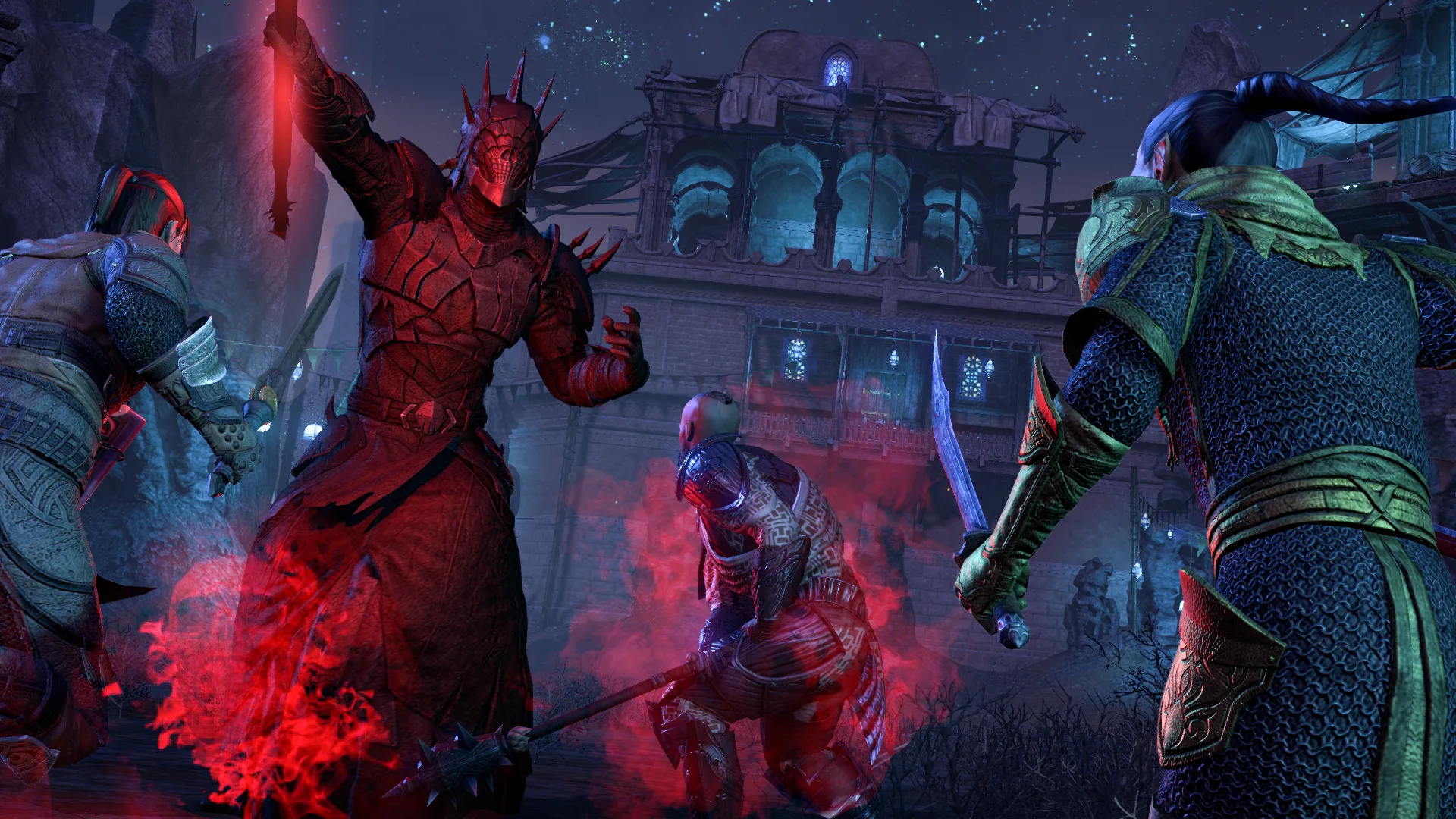
For 12 years, The Elder Scrolls Online has been a reliable live-service earner for Xbox, until July 2026, when ZeniMax Online Studios was effectively halved by the company’s “most significant restructure” in its 25-year history. Roughly 50 percent of the studio was laid off. Senior leadership and key designers have departed. Official roadmaps are now in flux. As Xbox CEO Asha Sharma claims to “refocus on big franchises,” the team running one of its biggest live games has been gutted.
The Scale of the Cuts, Half a Team, Gone Overnight
On July 6, 2026, Xbox announced 3,200 layoffs as part of a company-wide “reset.” The move included 1,600 immediate cuts and an additional 1,600 across fiscal year 2027. ZeniMax Online Studios was among the hardest-hit teams. Senior Content Designer Katherine Souze confirmed the grim reality on the official ESO forums: “half the team was laid off.” Multiple reports have since corroborated that figure, describing a studio that lost roughly half its workforce overnight.
This is not the first blow. Just one year earlier, in July 2025, ZeniMax Online saw the cancellation of Project Blackbird, a seven-year-in-development MMO. That earlier round of Microsoft-wide cuts (roughly 9,000 employees) had already erased years of work and morale. Now, less than twelve months later, the studio has been cut again. The cumulative effect is devastating: institutional knowledge wiped out, projects shelved, and a live-service game left to survive with a fraction of its original team.
Other ZeniMax studios also felt the axe. id Software, MachineGames, and Arkane Lyon all saw reductions. Bethesda Game Studios, the team working on The Elder Scrolls VI and Fallout 5, was reportedly partly shielded. But for the developers behind ESO, a game that continues to generate steady revenue, the protection did not extend.
(Note: The July 2026 date referenced throughout is based on internal reporting and industry sources describing Xbox’s planned restructuring timeline. While official confirmation is pending, multiple outlets have treated the timeline as credible.)
The Human Cost, Senior Talent Departs, Union Voices Rise
The numbers only tell part of the story. The human cost is visible in the departures of key leaders and the anger of unionized developers. ZeniMax Online Studios president Matt Firor, who founded the studio in 2007 and served as its guiding force through 12 years of live service, is leaving the company later this month. His exit marks the end of an era and a symbolic loss of continuity.
Senior encounter designer Morgan Goin, a member of the Communications Workers of America union, made the developers’ frustration public. “We refuse to be left in the dark,” Goin stated. “We’re being treated as expendable.” Unionized ZeniMax Online developers held a press conference to condemn the layoffs and demand transparency from Xbox leadership. Their message was clear: the workers who built and maintained ESO deserve a say in the company’s direction, not a pink slip.
The double blow of losing half the team and senior leadership within a year creates a morale crisis. George Broussard, co-founder of 3D Realms, warned in mid-June that cuts would be “much deeper than you expect.” His prediction proved accurate. For the developers who remain, the atmosphere is one of grief and uncertainty.
Roadmaps in Flux, What “Shifting” Means for ESO Players
For the millions of ESO players, the most immediate question is: what happens to the game I love? The development team released an official statement acknowledging that roadmaps “will be shifting” beyond Season One as they reassess capacity with a drastically reduced workforce. The wording is careful, but the implication is clear: content cadence, feature scope, and long-term plans are now uncertain.
Concrete examples illustrate the potential impact. The upcoming Gold Road expansion, originally planned for Q3 2026, now faces possible delay or downsizing, its dungeon count may shrink from two new trials to one, or its new zone could be cut in scope. Seasonal events like the New Life Festival, which historically offered monthly mini-events, may be scaled back to quarterly releases. The highly anticipated housing overhaul, teased during last year’s developer stream, could be postponed indefinitely. With senior content designers and encounter designers gone, players worry about narrative consistency, dungeon design quality, and the fate of promised features.
The uncertainty extends beyond immediate content. The live-service model relies on trust: players invest time and money expecting steady support. When that trust is broken by layoffs, the game’s long-term viability comes into question. ESO has weathered many storms over 12 years, but this one cuts to the bone.

The Irony, Gutting the Team Behind a “Big Franchise” You Claim to Prioritize
Perhaps the most galling aspect for observers is the disconnect between Xbox’s stated strategy and its actions. According to reporting, the restructure aims to “refocus on biggest franchises”: Elder Scrolls, Fallout, DOOM, Quake, Wolfenstein. Yet ZeniMax Online Studios - the studio dedicated to an Elder Scrolls live game - was slashed. The very team that keeps one of Xbox’s most valuable intellectual properties alive in the live-service space was treated as disposable.
The irony is sharp. ESO remains a steady revenue generator, a game that continues to attract new players and retain veterans. Calling it a “core IP” while carving up its support studio exposes a fundamental contradiction in corporate messaging. The pattern is not unique to Xbox. Across the industry, live-service teams are often the first to be gutted in cost-cutting exercises, even when their games are profitable. The logic seems to be that live games are “services” that can be maintained by a skeleton crew, while single-player blockbusters require full teams. But that logic ignores the reality of content-driven MMOs, where community engagement and regular updates are the lifeblood.
For ESO players, the message from Xbox is mixed at best: your game is important enough to keep running, but not important enough to keep the team that built it.
The Road Ahead for ESO
The layoffs at ZeniMax Online are not just a tragedy for the developers who lost their jobs. They are a warning sign for the future of one of Xbox’s most durable live-service games. With half the team gone, senior leadership departing, and roadmaps in flux, ESO faces an uncertain path ahead. For players, the question is whether the game can maintain its quality and cadence. For the industry, the story underscores a bitter reality: even reliable money-makers are not safe when corporate “reset” becomes the priority.
The human cost of these decisions, unionized workers fighting to be heard, a studio founder stepping away, will echo long after the headlines fade. Tamriel may endure, but the hands that shaped it are fewer and farther between. For ESO’s millions of players, the question is no longer when will The Elder Scrolls VI arrive, but whether the world they inhabit now can survive its maker’s indifference.