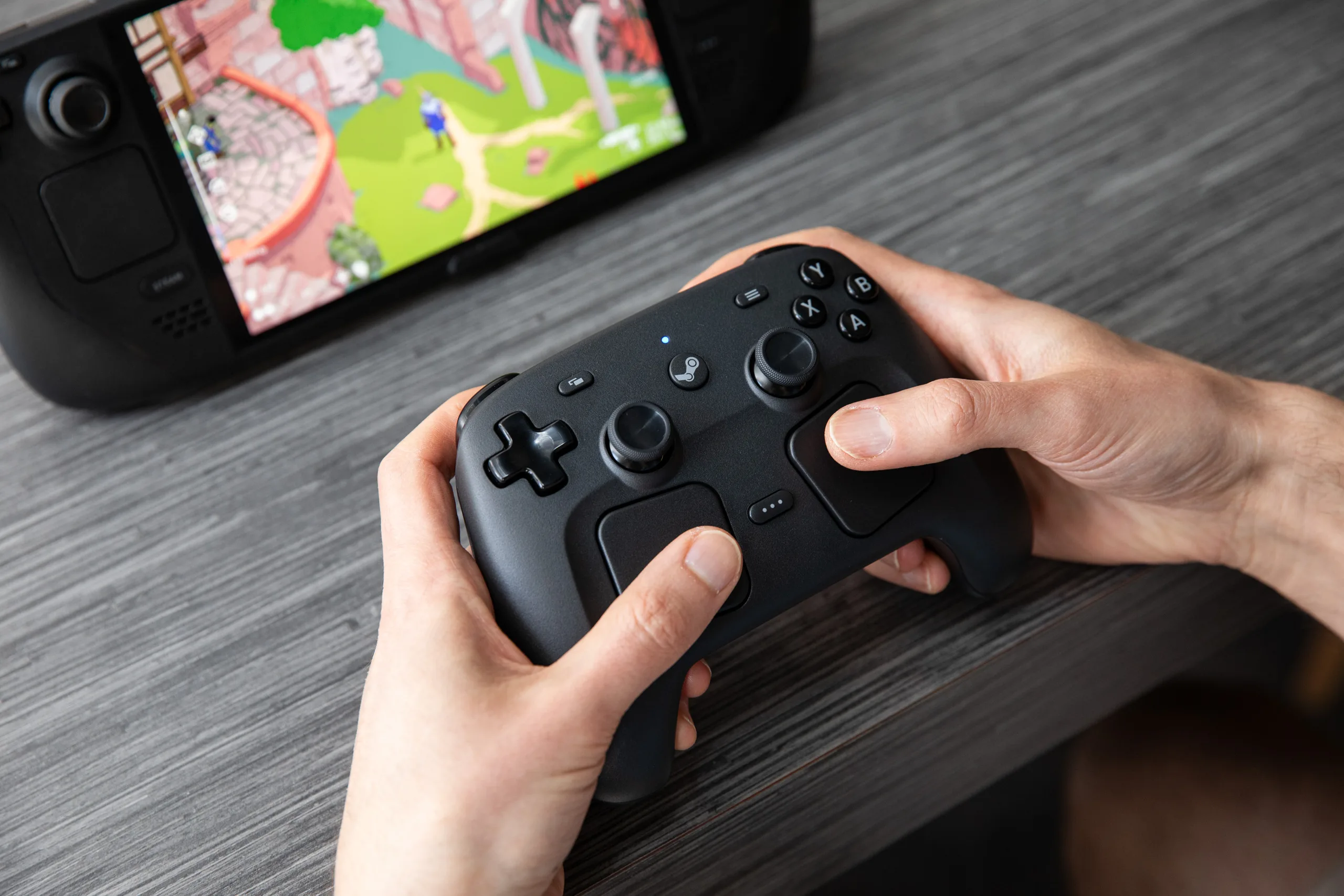
Valve’s Steam Controller Goes Solo: May Launch Date Set as RAM Crisis Holds Back Steam Machine
Imagine planning a family reunion, only to have half the guests stuck in traffic. That’s the situation Valve finds itself in with its ambitious 2023 hardware trifecta—a Steam Machine mini PC, the...

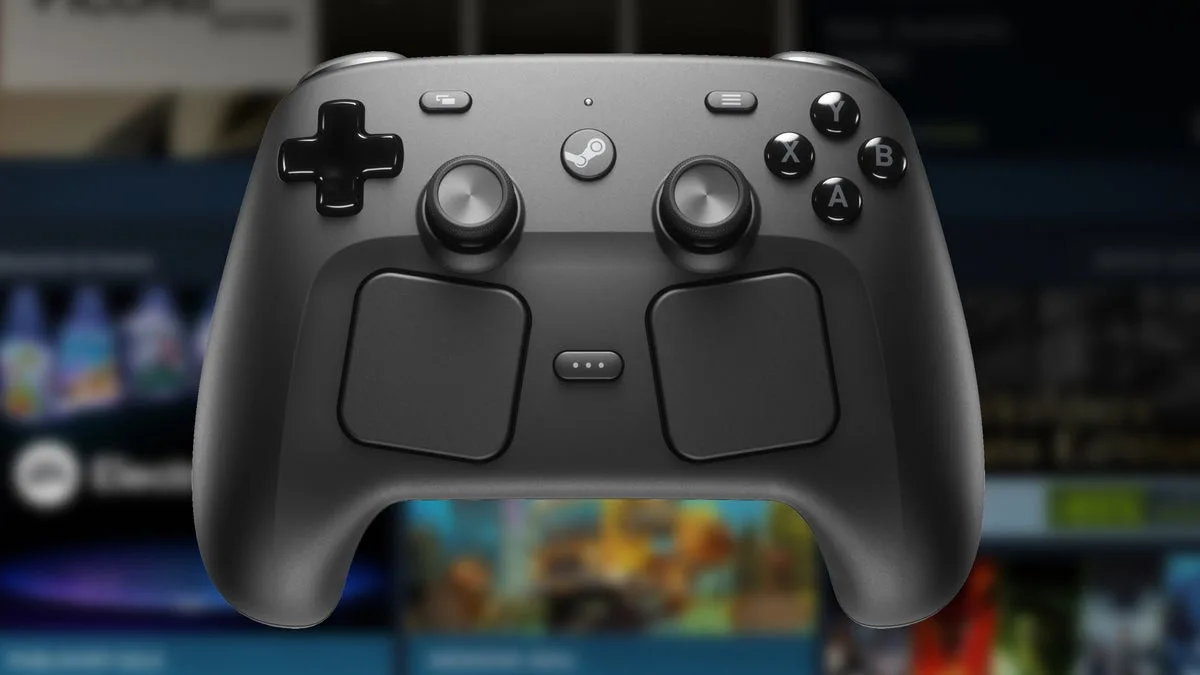
Imagine planning a family reunion, only to have half the guests stuck in traffic. That’s the situation Valve finds itself in with its ambitious 2023 hardware trifecta—a Steam Machine mini PC, the Steam Frame VR headset, and a redesigned Steam Controller. The global memory and storage crisis, fueled by insatiable AI data center demand, has thrown those plans into disarray. While the Steam Machine and Steam Frame remain delayed, Valve has confirmed that its brand-new £85 Steam Controller will launch independently on May 4, 2026. The decision raises questions: Why did the controller escape the shortage? Is it worth the price? And what does the delay mean for Valve’s broader hardware strategy?
Why the Steam Controller Avoided the RAM Crisis
The simplest explanation is also the most elegant: the Steam Controller contains no RAM or storage. Unlike its delayed siblings—the Steam Machine mini PC and Steam Frame VR headset—the controller is immune to the memory and storage shortages triggered by the AI industry’s voracious appetite for components.
Valve designer Lawrence Yang confirmed the pragmatic reasoning in an interview. “The controller is shipping now because it’s ready,” Yang said. “We didn’t want to artificially hold it back while we wait for the Steam Machine.” This decision reflects a disciplined approach to product launches: ship what you can, when you can, rather than risk indefinite delays.
Valve engineer Steve Cardinali elaborated on the broader context. “RAM shortages, driven by AI industry demand for memory, have delayed the Steam Machine and Steam Frame,” Cardinali explained. Both devices require memory and storage components that are experiencing significant price hikes and supply constraints. The controller, by contrast, is a self-contained peripheral with no volatile memory dependency—a fortunate design choice that now looks prescient.
A Redesigned Controller for the Steam Deck Era
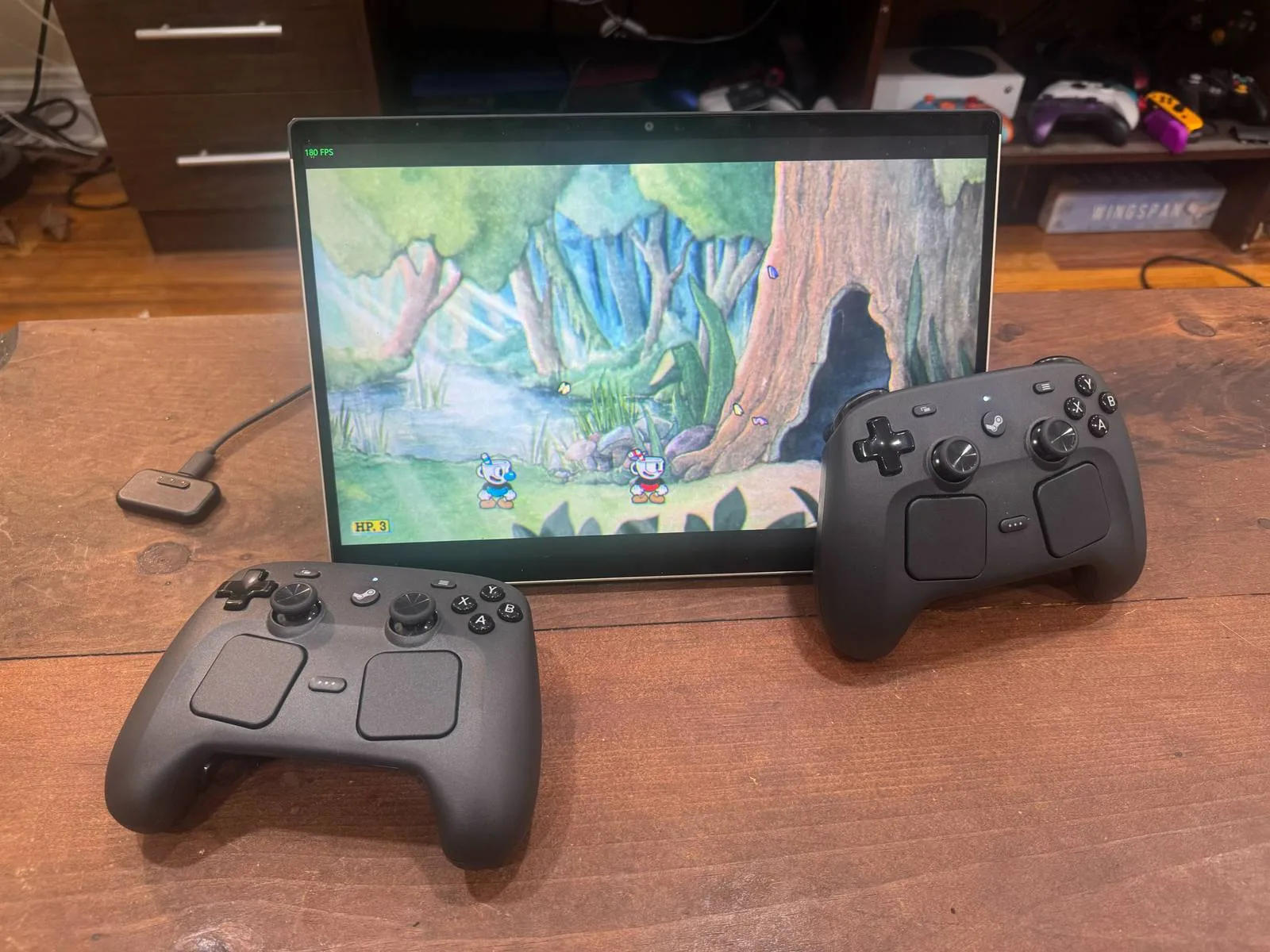
The original Steam Controller, launched in 2015, was a divisive piece of hardware. Its twin trackpads and lack of a second thumbstick forced players to relearn basic control schemes, leaving many frustrated. Valve has clearly learned from that experience.
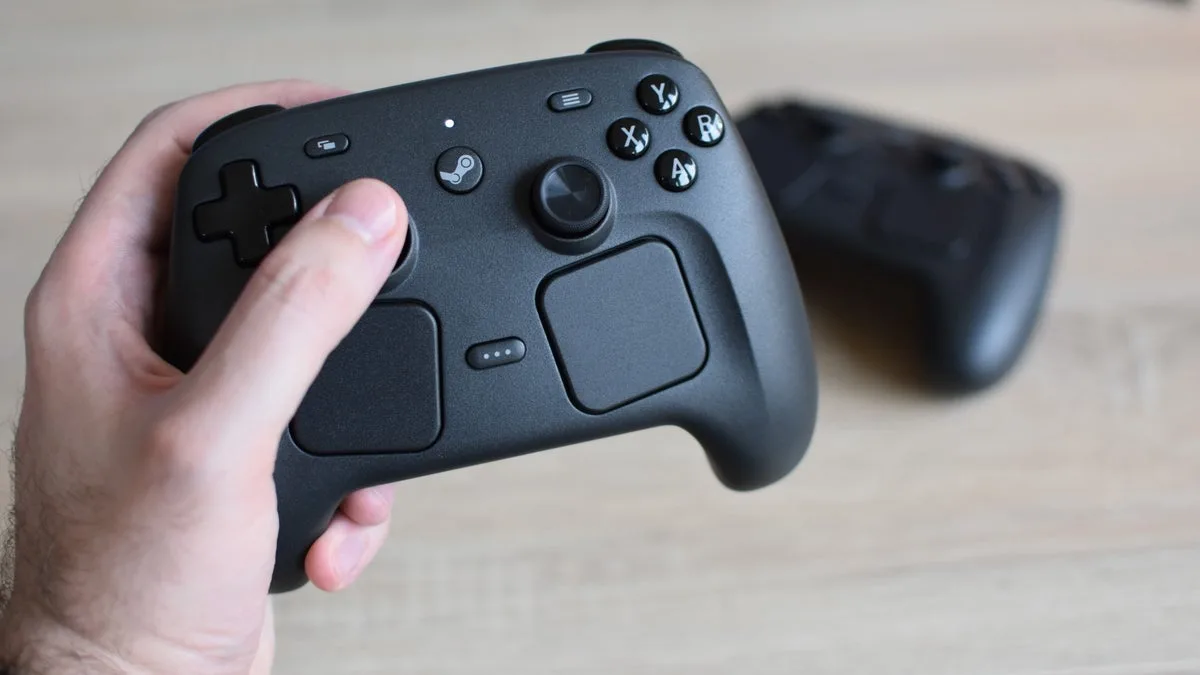
Development on the new controller began after the Steam Deck OLED launch, drawing on ergonomic prototypes from the Steam Deck project. The most obvious change is the addition of a second thumbstick and a Steam Deck-style layout. This solves the original’s most glaring flaw: the lack of inputs that required players to fundamentally adapt their muscle memory.
Essential inputs like gyro and trackpads have been retained, ensuring input parity with the Steam Deck. Valve engineer Jeremy Slocum noted that the controller fills a specific gap for docked Steam Deck users. “Many players wanted to use their Steam Deck’s custom inputs with other controllers but couldn’t,” Slocum said. “The new controller bridges that gap.”
The trackpads themselves serve dual purposes: gameplay functions (camera controls, radial menus) and desktop navigation. Community configurations already support mouse-and-keyboard games like Crusader Kings and RTS titles, demonstrating the controller’s versatility beyond traditional PC gaming.
Pricing, Availability, and Competitive Positioning
The Steam Controller is priced at £85 in the UK, €99 in Europe, and $99 in the US. Regional variations reflect distribution costs, import duties, and local market conditions—not arbitrary markups. This positions it £35 above an Xbox Wireless Controller but significantly below premium options like the Wolverine V3 Pro. Valve states the price was achieved through disciplined design choices—avoiding unnecessary features to keep costs down.
But is £85 too much for a controller that only works on PC? It’s a valid question. The controller’s PC-only compatibility—via the Steam client on PC, Steam Link on mobile, and the Steam Deck—is deliberate. Consoles like Xbox, PS5, and Switch are excluded due to API limitations for its extra features. For existing Steam users, the value proposition is clear: gyro, trackpads, and deep Steam integration are features no competitor can match. For console players, however, it remains a niche peripheral.
Valve has amassed enough stock for a solid launch, aiming to avoid the waiting lists that plagued the original Steam Deck’s release. The controller will be available exclusively via Steam on May 4th, with no retail presence planned at this time.
What the Steam Machine Delay Means for Valve’s Hardware Strategy
The Steam Machine and Steam Frame remain tentatively scheduled for release in the first half of 2026, but Valve has provided no updated timeline. “We’re hard at work and expect to share news soon,” the company stated.
According to Insider Gaming, Valve is nearing an announcement of the Steam Machine’s price and release date. Internal debates over pricing have been intense, with the company reportedly considering selling the hardware at a loss—at least in the short term—similar to the Steam Deck. Gabe Newell previously described the Steam Deck’s pricing as “painful” but “critical” for consumer adoption, implying a similar strategy may be used for the Steam Machine to compete with the PS5 and Xbox Series X.
The Steam Machine requires both RAM and storage, both of which are experiencing price increases due to the memory crisis. Valve is mitigating impacts by diversifying component suppliers to avoid single-source dependencies, but the challenge remains significant. If priced at or below the PS5 and Xbox Series X—which have seen recent price hikes—the Steam Machine could be competitive in the console gaming space. But those pricing decisions hinge on component costs that remain volatile.
What’s Next for Steam Hardware?
The Steam Controller’s solo launch on May 4, 2026, is a testament to Valve’s ability to adapt in a volatile hardware landscape. By shipping a controller that’s ready now rather than waiting for memory-dependent products, Valve secures a foothold in the PC gaming peripherals market while buying time for the Steam Machine and Steam Frame. The controller’s refined design, Steam Deck compatibility, and competitive pricing make it a compelling buy for existing Steam users—but the bigger story remains the RAM crisis’s ripple effects on Valve’s ambitious hardware roadmap.
With the Steam Machine’s pricing still under wraps and no firm release date, all eyes are on Valve’s next move in the console space. If Valve can weather the RAM storm, the Steam Machine could redefine PC gaming in the living room. But for now, the controller is the only ship leaving port—and it’s worth watching where it docks.