The Last Secret of Stardew Valley: Why a Decade-Old Mystery Remains Unsolved
The Hypothetical Revelation: A Secret Message in Plain Sight For the sake of this exploration, let's envision a future revelation. In a hypothetical interview, Eric Barone, the visionary behind...


The Hypothetical Revelation: A Secret Message in Plain Sight
For the sake of this exploration, let's envision a future revelation. In a hypothetical interview, Eric Barone, the visionary behind ConcernedApe, makes a stunning admission: a significant in-game secret has never been found.
The nature of this secret is as intriguing as its obscurity. Barone has spoken in the past about his love for embedding secrets and his meticulous, hands-on design process. It is entirely plausible that a hidden "secret message"—a digital relic or footnote to a road not taken during development—could be permanently embedded in the world. The most crucial clue in our scenario is also the one that explains its longevity: the secret is likely hidden within the game's artwork, not in its logic or code. This single detail would render traditional investigative tools useless. As Barone has explained in real interviews regarding other secrets, artistic sleight of hand makes visual Easter eggs resistant to discovery via datamining or decompilation. In our hypothetical, Barone expresses a mix of doubt and hope—skeptical anyone would find it due to its obscurity, but genuinely hoping someone eventually would.

A Decade of Digging: Why Couldn't the Community Find It?
The persistence of such a secret would stand in stark contrast to Stardew Valley's intensely scrutinized history. This is the community that solved the Junimo Kart mystery, decoded the secret of the Statue of Endless Fortune, and left no stone—or artifact trove—unturned. Hiding a secret in static artwork, such as environmental sprites, character portrait details, or furniture pixels, would be a masterstroke. While code can be decompiled and parsed line by line, a visual Easter egg requires a human eye to scan millions of potential pixels across countless screens, a fundamentally different and more arduous task.
The scale of the search problem is immense. The game has been subjected to an astronomical amount of playtime over the years. Yet, a secret could persist. This leads to two compelling theories: either it requires a specific, incredibly obscure sequence of actions to trigger its appearance, or it is simply a visual detail—a changed line in a painting, a subtle alteration in a wallpaper pattern—that has been in plain sight all along, waiting for the one player to look at it from the right angle, with the right knowledge.
Stardew Valley's Living Legacy: The Perfect Host for a Secret
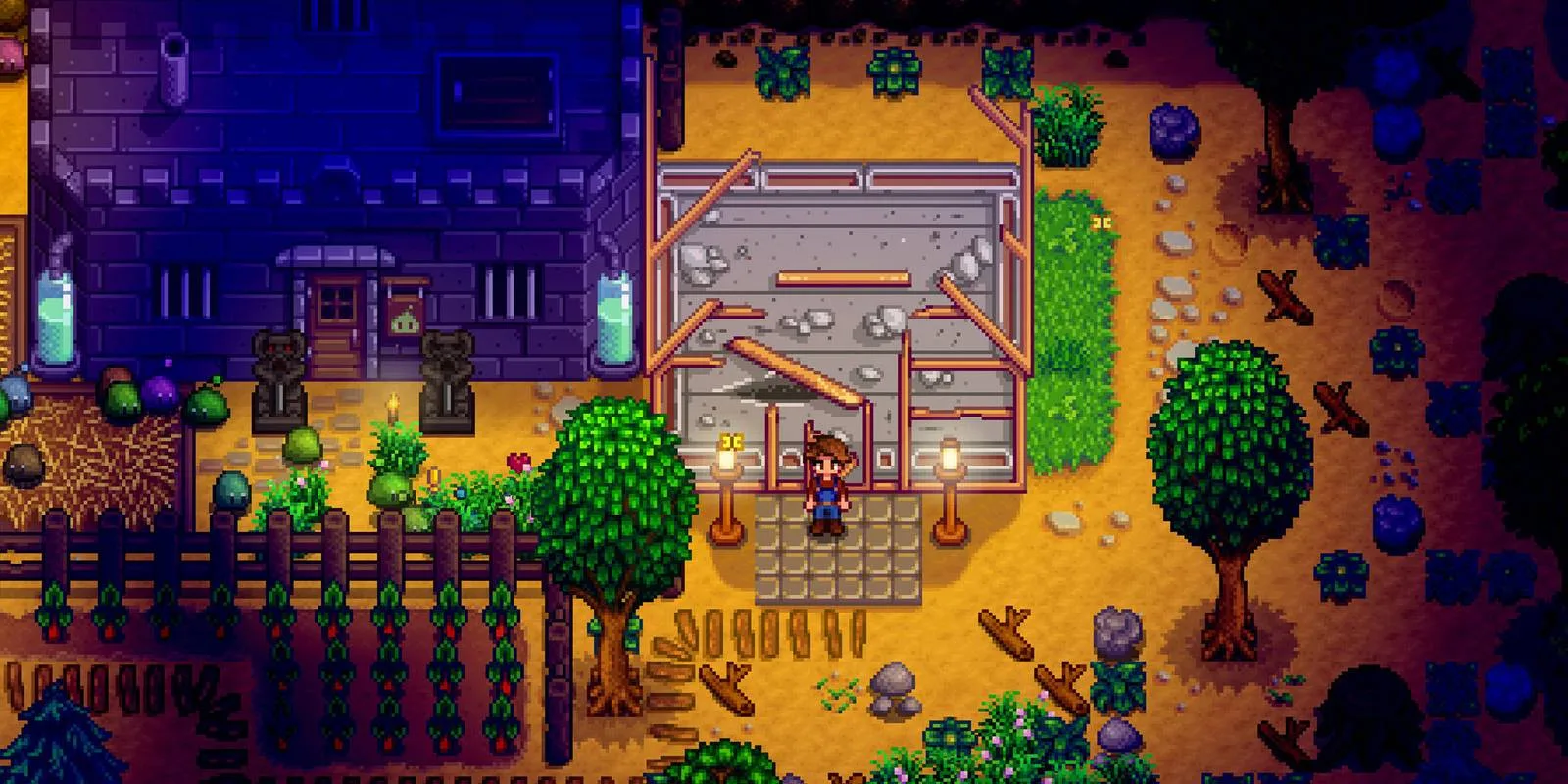
This thought experiment exists within the context of a game that has achieved staggering, ongoing success. Its consistent, massive daily player base is a testament to its timeless design. Its evolution continues, with Barone and his team working on new updates, a process that inherently involves changing plans and scrapping ideas. This ongoing development cycle is the perfect breeding ground for the kind of archival "relic" our hypothetical secret represents.
This support is tied directly to Barone's own journey and his profound connection to the community. Having started the project as a solo developer, he has cited sold-out Stardew Valley symphony concerts and countless profound stories from players as the highlights that motivate him to continue. An undiscovered secret would be a curious artifact of this relationship: a personal note from the creator to his audience, lost in the mail. It aligns with the game's spirit of discovery and the personal touch Barone is known for.
The Great Hunt: Where Could a Secret Be Hiding?
Armed with the "artwork" clue, a community hunt would enter a new, more observant phase. Theorists would re-examine every visual element. Potential hiding places are numerous:
- Wallpapers and Flooring: The dozens of decorative patterns that line the Farmhouse and other buildings, any of which could contain a coded pixel pattern or a subtle altered design.
- Unique Furniture or Artwork: Paintings, statues, or rare furniture items obtained from the Traveling Cart or festivals.
- Environmental Details: A specific arrangement of trees in the Cindersap Forest, a peculiar stone in the mountain quarry, or a barely-noticed marking in the Community Center.
- Character Portraits: A nearly imperceptible change in a character's expression between heart events, or a hidden symbol within the portrait frame.
- The Secret Notes Themselves: Could one of the existing secret notes contain a visual clue in its sketch that has been misread for years?
The secret's hypothetical nature as a "relic" of a changed plan makes it a piece of Stardew Valley's own archaeological record. It would not be a functional cheat or a powerful item, but a piece of history. This fact would encourage a slower, more thoughtful exploration—a return to the game's core spirit of careful observation.
This final, elusive thought experiment is not a prediction, but a celebration of Stardew Valley's enduring mystery and meticulous craftsmanship. It symbolizes how a game can feel both intimately known and endlessly surprising. Whether this specific secret ever exists, the very possibility ensures that players will continue to look at Pelican Town not just as a finished product, but as a living puzzle box—and that community-driven curiosity is perhaps the greatest testament to its enduring design.