Styx: Blades of Greed Review: A Gorgeous, Expansive Stealth Homecoming Hampered by Late-Game Payoffs
A Grander, Goblinsized World The most immediate and successful evolution in Blades of Greed is its sense of scale. The game abandons strictly linear missions for three massive, semi-open world maps:...

A Grander, Goblinsized World
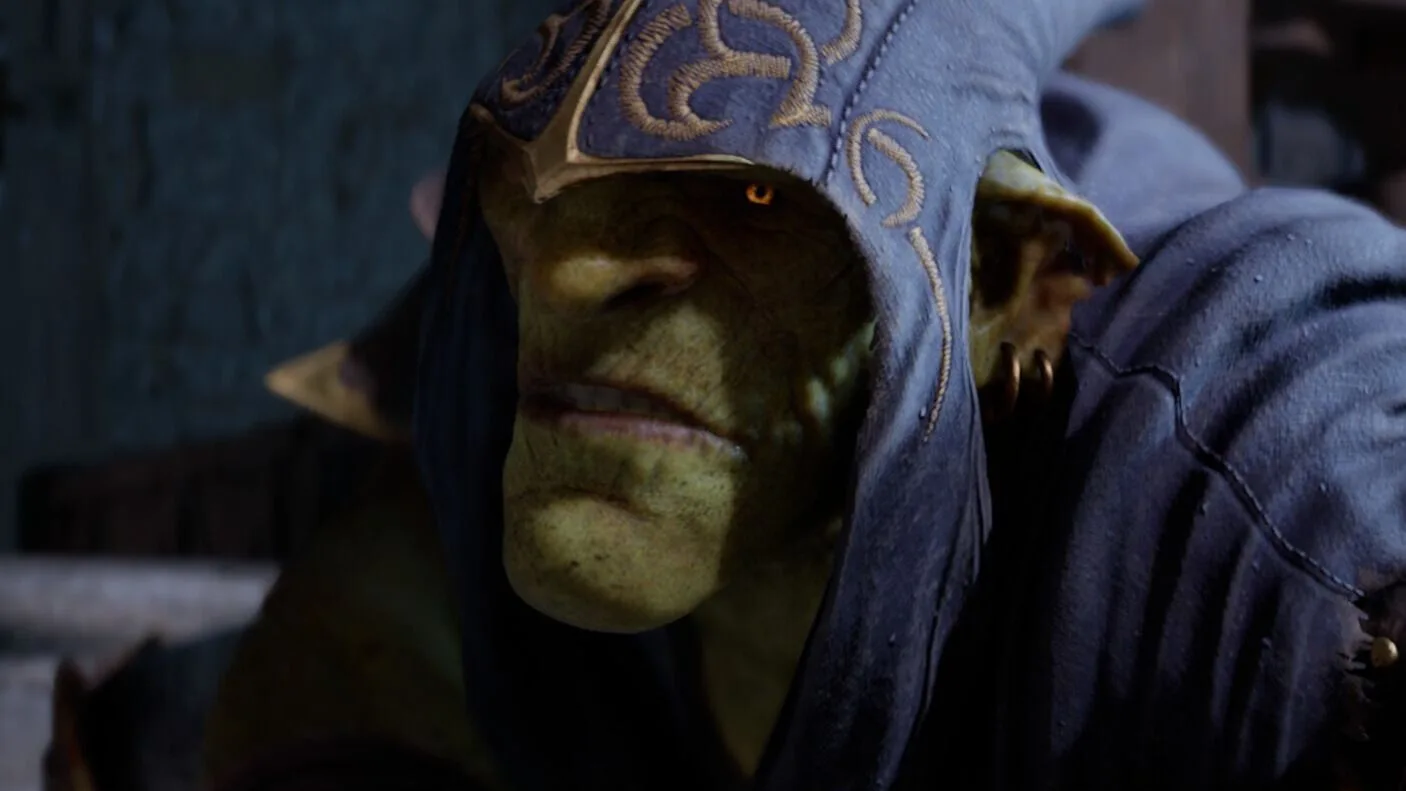
The most immediate and successful evolution in Blades of Greed is its sense of scale. The game abandons strictly linear missions for three massive, semi-open world maps: the imposing fortress of The Wall, the vibrant port city of Turquoise Dawn, and the haunting ruins of Akenash itself. This shift fundamentally changes the pace and philosophy of the stealth. Instead of navigating a predetermined path, you are presented with a dense, multi-layered sandbox and tasked with finding your own way through.
The level design is the game's crowning achievement. Each location is a masterpiece of verticality, packed with crumbling ledges, hidden tunnels, precarious rafters, and dense foliage. The environment is not just a backdrop; it's a fully realized tool for the discerning thief. This interconnected design rewards patient exploration and spatial awareness, offering multiple solutions to every guard patrol and locked gate. Your operations are launched from a central zeppelin hub, which frames the adventure with a grander, more exploratory feel than previous entries. Critics have rightly praised the world as "utterly gorgeous," with outlets like PC Gamer specifically highlighting its successful capture of a unique "1980s dark fantasy tone" that permeates the foreboding environments.
Accompanying this physical expansion is a welcome softening of the protagonist's edges. The once relentlessly grating and "tedious" misanthropy of Styx has been tempered. While still far from charming, his commentary is now more palatable, allowing players to focus on the heist without being constantly annoyed by the thief himself. It’s a subtle but impactful change that makes the long hours of lurking in shadows more enjoyable.

The Core Stealth Loop: Quartz, Tools, and Trouble
At its heart, Blades of Greed remains a purist's stealth experience. Direct combat is intentionally awkward and lethal; a head-on fight with even a single guard is a recipe for a quick reload, a point of universal criticism that identifies it as the game's weakest system. The core loop revolves around observation, planning, and execution. The new progression system is built around "Quartz," a luminous green power source that has replaced the series' iconic Amber. Scattered (and often heavily guarded) throughout the environments, Quartz serves as the currency for unlocking new skills in your hideout.
This system successfully merges the old with the new. Classic amber powers, like creating disposable clones and brief invisibility, return alongside flashier Quartz abilities. The new skills, such as the ability to possess guards for limited scouting or to briefly slow time, add fresh tactical wrinkles to your toolkit. Hunting for Quartz provides a clear, compelling objective that drives exploration. However, this hunt can become repetitive over time, as the core activity of sneaking into a guarded area to grab a glowing McGuffin repeats across the campaign.
New Toys, Old Problems: Mechanics & Missed Opportunities
Blades of Greed introduces its most exciting new mechanics with a frustrating caveat: you get them far too late. The hookshot grappling hook and the parachute glider are genuine game-changers, transforming the sprawling maps into a playground of fluid, vertical traversal. They enable sequence-breaking leaps, rapid escapes, and entirely new infiltration routes. The problem is their Metroidvania-style gating; these essential tools are unlocked deep into the adventure. For the majority of the playthrough, you are denied the very mechanics that would maximize the fun of the game's best feature—its level design.
This late-game payoff exacerbates some persistent series issues. General movement and controls can still feel "fiddly," with an awkward cover toggle that fails in tense moments. The most glaring omission, criticized universally, is the complete lack of an in-game map. In linear levels, this was a quirk. In these massive, multi-tiered labyrinths, it becomes a significant frustration, forcing reliance on memory and landmarks in an environment deliberately designed to be complex.
Technical polish is also inconsistent at launch. Reviewers noted bugs such as key pickups not registering, inconsistent enemy pathing, and occasional quick-save failures. While not game-breaking, these issues disrupt the carefully crafted tension that is the stealth genre's lifeblood. The narrative, a simple tale of greed and betrayal, does little to compensate; it offers no recap of prior games' convoluted lore, potentially confusing newcomers and firmly positioning Blades of Greed as an experience for gameplay over story.
Verdict: A Triumphant, Flawed Homecoming
Styx: Blades of Greed is a confident and visually stunning evolution that successfully expands the series' stealth playground into breathtaking new territory. It delivers a fantastic, vertical sandbox that will delight purists with its emphasis on patience, creativity, and exploration—qualities reflected in strong review scores ranging from solid 7/10s to high praise like PC Gamer's 82/100.
Yet, it remains held back from greatness by stubborn legacy issues, a frustrating delay on its most liberating mechanics, and a lack of polish in key quality-of-life areas. Priced at $40, it represents a substantial experience for fans who have waited nearly a decade. This is a triumphant, if flawed, return for the goblin thief—a homecoming that fully embraces ambition, even if it doesn't always stick the landing.