Steam Machine Priced at $1,049: Valve’s Living-Room PC Arrives at a Premium - With a Lottery to Match
The Price Reality, What You're Paying For At $1,049 for the 512 GB model, the Steam Machine sits squarely in premium gaming PC territory. The 2 TB version adds $300 to the base price. Valve confirmed...


The Price Reality, What You're Paying For
At $1,049 for the 512 GB model, the Steam Machine sits squarely in premium gaming PC territory. The 2 TB version adds $300 to the base price. Valve confirmed that it is not taking a loss on the hardware; the price reflects the bill of materials plus assembly. The company's original target, widely believed to be well under $1,000, fell apart as DRAM and NAND flash prices climbed over the past two years.
Earlier this year, a leak from TechTimes suggested the Steam Machine could cost as much as $1,500. In that light, the official $1,049 is a relief. But it still places the device far above the $500, $800 range that dominated pre-launch speculation. For comparison, a custom-built PC with similar internal specs, a 6-core Zen 4 CPU, RDNA 3 GPU with 28 compute units, 16 GB of DDR5 RAM, and 8 GB of GDDR6 VRAM, would likely fall in the $900, $1,100 range, though not in a compact living-room form factor with a custom SteamOS interface.
The Steam Controller remains a separate purchase, but Valve is offering bundled discounts for those who want the complete experience. The $99 standalone controller is itself a premium peripheral; the bundles save about $20.
Valve's decision to sell at component cost rather than subsidize, as console makers typically do, signals that this is not a race to capture market share. It is a product for enthusiasts willing to pay full freight for a well-engineered, compact PC that runs the entire Steam library from the couch.
The Reservation Lottery, How to (Maybe) Buy One
Valve learned from the Steam Deck launch. The randomized reservation queue is designed to frustrate scalpers and bots, ensuring that real users, those with established Steam accounts, have a fair shot. But the system also acknowledges a hard truth: supply will be extremely limited at launch.
Component shortages, especially for high-bandwidth memory, have constrained production. Valve has not disclosed the exact number of units initially available, but first shipments on June 29 will reach only a fraction of those who sign up. The queue is random, not first-come-first-served, so timing of the reservation does not matter. Everyone who registers before the June 25 deadline has an equal chance.
Eligibility requirements are strict: the Steam account must be in good standing (no bans or restrictions) and must have made a purchase before April 27, 2026. This prevents last-minute account creation from flooding the system. One unit per household further limits resale opportunities.
For those who do not win the lottery, Valve has not said when a second wave of reservations might open. Given the ongoing memory shortage, it could be months before the Steam Machine is widely available.
For those who do beat the odds, the real question becomes: what kind of performance are you actually getting for that price?

Performance and Target Audience, A PS5-Level Living-Room PC
Valve engineers describe the Steam Machine as a 1440p machine at heart. The custom AMD SoC, a 6-core Zen 4 CPU clocking up to 4.86 GHz paired with an RDNA 3 GPU with 28 compute units, 8 GB of GDDR6 VRAM, and 16 GB of DDR5 system RAM, is designed to deliver smooth frame rates at 1440p, not native 4K. Valve admits the "4K messaging" in early marketing was partly aimed at less technical buyers, but the hardware is not optimized for that resolution.
Performance is roughly equivalent to the PlayStation 5, impressive for a passively cooled living-room PC, but arriving nearly six years after Sony's console launched. The comparison is not entirely fair: the Steam Machine runs a full SteamOS desktop environment, supports mods, emulators, and the entire PC library, and can be used as a traditional computer. But on raw gaming horsepower, it does not leap past the current console generation.
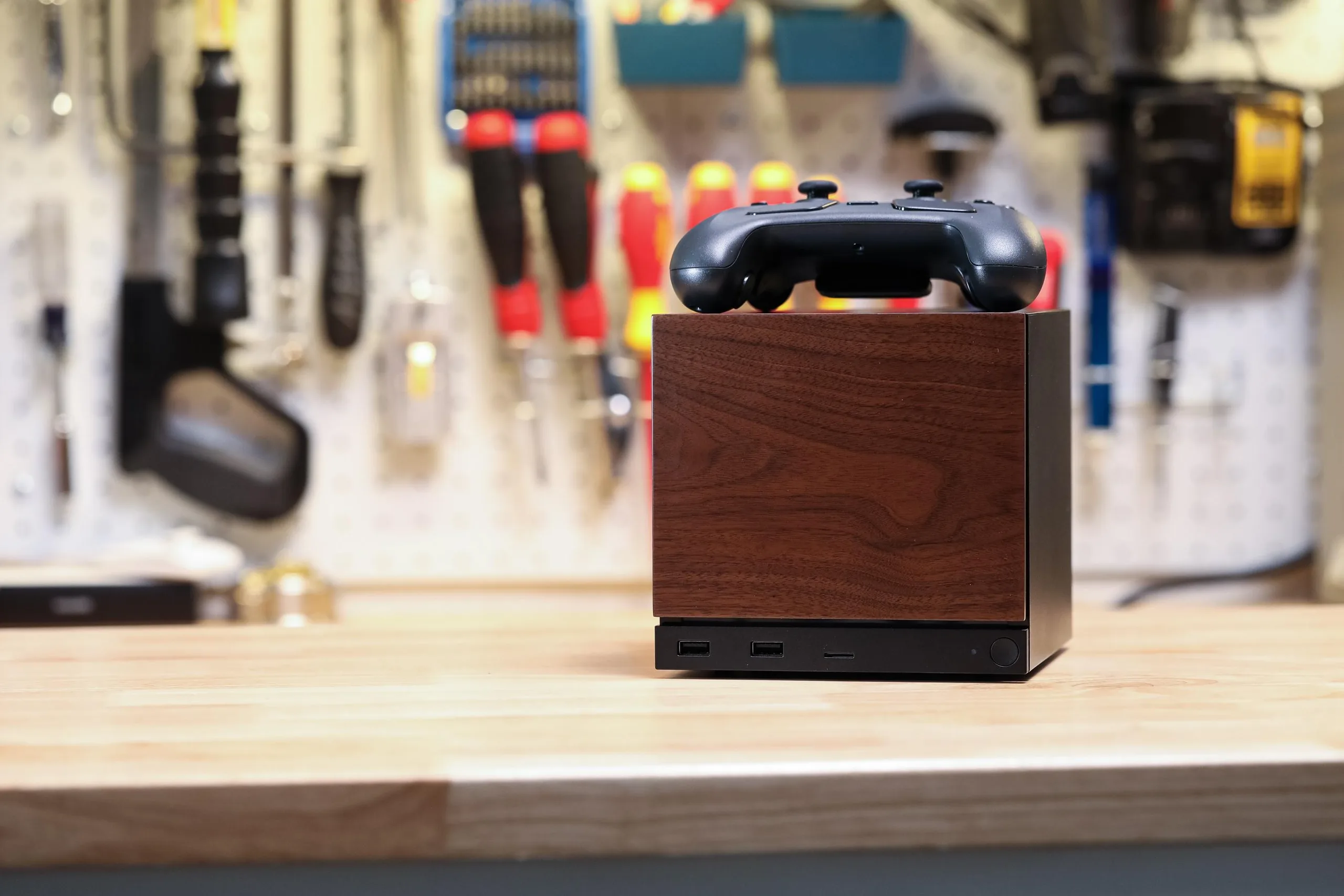
Who is the Steam Machine for? Valve is targeting existing Steam users who want a hassle-free living-room experience but are unwilling to compromise on library compatibility. It is not trying to win over console-only players with a cheap entry price. The 2 TB model includes two extra swappable faceplates, a red fabric panel and a solid walnut finish, a nod to the customization culture that Valve has cultivated with the Steam Deck.
For those with deep Steam libraries and a preference for couch gaming, the Steam Machine offers a cohesive, controller-friendly interface that no Windows-based living-room PC can match. But at $1,049, it is a luxury, not a necessity.
The Big Picture, Valve's Strategy and Market Position
This is Valve's second attempt at a Steam Machine. The first, launched in 2013, 2014 with third-party hardware partners, failed to gain traction. The PC gaming audience was not ready to abandon Windows for Linux-based SteamOS, and the fragmented hardware ecosystem confused consumers. This time, Valve is building everything itself, controlling the hardware-software integration tightly.
The success of the Steam Deck, launched in 2022 and still going strong after the LCD model was discontinued in December 2025, paved the way. The Deck proved that a bespoke Valve gaming device could thrive. The Steam Machine is essentially a more powerful, TV-oriented sibling. Valve's recent decision to raise Steam Deck pricing by $300, citing the same component cost pressures, indicates that the era of aggressively priced PC handhelds and consoles may be over, at least temporarily.
Yet the Steam Machine is not an assault on the console market. It is a passion project, built for the most dedicated segment of the Steam audience. Valve is not trying to sell millions of units; it is trying to deliver a polished experience for those who value it enough to pay the premium. The lottery system, the component shortages, and the selling-at-cost pricing all reinforce this message.
For the small number of players who win the reservation lottery and pay $1,049 or more, the Steam Machine will be a powerful, compact living-room PC with access to thousands of Steam games, a stylish design, and the customizability that PC enthusiasts love. But for the vast majority of consumers, it will remain a curiosity, an interesting but inaccessible product that costs more than a PlayStation 5 and requires an improbable stroke of luck to even purchase.
What does this mean for the future of Valve hardware? If the Steam Machine remains a niche artifact, will Valve pivot back to a broader strategy, or is this the new normal for premium PC gaming devices? The answer will define not just this product, but Valve's role in the living room for years to come.