Silent Hill f’s Writers Read 100 - 200 Books a Year to Master Ryukishi07’s Horror Style - Here’s Why It Worked
When Konami revealed that the scenario team behind Silent Hill f pressured each other to read 100 to 200 books annually during development, the gaming world did a double take. Was this a grueling...

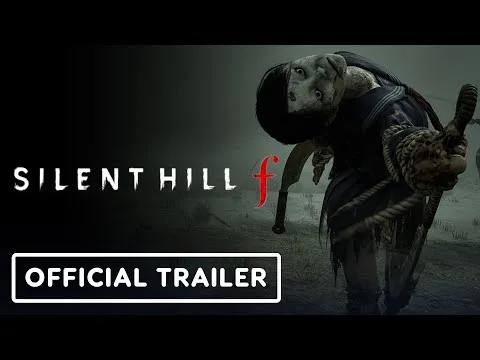
When Konami revealed that the scenario team behind Silent Hill f pressured each other to read 100 to 200 books annually during development, the gaming world did a double take. Was this a grueling mandate from management? Or a creative spark lit by peer-driven ambition? At CEDEC 2026, producer Motoi Okamoto clarified: it was never an order, it was a self-imposed challenge to absorb the literary DNA of celebrated horror author Ryukishi07. This article unpacks what that reading regimen looked like, why it was necessary, and whether such extreme input truly translates into unforgettable game narrative.
The Revelation at CEDEC 2026, Peer Pressure, Not Mandate
The bombshell came during Okamoto’s “Art of Producing Silent Hill” lecture at CEDEC 2026, Japan’s largest game developer conference. As first reported by Japanese site GameWatch and later translated for global audiences, Okamoto stated directly: Within the team, we put pressure on each other, especially among the scenario writers, to read at least 100 to 200 books a year.
This phrasing is critical. Early coverage sometimes framed the reading as an enforced directive from management, a “push” or “encouragement” from above. But Okamoto’s own words paint a different picture: it was internal peer pressure, a challenge writers set for themselves. The distinction matters because team-driven motivation often fosters deeper commitment than top-down orders. Writers who voluntarily adopt such a rigorous pace are more likely to internalize the material, rather than simply checking a box.
Why such an extreme target? According to Okamoto, the goal was to ensure the scenario team fully understood Ryukishi07’s “style and quirks” before writing alongside him. Ryukishi07, creator of acclaimed visual novels Higurashi When They Cry and Umineko When They Cry, was hired as the scenario writer for Silent Hill f precisely because of his unique blend of Japanese horror and mystery. The reading included his works, but also a broad diet of fiction to absorb his literary DNA.
Why Read 100 to 200 Books? The Ryukishi07 Connection
Ryukishi07’s writing is renowned for its psychological depth, layered mysteries, and unsettling atmosphere. For instance, his works often feature closed circles of suspects, supernatural elements grounded in psychological realism, and a layered narrative structure that rewards rereading, all traits that demand a deep understanding from any co-writer. To match his voice, the team needed more than a surface-level familiarity. Okamoto argued that strong “input”, diverse literary influences, generates better ideas and perspectives. This philosophy echoes how many legendary game writers approach their craft, but few have quantified it so starkly.
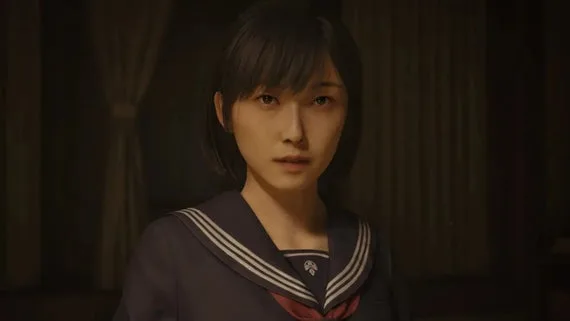
The team’s goal was not to mimic Ryukishi07, but to achieve a shared vocabulary of horror. Silent Hill f is the first mainline entry set in Japan, specifically 1960s Japan, and the first to explore the concept of finding the terror in beauty. To write a script that felt cohesive despite multiple writers, everyone needed to speak the same narrative language. Reading 100 to 200 books a year, roughly two to four books per week, was the method they chose to forge that common ground.
What They Actually Read, Beyond Ryukishi07
While Ryukishi07’s visual novel scripts were central, the sheer volume of the reading target implies a wide range of genres. Horror, mystery, literary fiction, and historical works likely filled their shelves. Given Silent Hill f’s setting and thematic emphasis, it’s plausible the team delved into Japanese literary horror. Okamoto did not reveal a definitive reading list, but based on the game’s 1960s Japan setting and its focus on finding the terror in beauty, it’s reasonable to infer authors like Edogawa Rampo, whose early 20th-century detective stories ooze dread, or the kaidan folklore tradition. Junji Ito’s manga, with its focus on body horror and the grotesque, might also have been on the list.
The reading load is extreme for anyone, let alone a game development team also handling scripting, dialogue, and localization. Two to four books per week is a pace commonly associated with professional critics and literary scholars, not AAA game developers. Okamoto framed it as a “challenge” rather than a requirement: team members could self-select, and the peer pressure likely meant accountability, not punishment. Still, maintaining that pace while developing a game speaks to an extraordinary level of dedication.

Did It Pay Off? Silent Hill f’s Narrative Reception
Silent Hill f released in 2025 to positive reviews, with particular praise for its narrative. As of this writing, the game holds an 86 on Metacritic, with critics singling out the writing for its emotional complexity and thematic cohesion. The game’s concept of finding the terror in beauty translated into a script that avoided tired horror clichés and instead drew from a rich well of literary influences.
Comparisons to earlier Silent Hill titles are instructive. While the series has always valued atmosphere, Silent Hill f was lauded for its fresh, literary quality, a direct contrast to the more abstract and often fragmented storytelling of recent entries. The reading regimen may have contributed to a more disciplined, reference-rich script. However, correlation is not causation. Good writing also requires talent, editing, and seamless integration with game design. The team’s extreme input likely helped, but it wasn’t a magic bullet.
What Game Writing Can Learn from Silent Hill f
Many narrative-driven studios, BioWare, CD Projekt Red, and others, encourage reading, but rarely with such specific targets. The Silent Hill f case suggests that when a team is working with a strong authorial voice like Ryukishi07, immersing themselves in that voice can build consistency across multiple writers. It’s a form of method writing for the development cycle.
But there are potential downsides. The pressure could lead to superficial reading, scanning pages to hit a number rather than absorbing content. It might also exclude writers who learn differently, whether through film, games, or hands-on workshops. Not every developer will thrive under a 200-book annual mandate.
The broader takeaway is that investing in “input” is undervalued in game development. Stories don’t emerge from a void; they are shaped by what creators consume. Okamoto’s approach is a bold reminder that great game writing often begins with a library card. The only mandate that truly mattered was the team’s own ambition to create a horror story worthy of its literary ancestors, a challenge they met one book at a time.