Sega's $776 Million Gamble: Why the Rovio Acquisition Stumbled in a Shifting Mobile Market
A strategic acquisition designed to forge a mobile gaming empire has instead resulted in a sobering financial reckoning. In February 2026, Sega Sammy Holdings announced a staggering ¥30.4 billion...

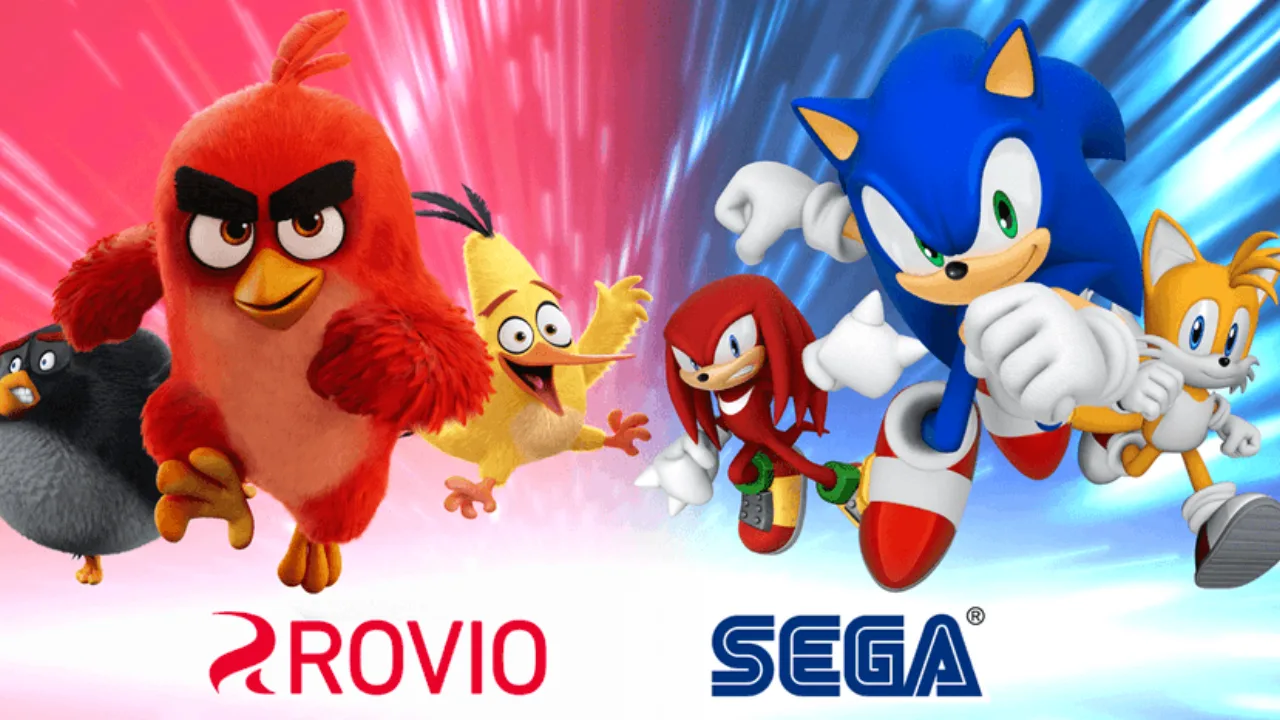
A strategic acquisition designed to forge a mobile gaming empire has instead resulted in a sobering financial reckoning. In February 2026, Sega Sammy Holdings announced a staggering ¥30.4 billion ($198 million) write-down on its high-profile purchase of Angry Birds creator Rovio Entertainment. This impairment charge, a formal admission that the acquired assets are now worth significantly less than the $776 million paid just two and a half years prior, forces a critical question: What went wrong with a deal meant to be a cornerstone of Sega's future? The $776 million price tag itself was a forward-looking bet, signaling Sega's belief in Rovio's potential as a future mobile engine, not merely the value of its historic Angry Birds revenue. The official line points to a "rapidly changed" mobile battlefield, but the story reveals a deeper tension between ambitious cross-media synergy and the unforgiving, hyper-competitive reality of the modern app store.
The Deal and The Dream: Sega's Mobile Ambitions
In September 2023, Sega finalized one of its largest-ever acquisitions, purchasing the Finnish mobile studio Rovio for $776 million. The strategic vision was clear and ambitious. Sega, a company with legendary console IP but a historically challenging relationship with the mobile market, sought to leverage Rovio's proven expertise in casual gaming, live operations, and franchise management. The goal was nothing short of establishing a dominant mobile publishing arm, using Rovio as both a revenue engine and a blueprint.
Post-acquisition, Sega moved quickly to activate its synergy plays. By March 2024, a crossover event between Angry Birds and Sega's flagship icon, Sonic the Hedgehog, was live across several mobile titles, signaling the start of a connected IP universe. On the media front, Sega announced it would co-produce The Angry Birds Movie 3 alongside Rovio, targeting a 2026 release. Furthermore, Rovio unveiled Angry Birds Legends, a new mobile strategy RPG, as part of a forward-looking portfolio refresh. On paper, the plan was a textbook example of integrated franchise building: leverage games to fuel movies, use movies to boost games, and cross-pollinate audiences between storied IPs.
The Reality Check: A $198 Million Write-Down
The financial optimism surrounding this plan evaporated in Sega's February 2026 report. The company disclosed an impairment loss of ¥30.4 billion ($198 million) specifically related to the Rovio acquisition. In corporate terms, a write-down is a stark admission that the future economic benefits from an asset will be less than its current book value. This accounting move effectively reduced the stated value of Rovio on Sega's balance sheet from $776 million to approximately $578 million. Sega's report candidly noted that Rovio's mobile game business profitability had fallen "below the initial forecast," leading to these "extraordinary losses" and a subsequent revision of the parent company's full-year operating forecast.
Blaming the Battlefield: The "Rapidly Changed" Mobile Market
Sega's explanation for the shortfall was singular and pointed: a "rapidly changed" and intensely competitive global mobile game market. This is more than corporate boilerplate; it speaks to a fundamental shift in the industry's landscape post-2023. The company specifically highlighted "fierce competition for customer acquisition," which is the core economic challenge in a saturated marketplace.
The mobile gaming gold rush has matured into a brutal war of attrition. User acquisition costs have skyrocketed, discovery on crowded app stores is increasingly difficult, and player attention is fragmented across a sea of high-quality, free-to-play titles. For a franchise like Angry Birds, which peaked in cultural ubiquity over a decade ago, cutting through this noise requires immense and sustained marketing investment. The hyper-casual boom has evolved, and the market now rewards deep live service mechanics, constant content updates, and sophisticated monetization—an environment where even famous IP cannot guarantee success without flawless execution and significant ongoing spend.
The Synergy Gap: Crossovers vs. Core Profitability
This brutal market reality is particularly challenging for Sega's core task: managing a legacy franchise whose glory days are a decade past. It also exposes a potential gap in the synergy strategy. While the Sonic crossover and the announcement of The Angry Birds Movie 3 generated headlines, the critical industry question is whether such initiatives translate into the sustained daily engagement and revenue needed for core mobile profitability.
Cross-media events can drive temporary spikes in user activity, but their long-term return on investment in a saturated market is uncertain. The strategic bet on a 2026 movie to meaningfully boost game metrics in 2024 and 2025 represents a significant timing risk. This context casts Sega's efforts in a new light: the "plan on paper" for integrated franchise building is colliding with the immediate, grinding pressure of user retention and monetization in a market that has largely moved on from simple casual puzzle games to complex live-service titles.
The Road Ahead for Sega and Rovio
The immediate impact of the write-down is a financial scar and a revised, more cautious outlook for Sega Sammy. The long-term strategic implications are now the critical unknown. Will Sega double down on its integration plan, pouring more resources into Rovio to chase the original vision? Or will the subsidiary see reduced investment and a strategic pivot toward cost management and milking its existing catalog?
The future of announced projects hangs in the balance. Is The Angry Birds Movie 3, now a Sega co-production, viewed as a crucial brand investment or a potential cost center? Does Angry Birds Legends represent the future of the franchise, and will it receive the marketing support needed to compete in the very market Sega cited as the problem? The original synergy vision—of a powerful mobile engine fueling a cross-media empire—is now under severe stress.
Sega's $198 million write-down is more than a financial adjustment; it's a verdict on a strategy that underestimated the mobile market's volatility while overestimating the power of cross-media synergy to revive a legacy franchise. It serves as a stark cautionary tale for the industry: even the most famous intellectual property and carefully constructed plans are vulnerable to the brutal, fast-paced dynamics of the mobile ecosystem. Acquisitions based on past performance are no guarantee of future success when the market itself is in constant flux. To salvage its remaining $578 million investment, Sega must now pivot from grand empire-building to agile, ruthless franchise management, proving it can nurture the Angry Birds IP in a market that has long since moved past its peak.
Tags: Sega, Rovio, Angry Birds, Mobile Games, Acquisitions