Reigns: The Witcher Review - A Bard's Tale of Swipes, Swords, and Silliness
The Bard's Gambit - Core Concept & Gameplay Loop At its heart, Reigns: The Witcher is built upon the foundational mechanic that defines Nerial’s Reigns series. You navigate Dandelion’s tall tales by...

The Bard's Gambit - Core Concept & Gameplay Loop
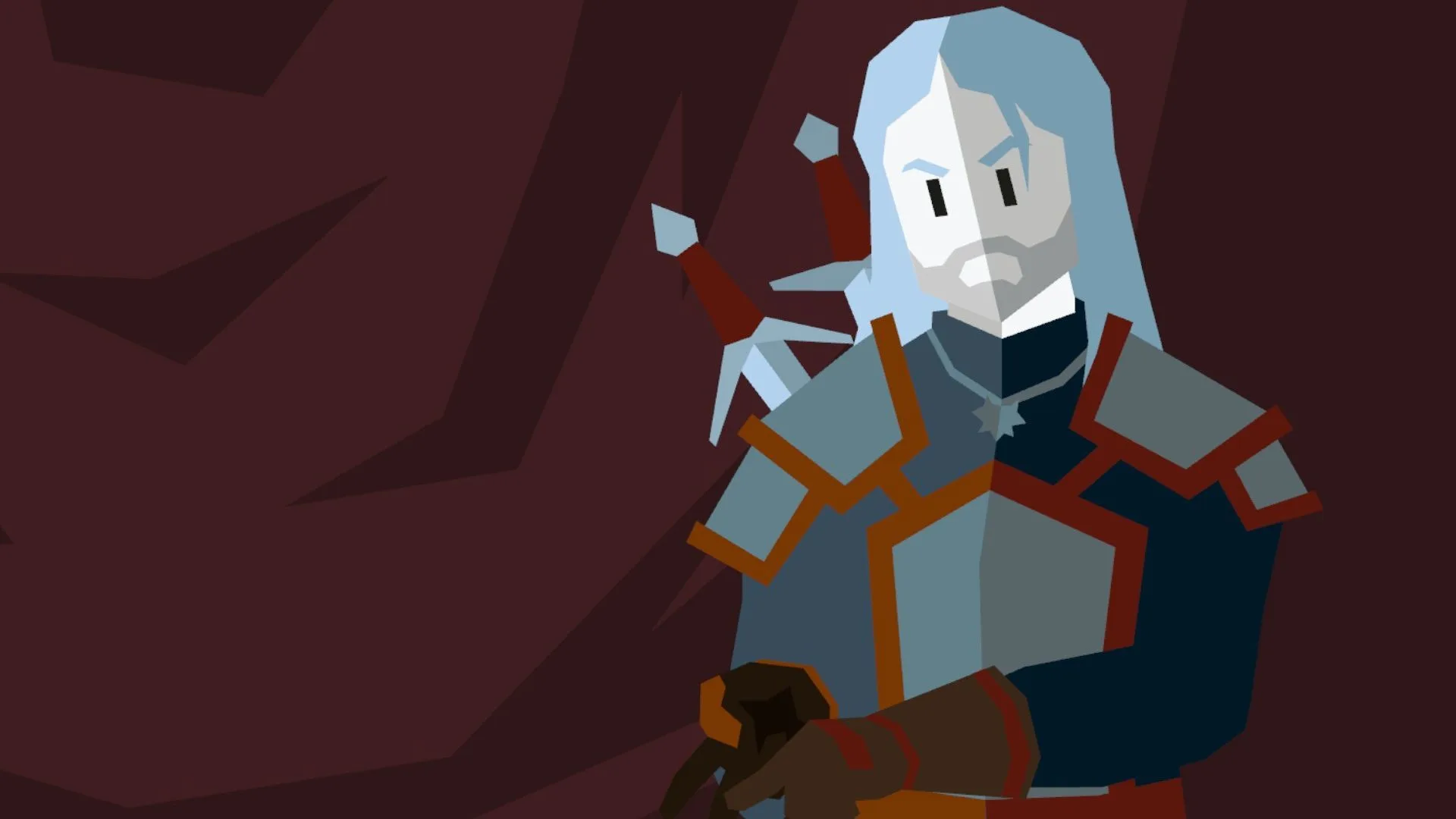
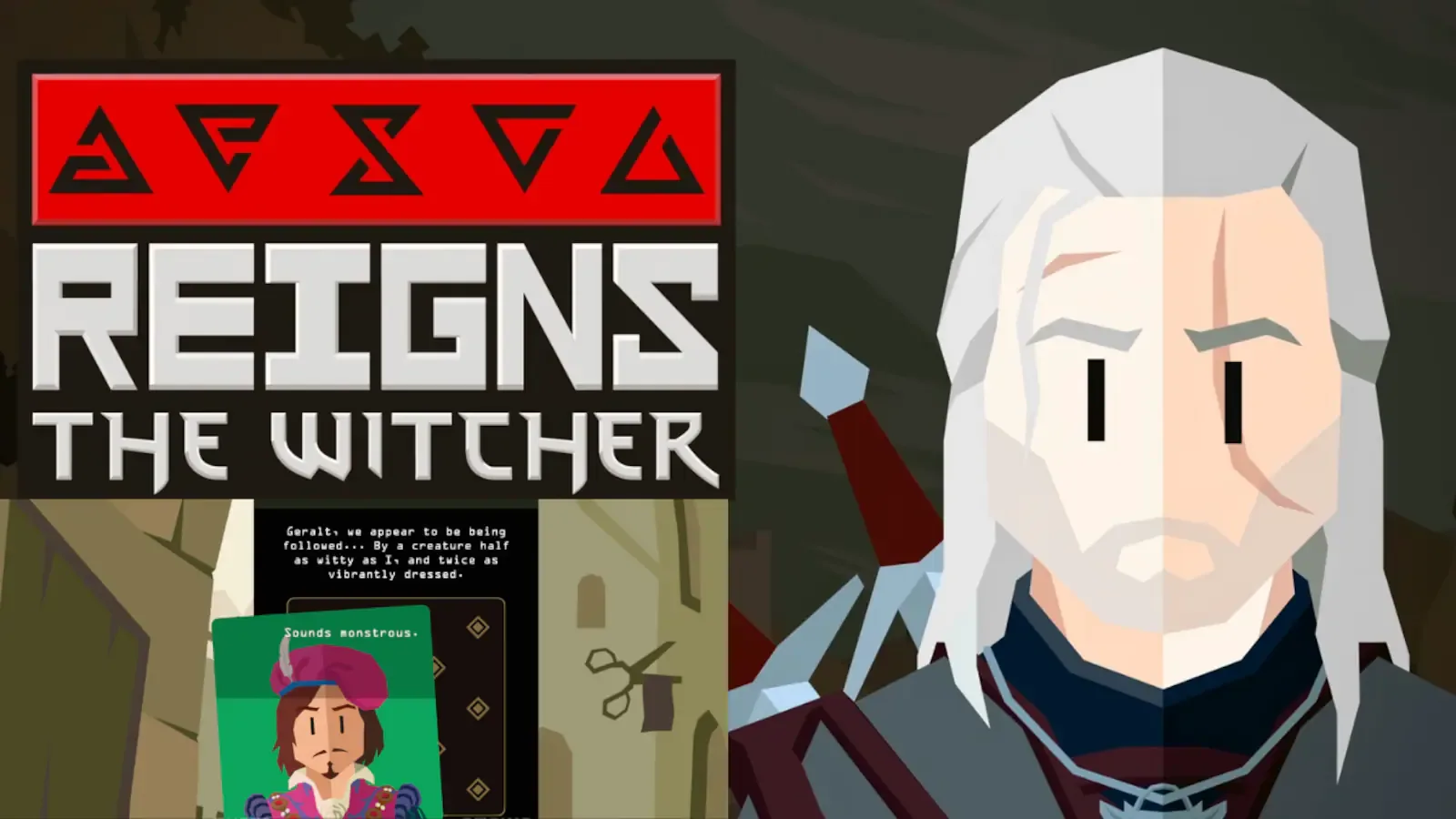
At its heart, Reigns: The Witcher is built upon the foundational mechanic that defines Nerial’s Reigns series. You navigate Dandelion’s tall tales by making binary decisions, swiping cards representing characters, creatures, and dilemmas either left or right. A noble offers you a contract? Swipe right to accept, left to refuse. A monster blocks your path? Swipe right to fight, left to attempt diplomacy. This elegant simplicity belies the game’s primary strategic challenge: balancing four key faction meters displayed at the top of the screen.
These meters—Human, Non-Human, Sorcerer, and Witcher Focus—are in a constant state of flux. Every decision you make will raise some and lower others. Letting any meter fill completely or empty entirely results in a grisly (and often comical) death for Geralt, ending your current run. Keeping the White Wolf alive becomes a precarious juggling act. Do you side with a village against a monster, boosting your Human standing but enraging the Non-Human faction? Or do you take a more nuanced, Witcher-like path and risk displeasing everyone?
This all unfolds within a roguelite structure. Each run presents you with three random objectives to complete, such as defeating a specific monster or finding a particular character. Death is frequent and resets your progress, but successful runs earn experience to permanently level up Dandelion. This meta-progression unlocks new cards, characters, spells, and story branches, slowly fleshing out the game’s surprisingly substantial content and encouraging “just one more run” to see what new absurd scenario awaits.
A Witcher's Work - New Mechanics & Combat
While card-swiping forms the narrative backbone, Reigns: The Witcher introduces two significant new mechanics to break up the pace and inject variety. The most prominent is a rhythmic, arcade-style combat minigame. When a swipe leads to battle, the perspective shifts to a grid. Geralt stands at the center as colored tiles—representing sword attacks, dodges, and Signs like Igni or Aard—flow toward him. Players must tap or collect these tiles in sequence to execute moves, dodging enemy attacks in a simple yet surprisingly tense rhythm-action segment.
The second new system is the “song puzzles.” Between adventures, you help Dandelion compose poems and ballads by arranging collected “inspiration” cards into a coherent structure. Solving these puzzles grants permanent bonuses, tying the game’s meta-progression directly to its core joke: you are literally building the bard’s legend.
These additions are a double-edged silver sword. They successfully prevent the gameplay from becoming monotonous and add a layer of active participation. However, the combat, in particular, has proven divisive. Some players appreciate the skill-based interlude, while others find its difficulty spike jarring and its mechanics tricky to master, noting it can feel disconnected from the strategic decision-making of the main game.
Tone, Content, and Fan Service
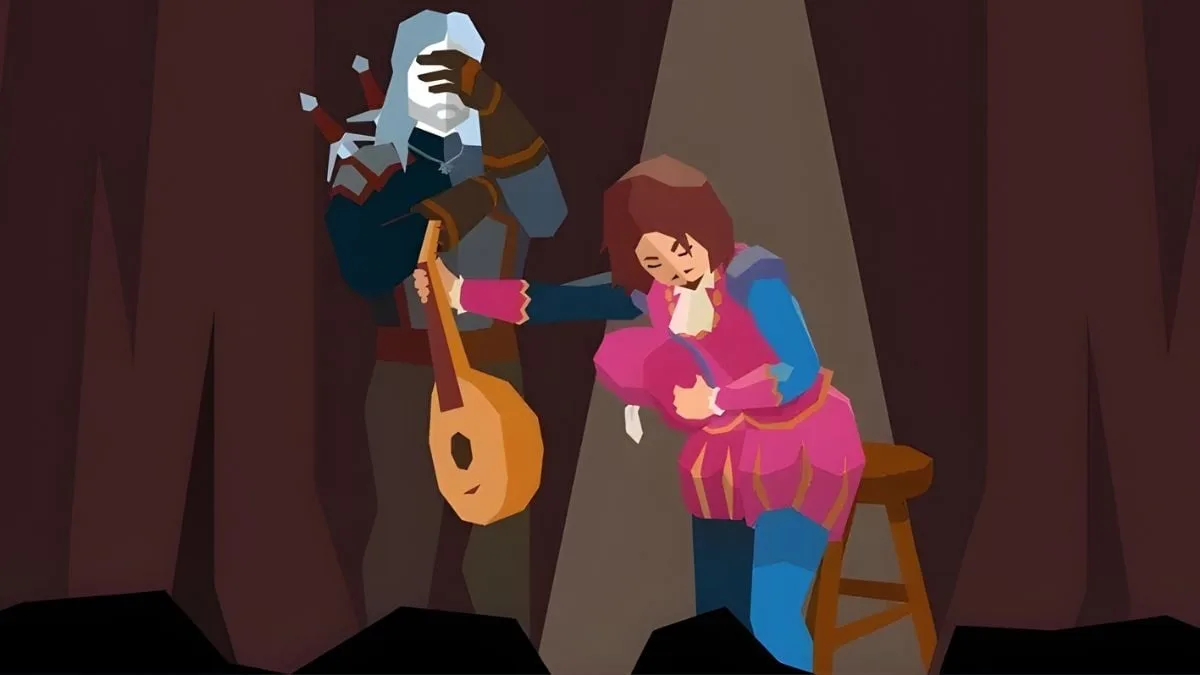
This is not the Witcher of the RPGs or the novels. This is The Witcher as recounted by Dandelion in a tavern after his seventh tankard. The tone is consistently, gloriously silly. Geralt might be forced to judge a bardic competition, get roped into a ridiculous political scheme over a missing spoon, or engage in witty banter with a deeply unimpressed Yennefer. The writing is sharp, witty, and fully embraces its role as an unreliable, self-aggrandizing narration.
The fan service is deep and delightful. Cameos abound, from major figures like Triss, Vesemir, and Regis to more obscure characters, all rendered in the game’s charming, minimalist art style. They are used not for lore accuracy, but for humor. Seeing these typically solemn characters dropped into Dandelion’s farcical scenarios is a constant source of joy.
This approach makes the game remarkably accessible. A newcomer can enjoy it as a clever, funny narrative game about balancing resources. But for fans, there’s an extra layer of appreciation. Recognizing a deep-cut reference, understanding why a particular choice would infuriate Yennefer, or simply enjoying the parody of the franchise’s darker themes adds significant value and elevates the experience.
The Critical Balance - Strengths vs. Grind
The critical consensus for Reigns: The Witcher, with scores ranging from 65/100 to 8/10, paints it as a fun, funny, and clever casual game with notable pacing issues. It is not a deep narrative successor to The Witcher 3, nor is it trying to be. It is a snack-sized parody that understands its source material well enough to lovingly mock it. This identity frames both its clear strengths and its consistent flaws.
On the positive side, reviewers widely praised its clever writing, substantial content, and perfect suitability for short play sessions on PC or mobile (it’s Steam Deck Verified). The strategic depth hidden within the simple meter management is frequently cited as a surprise highlight. For a $5.99 title, the amount of gameplay and replayability is substantial.
The criticisms, however, stem from the very structure that provides that replayability. To unlock all the game’s secrets, endings, and cards, players must engage in a potentially repetitive grind. The roguelite progression can feel slow, and the random nature of card draws and objectives means that failure can sometimes feel arbitrary or unfair, a consequence of poor luck rather than poor strategy. This grind is the primary barrier for completionists, who may find the journey to 100% more tedious than thrilling.
Reigns: The Witcher is a successful, if niche, fusion. It excels not as a canonical expansion of the lore, but as a lighthearted, pick-up-and-play reinterpretation through Dandelion’s rose-tinted (and wine-stained) spectacles. It offers genuine laughs, surprisingly engaging strategic gameplay, and a unique way to revisit the Continent. While the grind to see everything can test one’s patience, the journey there is filled with more than enough wit and charm to make it worthwhile. This is a game best enjoyed by fans of narrative-driven casual experiences and by Witcher devotees who possess the one trait Geralt often lacks: a sense of humor about the whole damn thing.
Tags: Reigns: The Witcher, Game Review, The Witcher, Narrative Game, Mobile Gaming