Quantic Dream's MOBA Gamble: Why Spellcasters Chronicles Launched Into a Crowded Arena
A Studio's Radical Pivot: From Narrative to MOBA For over two decades, Quantic Dream has built its reputation on a singular pillar: the premium, choice-driven narrative adventure. Their games are...

A Studio's Radical Pivot: From Narrative to MOBA
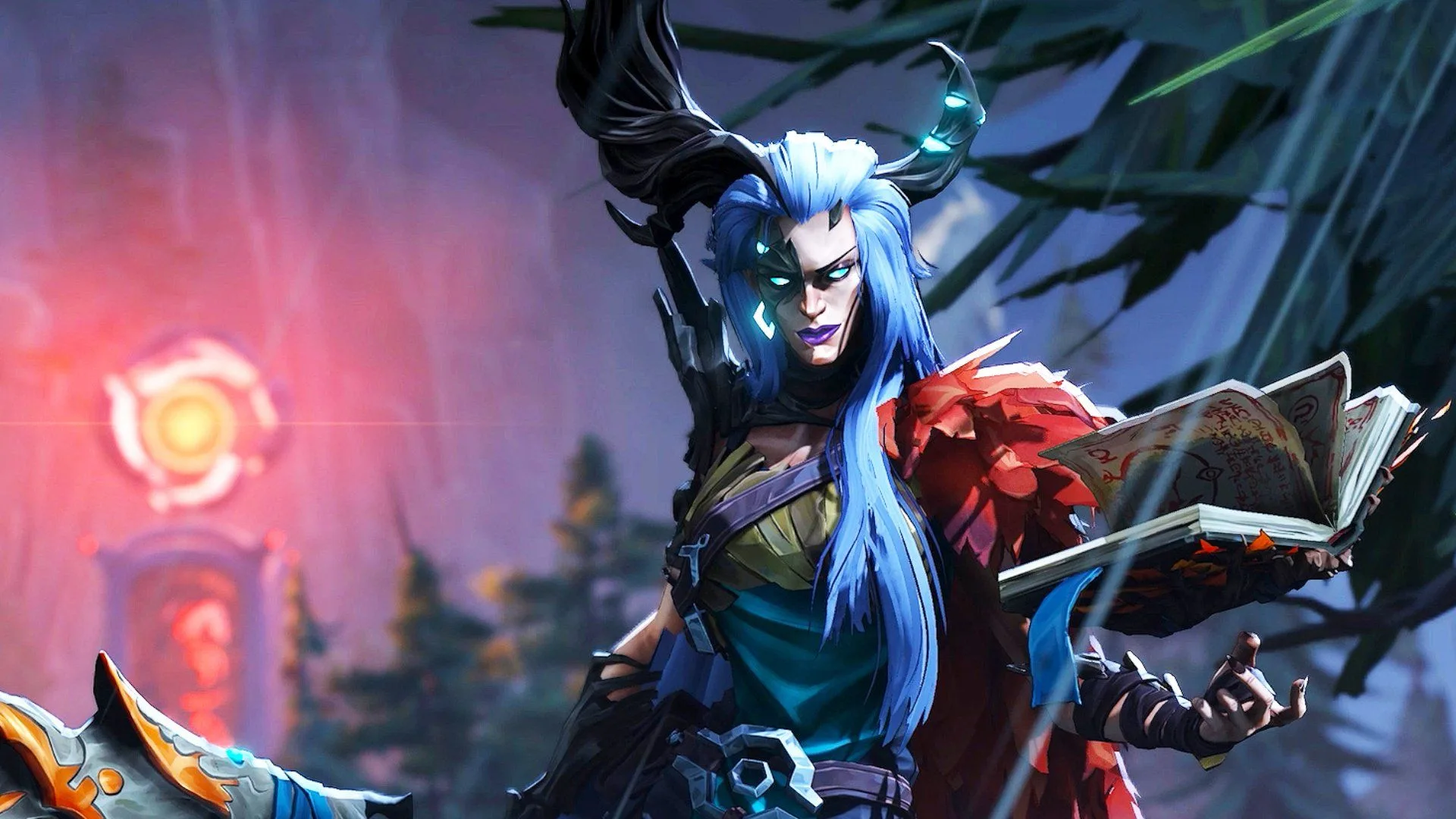
For over two decades, Quantic Dream has built its reputation on a singular pillar: the premium, choice-driven narrative adventure. Their games are defined by high production values, Hollywood-caliber performances, and branching storylines. The announcement of Spellcasters Chronicles, a free-to-play competitive MOBA, represented not just a new game, but an identity crisis in action. It signaled a dramatic shift from crafting solitary, contemplative experiences to entering the relentless, community-driven arena of live-service PvP.
The game's core innovation aimed to justify this leap. Spellcasters Chronicles proposed to disrupt the established MOBA formula by replacing the traditional in-match item shop with a deckbuilding system. Before a match, players would construct a deck of ability-enhancing cards, which they could then draw from and play during the game to augment their hero. This mechanic promised a layer of strategic pre-planning and in-the-moment adaptation more commonly associated with card games like Hearthstone, grafted onto the lane-pushing fundamentals of League of Legends or Dota 2.
Furthermore, the choice of an Early Access model on Steam and the Epic Games Store was itself a significant and risky departure. Quantic Dream is a studio accustomed to delivering final, polished products. Early Access is a public development phase, often messy and iterative, reliant on community feedback to shape the game—a far cry from the controlled, authorial vision the studio is known for. This decision placed Spellcasters Chronicles in a vulnerable, unfinished state from day one, banking entirely on the strength of its novel hook to attract and retain a foundational player base.

Launching Into the Storm: The February 2026 Calendar Crunch
The ambition of Quantic Dream's pivot was matched only by the improbability of its chosen launch window. Spellcasters Chronicles arrived simultaneously with three major events that collectively dominated the PC gaming landscape:
- Bungie's Marathon Server Slam: A massive, open beta weekend for one of the most anticipated games of the year. As a final infrastructure stress test before Marathon's full launch on March 5, 2026, it offered exclusive cosmetic rewards, drawing millions of players to its sci-fi extraction shooter gameplay.
- The Horizon Hunters Gathering Playtest: The first public hands-on for another promising new IP, capitalizing on the co-op action genre's popularity and pulling in curious early adopters.
- Steam Next Fest: Valve's flagship digital event, a week-long festival where hundreds of demos for upcoming games vie for attention from press and players alike, making discoverability for any single title exceptionally difficult.
Against this backdrop, Quantic Dream's marketing approach seemed reserved, if not underpowered. The launch was announced primarily through the studio's own social media channels, a relatively low-key strategy that stood in stark contrast to the industry-wide hype machines driving its competitors. The challenge was monumental: capturing player attention, securing crucial Twitch streaming visibility, and convincing gamers to download and commit to an unproven Early Access MOBA when they could be earning exclusive loot in Marathon or sampling dozens of other games for free.
First Impressions: Deckbuilding Dreams vs. Technical Realities
The initial reception to Spellcasters Chronicles was a tale of two reactions. A niche group of players and genre enthusiasts expressed genuine curiosity about the deckbuilding mechanic, seeing potential in its hybrid design. However, this intrigue was swiftly and decisively overshadowed by a wave of player reports focusing on the game's technical state—a direct consequence of its Early Access launch.
Community forums and Steam reviews quickly filled with complaints about performance issues, server instability, and a variety of bugs that hampered the core gameplay experience. For a competitive MOBA, where split-second reactions and consistent performance are paramount, these technical hurdles proved to be a critical barrier. The innovative card system became a secondary talking point, buried under discussions of lag, crashes, and balance problems.
The most concrete metric of this struggle was the player count. At the time of reporting, Spellcasters Chronicles achieved a peak concurrent player count of just 888. In the context of Steam, where popular titles regularly see peaks in the hundreds of thousands, and especially during a period flooded with alternatives, this figure painted a clear picture: the game failed to capture a significant audience at launch, stifled by both external competition and its own technical shortcomings.
The Marathon Factor: A Case Study in Contrasting Betas
The juxtaposition with Bungie's Marathon Server Slam is particularly instructive. While both were technically "tests," their execution, player psychology, and studio preparedness differed vastly.
The Marathon Server Slam, running from February 26 to March 2, 2026, was a limited-time event with a clear, rewarding purpose. It offered a substantial slice of content—two maps, five character classes, and faction progression—and incentivized participation with exclusive cosmetic rewards that would carry over to the full game. Players engaged in a focused, goal-oriented weekend, stress-testing servers while working towards tangible loot. It was a celebratory, high-energy preview of a polished product.
Spellcasters Chronicles, by contrast, asked for an open-ended Early Access commitment to an unproven concept. There was no limited-time frenzy, no exclusive carry-over rewards—just an invitation to help build an unfinished game. In the shadow of Marathon's event-driven spectacle, Quantic Dream's proposition felt more like homework than a party. The sheer gravitational pull of a Bungie franchise in the white-hot extraction shooter genre likely siphoned away the exact core PC gaming audience—invested, competitive, and hardware-ready—that Spellcasters Chronicles desperately needed to bootstrap its community.
The Road Ahead for Spellcasters Chronicles
The future of Spellcasters Chronicles is now defined by a steep uphill climb of its own making. The immediate path is non-negotiable: the studio must prioritize and relentlessly address the technical issues flagged by its small but vital Early Access community. Stability and performance are the absolute baseline for any competitive game's survival, and launching without that foundation has proven costly.
Beyond fixes, Quantic Dream may need to consider a strategic reset. This could take the form of a significant "relaunch" or a major content update (like a Season 1 launch) marketed aggressively outside the shadow of a calendar crunch. Finding a quieter moment to reintroduce the game's novel deckbuilding hook is essential to giving it a fair hearing.
The fundamental question remains: Is the core innovation strong enough? If Quantic Dream can deliver a polished, stable MOBA experience, does the card-based system offer a compelling enough reason for players to diverge from established giants? It presents a high strategic ceiling but also a steeper learning curve. The studio must now prove that its creative gamble can translate into deep, satisfying, and—above all—stable gameplay that can carve out a niche in one of gaming's most competitive genres.
The saga of Spellcasters Chronicles thus far is a masterclass in how market timing and technical polish are not mere details, but existential factors. For Quantic Dream, the path forward is a brutal test of post-launch resilience and a reassessment of launch strategy. For the industry, it's a stark reminder that in an era of perpetually crowded calendars, even the most innovative idea needs a clear runway—and a stable build—to ever have a chance to take flight.