Metroid Prime 2D Demake: Fans Spent 3 Years Building a Secret 2D Love Letter to a 3D Classic
There is a special kind of tension that hangs over the best fan games. It's the feeling of borrowed time, a miracle existing only because no one in a legal department has noticed it yet. For the team...


There is a special kind of tension that hangs over the best fan games. It's the feeling of borrowed time, a miracle existing only because no one in a legal department has noticed it yet. For the team behind the Metroid Prime 2D demake, that tension has been the backdrop for three years of work. The game is out now, it's exceptional, and the people who made it know the clock is ticking.
"Hopefully as many people as possible get to play it before Nintendo flips out," one of the project's creators noted at launch. That line captures modern fan development in a single breath: passion can be erased in an afternoon, no matter how much love built it. But before we discuss the legal sword hanging overhead, let's talk about why this game is worth racing to play.
A 3D Classic Reborn in Two Dimensions
For the uninitiated, a "demake" reimagines a game in an older, more restrictive visual and mechanical style. Where Metroid Prime was first-person and fully 3D, this fan project rebuilds the adventure as a 2D side-scroller. Simple in theory. A staggering act of translation in practice.
The demake takes the pillars of Prime: atmospheric exploration, scanning alien lore, morph ball mazes, visor mechanics, and cinematic boss fights, and rebuilds them in the language of classic 2D Metroid. The result sits between Super Metroid and Metroid Fusion in feel, with tight platforming and the interconnected, lock-and-key world design fans adore.
What makes it sing is the conversion of first-person ideas into a lateral view. The scan visor becomes an overlay that highlights objects without stopping your momentum. Thermal imaging sequences force quick visor switching, just like the original, but with side-scroller spatial awareness. Morph ball tunnels are as devious as ever, threading over magnetic rails with a precision that would make the Space Pirates jealous.
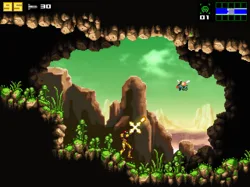
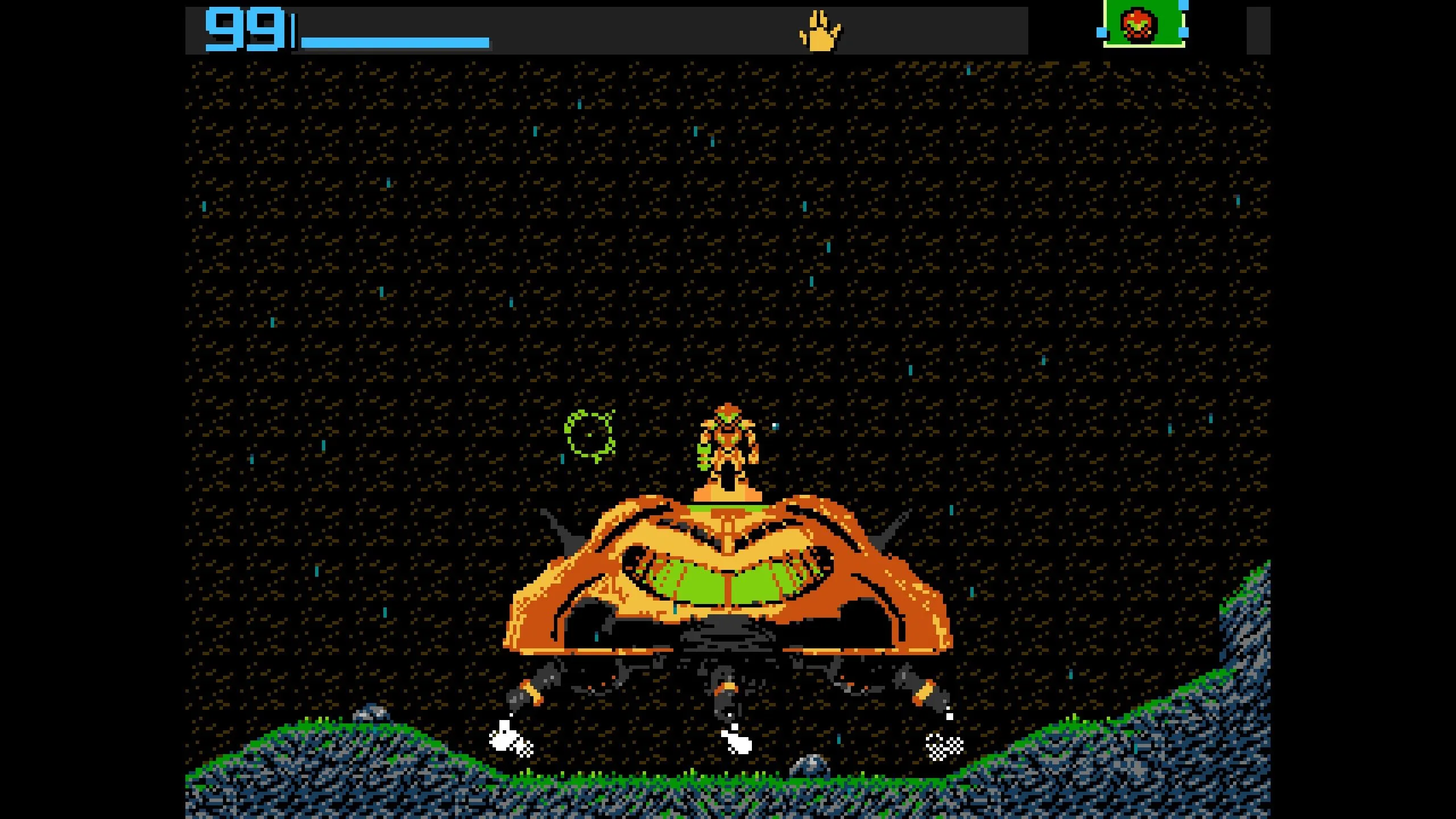
Visually, this is moody pixel art. Rain-slicked ruins, overgrown Chozo temples, and ominous Phazon mines translate beautifully into 2D. Flickering fires cast long shadows, and caverns press down with oppressive darkness. Samus is alone on a hostile planet, and the screen never lets you forget it. This doesn't just look like Metroid; it feels like Metroid. The sound design matches that commitment, with reworked versions of familiar Prime tracks and original compositions that reinforce the loneliness of Tallon IV without ever overwhelming the atmosphere.
Three Years in the Shadows: The Secret Development
Building a fan game is rarely a linear process. Building one in total secrecy adds another layer of difficulty entirely. The team behind Metroid Prime 2D spent three years developing the project without official trailers, public development blogs, or even a website that might attract the wrong kind of attention. Details circulated in private spaces, and playtesters were chosen for both skill and discretion. In an era where visibility is standard practice, silence was a deliberate survival strategy.
The project was sustained entirely by volunteer labor. Programmers, pixel artists, composers, and playtesters contributed what they could, with no crowdfunding campaign, no storefront, and no commercial ambition. The motivation was pure affection for the source material, a desire to see a beloved game reimagined in the style of the 2D classics that defined the franchise for so many players.
That discipline carried through to launch. The game was released across multiple mirrors and distribution channels at once, a common tactic among fan projects hoping to reach as many players as possible before a platform holder can intervene. The creators knew the risk going in. They accepted it because, in their view, the work deserved to be seen.
Why It Rocks: Design and Fan Reception
The 2D conversion is more than a cosmetic reskin. Morph ball tunnels demand precise positioning and bomb-jumping timing, while visor modes become meaningful tools for navigating obstacles rather than simple gimmicks. The scan visor, reworked as a context-sensitive overlay, encourages environmental curiosity without breaking the rhythm of exploration. Boss encounters translate Prime's signature arena fights into side-scrolling battles, testing pattern recognition and reflexes in equal measure.
The faithfulness extends beyond mechanics. Scan logs return, filling in the world's background lore and rewarding players who take the time to investigate. Environmental storytelling carries a heavy load: a shattered laboratory, a half-buried Chozo statue, a corpse in a maintenance corridor. These are the details that defined Prime, and they all survive the transition to two dimensions.
Early player response has been overwhelmingly positive. Community threads praise the art direction, the fidelity to Prime's atmosphere, and the level of polish, a frequent stumbling block for volunteer projects that this one appears to have cleared with confidence. The PC-based release is easy to run, launches directly from a downloaded executable, and offers solid controller support, making it accessible to both longtime fans and newcomers curious about the demake concept.
Metroid Prime 2D also claims a unique place in the broader landscape of fan projects. AM2R rebuilt Metroid II in the style of Zero Mission, a 2D game remade with a 2D sensibility. This project does something closer to translation, compressing a first-person exploration game into a side-scrolling structure while preserving its distinct identity. That reversal is what makes it feel fresh, even for players who know the original Prime by heart.
The Nintendo Threat: A Takedown Waiting to Happen
No fan game of this ambition has ever enjoyed permanent safety. Nintendo has a well-documented history of aggressively protecting its intellectual property, issuing cease-and-desist letters to beloved projects such as AM2R and Pokémon Uranium. The legal mechanics are straightforward: a DMCA takedown notice can remove a game from major hosting platforms within hours, often without a public hearing or appeal.
That reality explains the creators' "before Nintendo flips out" framing. The community understands that this game's shelf life may be short, and players are being urged to download and experience it while the window remains open. The urgency is not manufactured; it is a direct consequence of the ecosystem in which fan games exist.
From Nintendo's perspective, projects like this occupy a gray area. They use proprietary characters, settings, and music without authorization, and the company has every right to enforce its copyrights. At the same time, fan tributes like Metroid Prime 2D generate goodwill and excitement around a franchise, functioning as unpaid advertising that most companies would envy. Nintendo has never publicly accepted that framing, and it likely never will.
There is an additional irony worth noting. Nintendo's own release schedule for 2D Metroid has been sparse, with a long gap between Fusion and Dread. In that silence, fans built their own 2D Metroid experiences, AM2R, this demake, and countless smaller projects. The demand was always there. The fan community proved it.
The Clock Is Ticking, But the Work Remains
None of this changes the arithmetic of fan game longevity. The clock is ticking, and a takedown could arrive at any moment. But even if the game eventually vanishes behind legal walls, the act of making it remains a victory. For three years, a team of volunteer developers, artists, and composers worked in careful secrecy, not for profit, not for recognition, but simply because they believed a classic deserved a new perspective. That passion cannot be deleted by a legal notice.
The window to play Metroid Prime 2D may be brief, which is precisely why it deserves attention now. Play it, appreciate it, and respect the labor behind it. In the world of fan games, the fleeting nature of availability is part of what makes the experience precious. The game exists, it is exceptional, and for the moment, it is here. That is exactly the kind of devotion that keeps the Metroid spirit alive, no matter what the lawyers say.