Meta's Horizon Worlds VR Gets a Reprieve: What the Reversal Means for the Metaverse
In the fast-paced world of tech, corporate strategies can shift with the wind. Few recent examples illustrate this volatility as starkly as Meta's bewildering dance around the fate of Horizon Worlds...

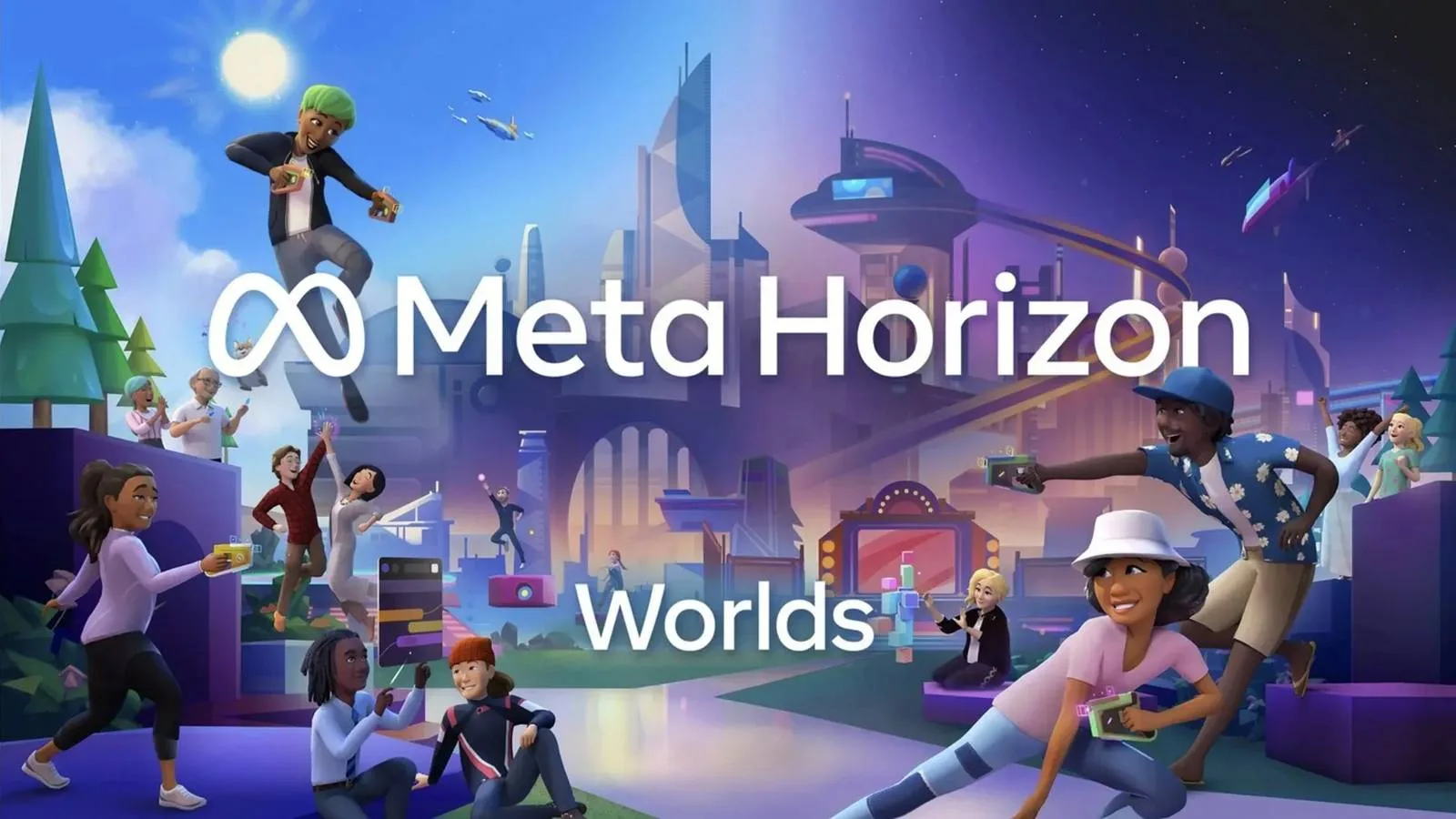
In the fast-paced world of tech, corporate strategies can shift with the wind. Few recent examples illustrate this volatility as starkly as Meta's bewildering dance around the fate of Horizon Worlds in virtual reality. In a move that left industry watchers and users scratching their heads, the company announced a definitive shutdown date for the VR version of its flagship metaverse platform, only to perform a complete about-face just weeks later. This indecision stems from a fundamental problem: despite massive investment, Horizon Worlds VR never overcame early criticisms of simplistic visuals and failed to achieve the mainstream adoption Meta needed. This sudden reversal is more than just a change of heart on a single app; it serves as a revealing microcosm of the larger, often confusing, state of Meta's metaverse ambitions. The central question now hangs in the air: does this reprieve signal a renewed, if scaled-back, commitment to VR social spaces, or is it merely a temporary stopgap as the company fundamentally redefines its entire metaverse strategy?
The Announcement and the About-Face
The initial plan seemed clear and final. Meta communicated to its community that the VR incarnation of Horizon Worlds would be delisted from the Quest Store starting March 31, 2026, with a complete shutdown of the service following on June 15, 2026. For users who had built experiences and communities within the platform, the countdown had begun.
Then, without fanfare, the timeline evaporated. In a quiet but significant reversal, Meta updated its support documentation to state that the Horizon Worlds VR app would now be supported for the "foreseeable future." However, this lifeline came with critical caveats. The commitment is explicitly limited to "existing games" only. In a statement clarifying the decision, Meta's Chief Technology Officer, Andrew Bosworth, framed the move as an act of accommodation, stating the company wanted to "continue to support the community of VR players who enjoy Horizon Worlds." The crucial detail, however, is the absence of any future development. Bosworth confirmed there are "no plans to release new games or features" for the VR version. The platform has been placed in a state of suspended animation—kept alive for its existing user base but with no path for growth.

The New Strategy: Mobile Takes Center Stage
This reversal for VR is only one side of the coin. The other, more decisive side reveals Meta's new strategic priority. The company has explicitly stated that Horizon Worlds is becoming a "mobile-only experience." The reasoning, as outlined in official communications, is to "tap into a much larger market" beyond the limited, though dedicated, VR user base.
This pivot is not an isolated tactical shift but a reflection of a clarified—some might say corrected—corporate vision. Andrew Bosworth has publicly addressed what he calls a "misunderstood concept." In his framing, the metaverse was never intended to be an exclusively VR-driven domain. Instead, Meta's long-term vision encompasses augmented reality (AR) and even 2D mobile experiences as integral components. The demotion of the VR app, therefore, is part of a broader effort to realign the Horizon Worlds brand with a more accessible, multi-platform future. The metaverse, in Meta's revised playbook, must meet users where they already are: on their phones.
Reading the Tea Leaves in Meta's Broader Moves
This strategic pivot to mobile becomes even clearer when viewed alongside Meta's other recent actions. To understand the Horizon Worlds decision, one must view it within the context of Meta's tumultuous 2026. This year has been defined by a significant restructuring of the company's metaverse division, Reality Labs, including over 1,000 layoffs and the closure of three dedicated VR game studios. Against this backdrop of contraction, the VR app's reprieve seems like an anomaly.
The picture becomes clearer when examining Meta's parallel commitments. While scaling back support for this specific VR software title, the company has simultaneously reaffirmed what it calls a "robust roadmap" for future VR hardware, including devices like the Quest 3S released in late 2024. Furthermore, Meta invested nearly $150 million in 2025 into programs supporting third-party VR developers. This indicates a strategic decoupling: a continued belief in the VR hardware ecosystem as a whole, but a retreat from in-house, first-party social VR experiences that have failed to gain traction.
The financial pressure is impossible to ignore. Reality Labs, the division housing Meta's VR and AR projects, reported a staggering $4.4 billion loss in the last quarter for which data is available. As these losses accumulate, corporate priorities are visibly shifting. The immense capital and attention once reserved for the metaverse are now being funneled toward two other frontiers: artificial intelligence and wearable devices, exemplified by the growing success of the Ray-Ban Meta smart glasses partnership.

The Legacy and Challenges of Horizon Worlds VR
Launched with great ambition on the Meta Quest platform in December 2021, Horizon Worlds was intended to be the vibrant, user-generated heart of the VR metaverse. Its journey, however, has been fraught with the challenges noted earlier. Almost from its inception, the platform faced criticism for its simplistic, cartoonish graphics, which many felt were underwhelming for a next-generation social space. More damningly, it struggled to achieve mainstream popularity even within the core VR community, failing to become the must-visit destination Meta envisioned.
The decision to place the VR app into a "maintenance mode" of support cements its legacy as an ambitious but flawed experiment. For its small, dedicated user base, it ensures their creations and social hubs won't vanish overnight. For the industry, Horizon Worlds VR will be remembered as a pivotal, if imperfect, first major attempt at a large-scale, corporate-backed social VR metaverse. Its struggles and subsequent strategic sidelining offer a sobering case study in the gap between metaverse theory and consumer reality.
Conclusion: A Graceful Wind-Down, Not a New Beginning
Meta's current position is one of deliberate duality. The company is publicly pulling back from aggressive in-house VR software development for Horizon Worlds while simultaneously doubling down on the VR hardware ecosystem that supports everyone else's software. This episode reflects a broader maturation and recalibration of the metaverse vision.
Therefore, the reprieve for Horizon Worlds VR is less a recommitment and more a graceful wind-down. The signal to the market is clear: Meta will build the VR hardware arena and fund third-party developers, but it will no longer be the main event in first-party social VR software. The dream is being reshaped away from a VR-exclusive fantasy and toward a more pragmatic, multi-platform approach where accessibility trumps immersion. For the metaverse ideal, the immediate path forward is one of convergence—where VR experiences are complementary to, not competitive with, the ubiquitous mobile world. The saga of Horizon Worlds VR suggests that the immediate future of Meta's metaverse may not be strapped to your face, but resting in your pocket.
Tags: Meta, Horizon Worlds, Virtual Reality, Metaverse, Tech Strategy