Meccha Chameleon: The Hide-and-Seek Game That Sold 7 Million Copies and Became a Player-Made Art Gallery
Note: This article is a speculative piece set in the near future. A player painstakingly mixes colors on their chameleon character, dabbing brushstrokes until the model resembles a miniature Mona...

Note: This article is a speculative piece set in the near future.
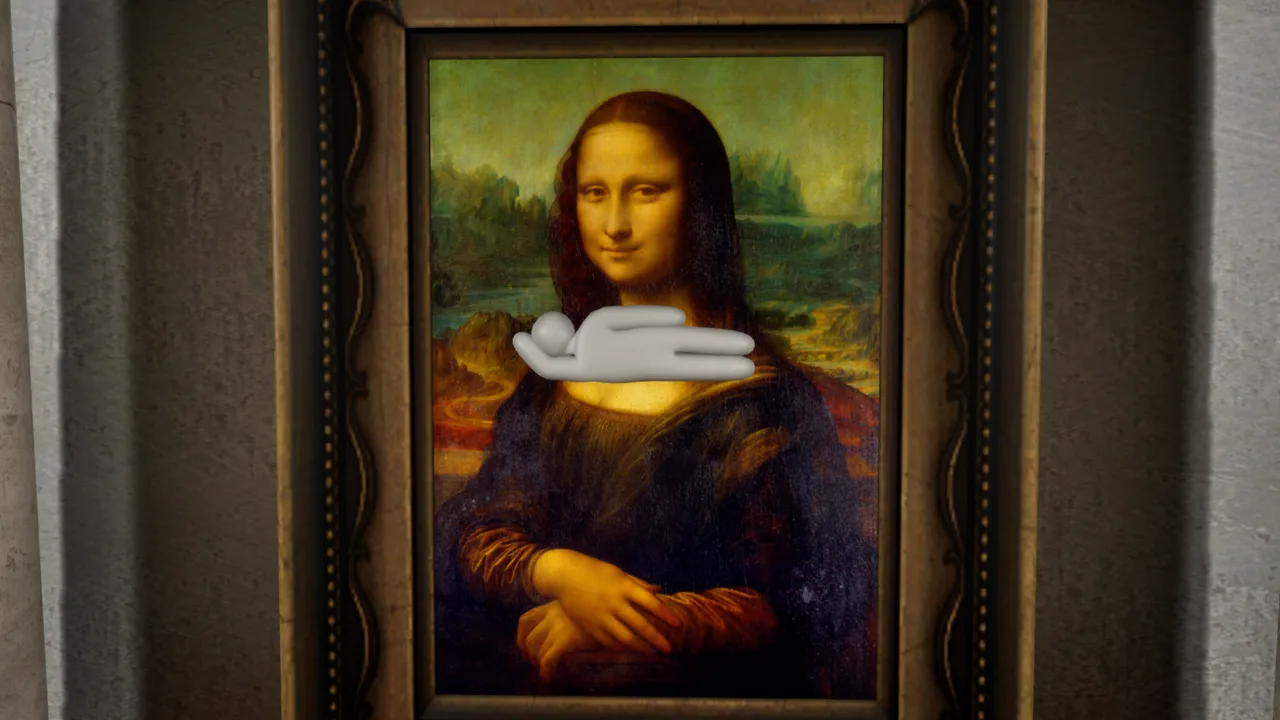
A player painstakingly mixes colors on their chameleon character, dabbing brushstrokes until the model resembles a miniature Mona Lisa. They slot into a gallery wall, perfectly concealed, as the seeker sprints past inches away. This is Meccha Chameleon, a $5.99 hide-and-seek party game built by a two-person team in roughly two months.
In just 12 days after launch, that same game sold 7 million copies on Steam. It reportedly outpaced Resident Evil Requiem and Crimson Desert in sales velocity. It peaked at over 340,000 concurrent players. And it spawned a subculture of player artistry that rivals the commercial explosion itself. This is the story of Meccha Chameleon's dual identity: an improbable word-of-mouth sales juggernaut and an unexpectedly deep canvas for community creativity.
The Mona Lisa in a Hide-and-Seek Game, When Camouflage Becomes Art
At first glance, the painting mechanic looks like a basic color-wheel tool. But players quickly discovered they can mix shades and brush patterns across their white chameleon model in real time, turning camouflage into an expressive medium. The goal remains straightforward: blend into any surface, a textured wall, a patterned floor, a cluttered bookshelf, then hold still while a seeker searches the map. What began as a simple hiding function has evolved into something far more ambitious.
Instagram user artofmenevir has become a standout example of this trend, sharing miniature recreations of famous paintings created entirely within the game's painting system. The Mona Lisa appears on a chameleon model that vanishes into an art gallery wall. Van Gogh's Starry Night swirls across a character tucked into a corner exhibit. These are not mods or external overlays. They are handmade, pixel-by-pixel camouflage jobs executed with the same brush tool every player has access to.
The catalyst for this creative explosion is the "Art Gallery" custom map created by Steam Workshop user Popunia. The map transforms the game into a virtual museum, with white walls, plinths, framed canvases, and carefully lit corridors that provide ideal canvases for artistic hiding spots. Players do not just blend into the environment. They become part of the exhibit. The map has become one of the most popular community creations, redefining what the game can be, and driving shareable content across social media and streaming platforms. Clips of elaborate camouflage jobs that took 15 minutes to paint are watched by millions in 30 seconds. The painting mechanic transforms a simple social game into a tool for self-expression. It is the kind of emergent gameplay that developers dream about but can never fully plan for.

7 Million in 12 Days, The Numbers That Stunned the Industry
Let the figures speak for themselves. Meccha Chameleon launched on Steam on June 9, 2026. By June 22, the developer announced that the game had sold 7 million copies. The velocity of that sales curve is staggering.
Consider the context. Capcom's major 2026 survival horror release, Resident Evil Requiem, reportedly took roughly two months to reach 7 million units. Pearl Abyss's open-world action epic, Crimson Desert, sold 6 million copies in approximately three months. Meccha Chameleon, a $5.99 game from a team of two with no advertising budget, surpassed their pace by a wide margin.
The game hit an all-time concurrent player peak of 340,534 on June 21. That number placed it as the fifth-highest peak of any Steam release in 2026, trailing only heavyweights like Slay the Spire 2 and Subnautica 2. For context, that concurrent figure means nearly half a million people were playing a hide-and-seek game about painting chameleons at the same time on a single Tuesday evening.
The Steam rating tells an equally compelling story. Meccha Chameleon holds a "Very Positive" score of 87 percent positive from over 10,800 English user reviews, notable for any game, but especially remarkable given its low price point and viral scale. Games that sell this fast and this broadly typically attract review-bombing or negative feedback from players who bought into hype. Meccha Chameleon has largely avoided that fate, though the sheer scale has introduced friction: reports of spawn-camping and gaps in the initial report system surfaced on forums, prompting the developer to respond quickly.
Meccha Chameleon belongs to what has been called the "friendslop" genre of social multiplayer games, low-cost, highly social, streamer-friendly experiences designed for groups of friends. It stands alongside Lethal Company, REPO, and Among Us as proof that a simple, well-executed concept can dominate sales charts without AAA budgets or marketing campaigns.
The Cinderella Development Story, Two Months, Zero Ads, Two People
The most remarkable part of this story is how Meccha Chameleon came to exist in the first place. The game was built by solo developer lemorion_1224, who handled all the code, with co-creator Haganeiro contributing to design and concept. The entire development cycle spanned roughly two months.
The concept did not emerge from nowhere. The developers spent years experimenting with hide-and-seek mechanics inside Fortnite, building custom game modes that tested various hiding and disguise concepts. One prototype involved a "razor-thin" hiding mechanic where players could flatten themselves against surfaces. Another let players disguise themselves as NPCs. These Fortnite experiments became the design foundation for Meccha Chameleon, refined and rebuilt from scratch in a completely different engine.
The team spent nothing on advertising. There was no marketing budget, no influencer campaign, no PR push. The game went viral entirely through word-of-mouth, streaming, and the organic spread of clips across social media. The developers used Epic Games' free multiplayer networking tools to handle server operations, avoiding the need for dedicated server infrastructure. This technical decision saved costs and allowed a two-person team to support millions of concurrent players without collapsing under server load.
Industry figures have taken notice. Mixi and Sega game producer Taira Nakamura called Meccha Chameleon's success an "unthinkable achievement" for the Japanese game industry. That assessment is not hyperbole. A $5.99 game built in two months by two people with zero ad spend outsold some of the biggest AAA titles of the year. That is not just impressive. It is a structural disruption of how the industry thinks about success.
What's Next, Osaka Map, Player Safety, and a Genre's Future
The developer announced the 7 million sales milestone alongside the release of Update 1.7.0 on June 23. The update adds a new Osaka-themed map, fulfilling a promise made earlier in the game's early access period. The map transforms the hide-and-seek environment into a stylized Japanese urban landscape, complete with street stalls, neon signs, and back alleys that provide fresh camouflage opportunities.
The update also introduces a player report feature, a necessary addition as the game's massive player base inevitably includes players who abuse the system. A robust report system is essential for maintaining the social trust that makes games like this work. It is a positive sign that the developer is thinking about long-term community health rather than just riding the viral wave.
Meccha Chameleon's continued reliance on Steam Workshop for custom maps indicates a community-driven roadmap. The Art Gallery map by Popunia is the most visible example, but the Workshop already hosts hundreds of player-created environments. This model gives the game near-infinite replayability without requiring the developer to produce endless official content. It also keeps the creative community engaged and invested in the game's future.
For indie developers watching from the sidelines, Meccha Chameleon offers a clear lesson. The barrier to entry is lower than it has ever been. Free tools, accessible networking libraries, and short development cycles are now sufficient to build a game that can compete with AAA releases. The key variable is the social mechanic, the moment where a simple core loop becomes shareable, streamable, and impossible to put down.
When the Canvas Wins
The Mona Lisa recreations and the 7 million sales are two sides of the same coin. Meccha Chameleon succeeded not because it was the most polished game of the year, or the most graphically impressive, or the most mechanically complex. It succeeded because it gave players a tool to be creative and a reason to share that creativity with others.
The painting mechanic is the heart of the game. It is also the engine of its viral spread. Every clip of a perfectly camouflaged player is a miniature advertisement. Every Mona Lisa recreation is a signal to potential buyers that this game offers something unique. The Mona Lisa recreations are lovely. The question that should keep AAA publishers up at night is: what happens when a two-person team can replicate this formula a second time? As community maps and updates continue to roll out, the line between game and canvas will only blur further. Meccha Chameleon has already proven that a hide-and-seek game can be a gallery. The question now is what else it can become, and how many more indie Cinderellas are waiting in the wings.