Masters of Albion: Peter Molyneux's Final God Game Promises Cozy Creativity and Brutal Survival
The name Peter Molyneux has, for decades, been synonymous with two things in gaming: visionary genius and broken promises. It’s a legacy built on genre-defining classics like Populous and Dungeon...

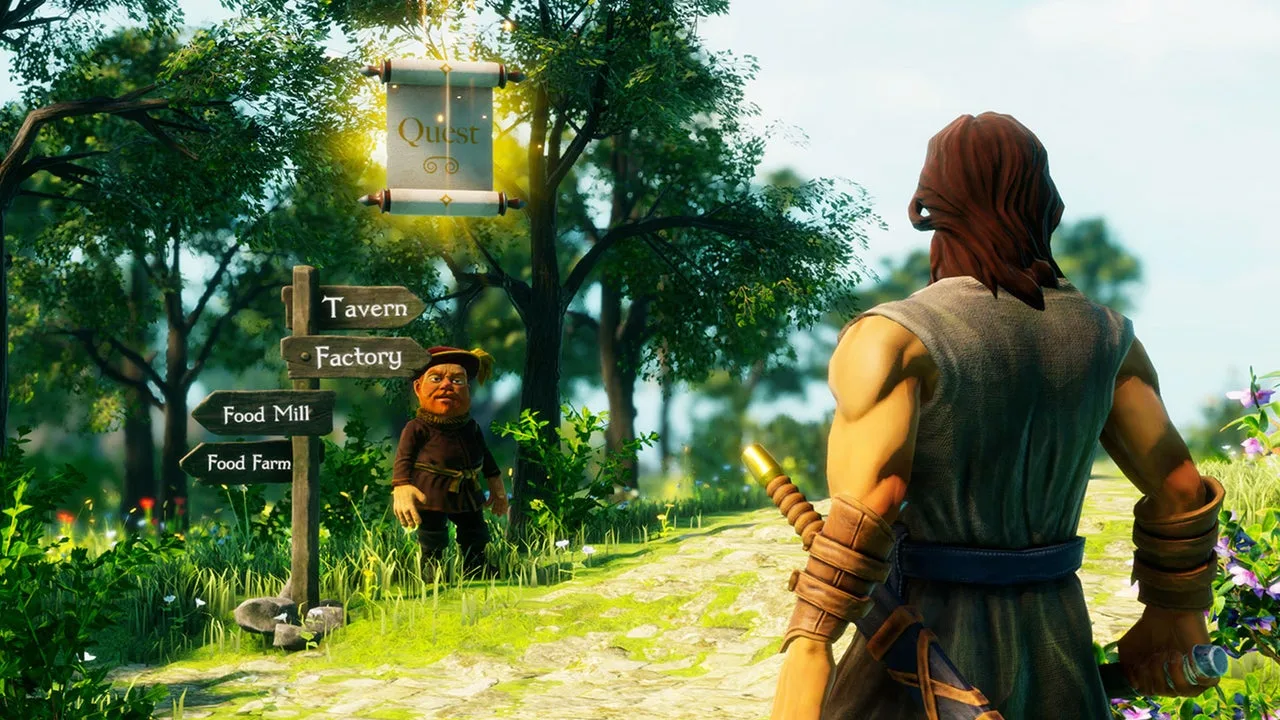
The name Peter Molyneux has, for decades, been synonymous with two things in gaming: visionary genius and broken promises. It’s a legacy built on genre-defining classics like Populous and Dungeon Keeper, forever intertwined with the infamous hype cycles for Fable and Godus that left players wondering where the line was between ambition and illusion. So, when the legendary—and controversial—designer announces his final project, it’s bound to be grandiose. What we got, however, was a trailer featuring villagers flipping off a giant divine hand, armor made of sausages, and the looming threat of a housing inspector. This is Masters of Albion, a game that perfectly encapsulates the Molyneux paradox: a breathtakingly ambitious genre-blend poised as a career-capping redemption arc, set to enter Early Access in April 2026. It promises to be either his masterpiece or his most spectacular mirage.
The Culmination of a Vision: Molyneux's Final Project
At 66, Peter Molyneux has stated unequivocally that Masters of Albion is his final project. He has framed it not just as another game, but as the "culmination" of his life's work—an attempt to finally deliver on the god-game fantasy he has chased since Black & White. In a notable act of contrition, Molyneux has publicly apologized for his history of overpromising, telling the press, "I am not going to make that mistake again." He has positioned this game as a form of redemption, a last chance to cement his legacy not for hype, but for execution.
The sense of finality surrounding the project was underscored by an unexpected industry moment: the retirement of the beloved parody Twitter account "Peter Molydeux." Run by artist Adam Capone, the account spent years satirizing Molyneux's penchant for wild, impractical game ideas. Capone officially shut it down in January 2026, citing Molyneux's announcement of his final game as a key reason, stating the bit had reached its natural conclusion. Yet, for all the talk of culmination and closure, skepticism remains the default setting for a significant portion of the audience. With the game already amassing over 9,700 followers on Steam, the community watches with a mix of hope and wariness, asking the fundamental question: can the man who taught us to doubt believe in his own final vision?
Gameplay Pillars: From God's Hand to Possessed Peasants
Masters of Albion is a deliberate fusion of three core genres: the strategic oversight of a god-game, the creative management of a city-builder, and the personal exploration of an RPG. The most iconic returning mechanic is the giant, player-controlled hand, a direct evolution from Black & White. This is your primary divine interface with the world of Albion, used to terraform, construct, and interact. Crucially, the NPCs are not mindless drones; they react to your gestures. A benevolent pat on the head might boost morale, while an aggressive flick might send them tumbling—or prompt a very human, very British middle finger in response.
When you want to leave the celestial perspective, you can "possess anything." This feature, if realized as described, allows you to jump into the mind of any villager, creature, or animal, experiencing the world you’ve shaped from a grounded, third-person view. It’s a promise of seamless transition from macro to micro. Building your village leverages a snap-together, Lego-like block system designed for instant creativity. There are no resource timers or cooldowns here; if you can imagine a structure, you can build it immediately, placing walls, roofs, and yes, even sausage-themed armor racks with a click.
The Loop of Albion: Cozy Days and Brutal Nights
The entire experience orbits a single, compelling dichotomy. The heart of Masters of Albion is its core loop, succinctly described by 22Cans as "Cozy Creativity by Day, Brutal Survival by Night."
Your daylight hours are for peaceful construction, questing, and shaping society. However, this isn't just aesthetic town planning. Your architectural and moral choices have systemic consequences. Building cramped, squalid huts versus spacious, elegant homes will influence your village's moral alignment and can trigger events like a visit from a fastidious housing inspector, who will judge your civic standards.
When the sun sets, the cozy management sim transforms. A nocturnal threat emerges, forcing you to defend your creation. This shift turns daytime creativity into a strategic imperative, where the placement of walls, towers, and lighting becomes a matter of survival. This cycle—build, influence, defend—forms the ongoing management challenge, a loop that aims to marry the satisfaction of creative expression with the tension of high-stakes consequence.
Legacy and Ambition: Inspirations and a Trilogy Plan
Molyneux cites a modern touchstone for his old-school ambition: the systemic freedom and seamless interaction of The Legend of Zelda: Breath of the Wild and Tears of the Kingdom. He aims to bottle that "see it, do it" philosophy within his god-game framework. Masters of Albion is also a tapestry woven from threads of his own past: the deific control of Populous, the creature morality of Black & White, the dungeon-building of Dungeon Keeper, and the whimsical Britishness of Fable.
This brings us to the setting: Albion. While inspired by the same Medieval Britain fantasy that defined the Fable series, Molyneux clarifies this is a new, separate incarnation, existing outside that franchise's timeline. The ambition doesn't stop at one game. Masters of Albion is planned as a full trilogy. The Early Access launch in 2026 will contain only Chapter One, with its story delivered through a quest system of primary "gold scroll" missions and optional "silver scroll" tasks. Molyneux has admitted that developing a game of this scope is a "terrifying development process," a nod to the immense technical and design challenges of making these interconnected systems sing.
Masters of Albion represents the ultimate Peter Molyneux proposition. It is a potent cocktail of beloved mechanics from his greatest hits, wildly creative new ideas, and a foundational promise to finally deliver. The Early Access launch in 2026 is more than a release date; it is the pivotal, tangible test. It will determine whether this project, with its housing inspectors and sausage armor, can transcend its creator's complicated history to become the fitting, successful finale to one of gaming's most storied and turbulent careers. For its sheer ambition, its nostalgic pull, and the dramatic weight of its "final chance" narrative, it remains one of the most compelling projects on the horizon—a game you watch not just to play, but to witness whether a legend can rewrite his own story.