Marvel Super Heroes Is the MTG Redemption Arc That Spider-Man Needed
Where Spider-Man Went Wrong To understand why Marvel Super Heroes feels like such a course correction, it helps to remember just how badly the first attempt stumbled. Marvel’s Spider-Man was a...

Where Spider-Man Went Wrong
To understand why Marvel Super Heroes feels like such a course correction, it helps to remember just how badly the first attempt stumbled. Marvel’s Spider-Man was a smaller, 100-card set that used the “Pick-Two Draft” format. In theory, that meant players chose two color pairs and built around them. In practice, the draft environment was shallow and repetitive. The cards lacked synergy. The mechanics felt disconnected. As one reviewer put it, the set was “only just fine, which isn’t good enough for a premium crossover.”
The roster was arguably the biggest problem. Instead of a coherent team, the set crammed in every Spider-person imaginable: Peter Parker, Miles Morales, Gwen Stacy, Spider-Man 2099, Spider-Ham, and more. While diehard Spider-Fans may have appreciated the deep cuts, the gameplay suffered. There was no clear identity. Draft archetypes became confused. A deck built around “Spider-people” could mean anything, and typically meant very little. The result was a Limited format that felt like a grab bag of vaguely related cards rather than a cohesive strategy.
Wizards acknowledged the disappointment. A player survey after the set’s release asked specifically about card power, draft enjoyment, and roster composition. The feedback was clear: players wanted stronger, more synergistic cards and a roster that told a focused story. Marvel Super Heroes took that feedback to heart.
A Fresh Mechanical Foundation: Power-Up, Teamwork, and Plan
Where Spider-Man introduced a handful of returning mechanics that never quite gelled, Marvel Super Heroes builds its entire identity around three new keywords that create clear, rewarding gameplay loops.
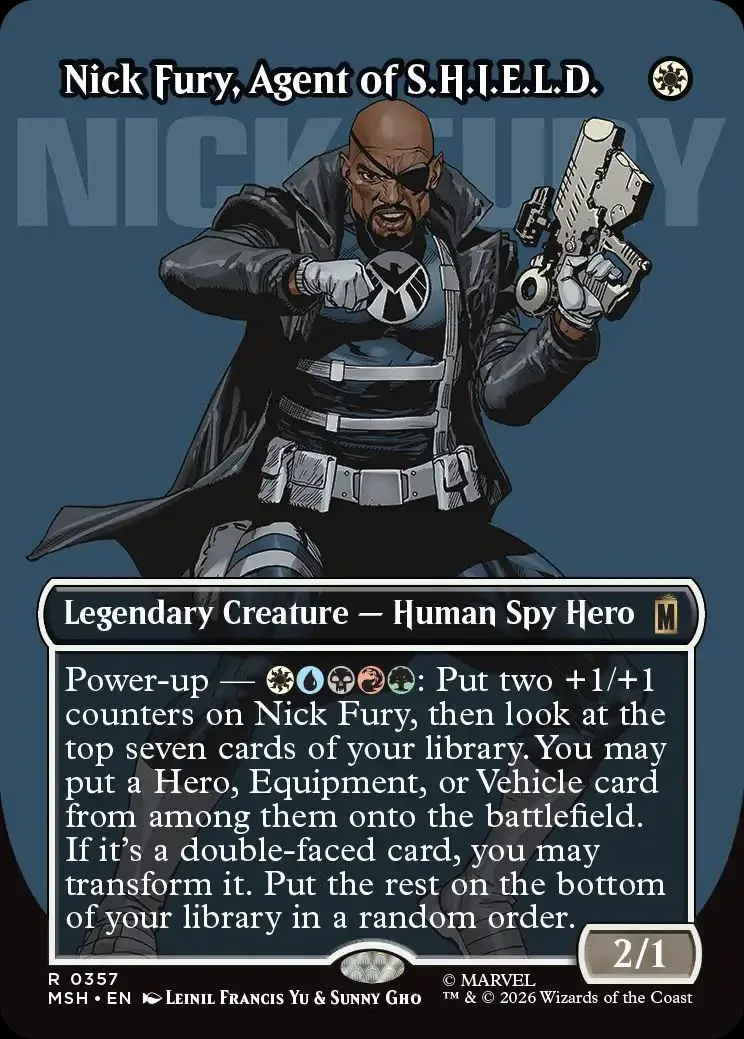
Power-Up lets creatures grow stronger at key moments, typically when you cast spells or attack. It rewards aggressive, proactive play without being overwhelming. Teamwork is the set’s signature synergistic mechanic, encouraging creatures to support each other with bonuses when they attack or block together. It turns combat into a chess match, where positioning your creatures matters as much as raw power. Plan, meanwhile, introduces a brand new enchantment type. These are villainous schemes that each offer a long-term payoff for a specific strategy, letting you build your side of the battlefield like a comic book mastermind.
These mechanics do not exist in isolation. Power-Up and Teamwork feed into each other naturally. Consider “Mighty Thor, God of Thunder” — a 4/4 with Teamwork that gives all your other attacking creatures +1/+1. Pair her with “Iron Man’s Arc Reactor,” a creature with Power-Up that grows when you cast noncreature spells, and you have a classic Avengers synergy that rewards building a board. The set also brings back Connive and modal double-faced cards from Spider-Man, but here they are deployed with purpose. Connive fuels graveyard strategies in blue-black, while modal double-faced cards allow heroes to transform into their powered-up forms. The draft environment now has eight clear archetypes, each with its own identity and payoffs. Players opening a pack of Marvel Super Heroes know exactly what their colors want to do.
The Roster Fix, From Spider-Swarm to Avengers Plus
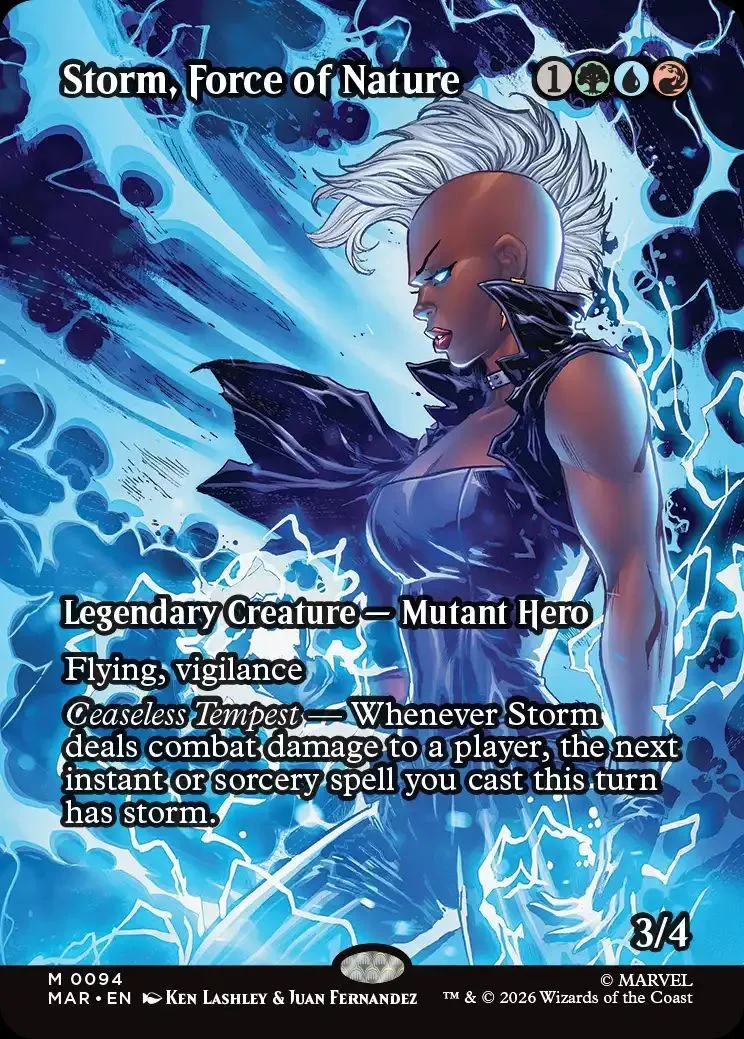
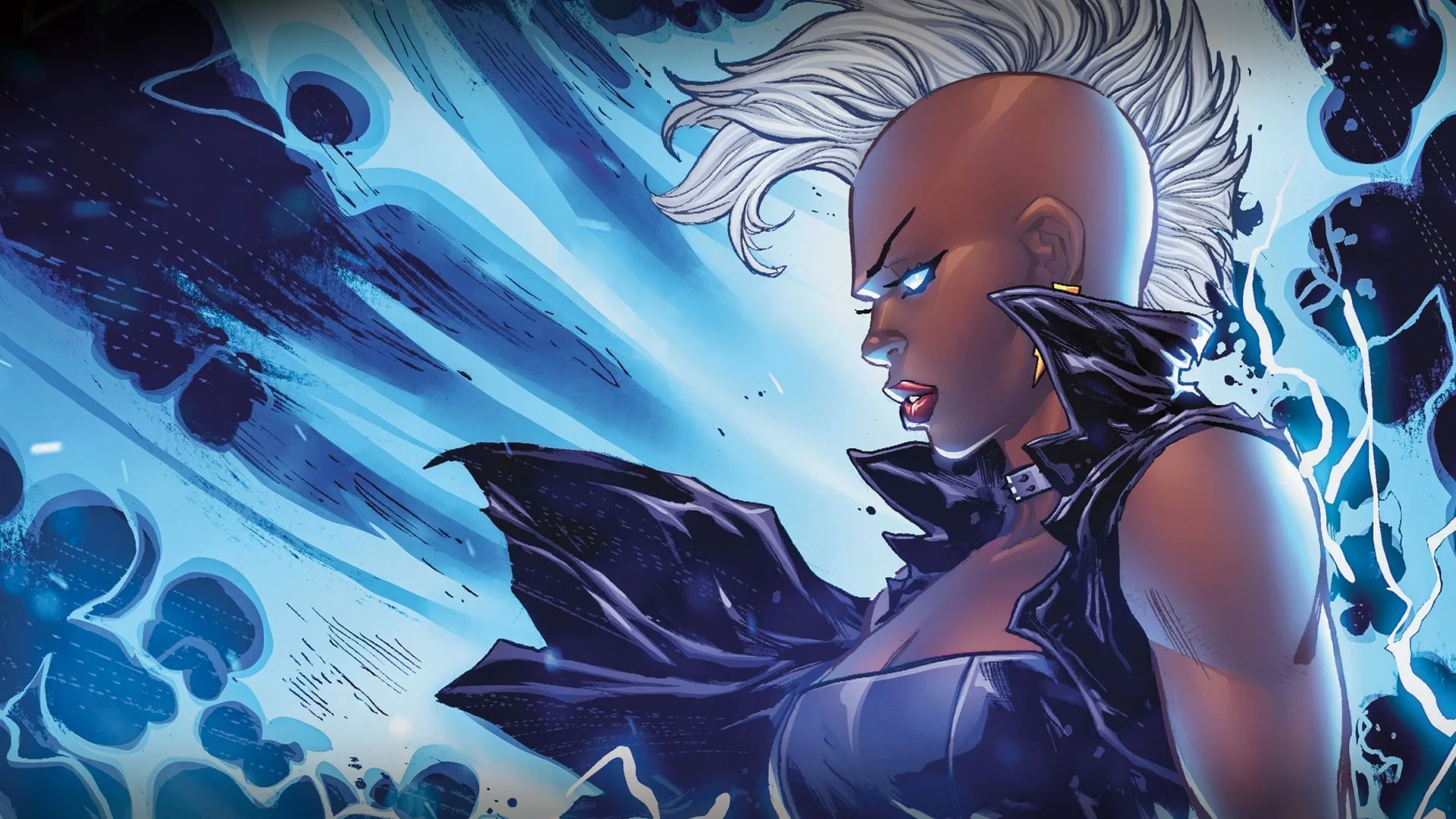
The most visible change is the roster. Instead of an army of interchangeable Spider-people, Marvel Super Heroes focuses on what Mark Rosewater calls “Avengers plus.” That means the core of the set is Earth’s Mightiest Heroes: Iron Man, Captain America, Thor, Black Widow, Hulk, and Hawkeye. Also included are the Fantastic Four and a carefully selected handful of X-Men, such as Wolverine and Storm. Notably absent are MCU-style portrayals. The art and card designs draw from classic comic aesthetics, giving the set a timeless, nostalgic feel that avoids the licensing complications of actor likenesses.
Rosewater’s personal involvement cannot be overstated. He has openly said he called dibs on designing a Marvel set when Universes Beyond was first conceived, writing on his blog, “I’ve been a Marvel fan since I was a kid, and I knew I had to be the one to bring these characters to Magic.” That passion shows. The set’s design philosophy is driven by a deep love for the source material, not by a checklist of marketable characters. Each hero and villain feels like they belong in a Magic game, with abilities that evoke their comic book identities without being clunky. Captain America boosts your team. Iron Man builds artifacts. Hulk smashes anything in his path. The mechanical identity of each color pair is clear, and each archetype tells a story.
Critical and Player Reception, A Triumph or a Warning?
The reception has been overwhelmingly positive. PC Gamer described it as “a triumphant return to form for Marvel crossovers,” praising its “tight synergy and exciting build-arounds.” Reviewers have called the set “on a whole other level” from Spider-Man, applauding its power level and draft synergy. The set is packed with strong, build-around cards that feel rewarding to open and play. Players on social media have been sharing their favorite pulls and decklists with renewed excitement.
But praise for this specific set does not erase a growing unease among the Magic community. Marvel Super Heroes arrives as part of a 2026 schedule that includes seven major releases, most of which are Universes Beyond crossovers. With each new set, the line between Magic’s own multiverse and licensed IPs blurs further. Some fans worry that the game is losing its identity, becoming a vessel for corporate crossovers rather than a place for original worldbuilding. Even as critics celebrate this set, they note the accelerating pace of crossovers as a broader concern.
A Set That Does Marvel Justice, But Questions Linger
Marvel Super Heroes is the redemption arc that the MTG-Marvel partnership desperately needed. Its focused mechanics, coherent draft environment, and passionate design direction prove that Universes Beyond can produce great Magic sets. The lessons learned from Spider-Man have been applied with surgical precision. For anyone who felt let down by the first Marvel outing, this set is a welcome return to form.
Marvel Super Heroes is a win. For now, that’s enough — even as we watch the horizon for the next universe to cross over.