Magic: The Gathering Is Bringing Universes Beyond Back to Fantasy - But Don't Expect It to Stop There
The Fantasy Pivot: What Designers Are Saying (and Not Saying) The most direct signal came from Hasbro CEO Chris Cocks during an investor call, where he acknowledged fan criticism of...

The Fantasy Pivot: What Designers Are Saying (and Not Saying)
The most direct signal came from Hasbro CEO Chris Cocks during an investor call, where he acknowledged fan criticism of immersion-breaking settings. He promised that future Universes Beyond partners would be “more fantasy-adjacent” and specifically noted that none “will take place in New York City.” That line was a clear nod to the widespread frustration over sets like Secret Lair x Stranger Things, which dragged Hawkins, Indiana into the multiverse.
Mark Rosewater, Magic’s head designer, went further. In interviews, he identified high fantasy as the game’s “creative center,” using a pendulum metaphor to explain the direction. “It swings and goes different directions, but there is a default state, a center… Creatively that center is high fantasy,” he said. This is the first time Rosewater has publicly named a creative default for Magic, and it represents a significant rhetorical shift from the “anything goes” era of the past few years.
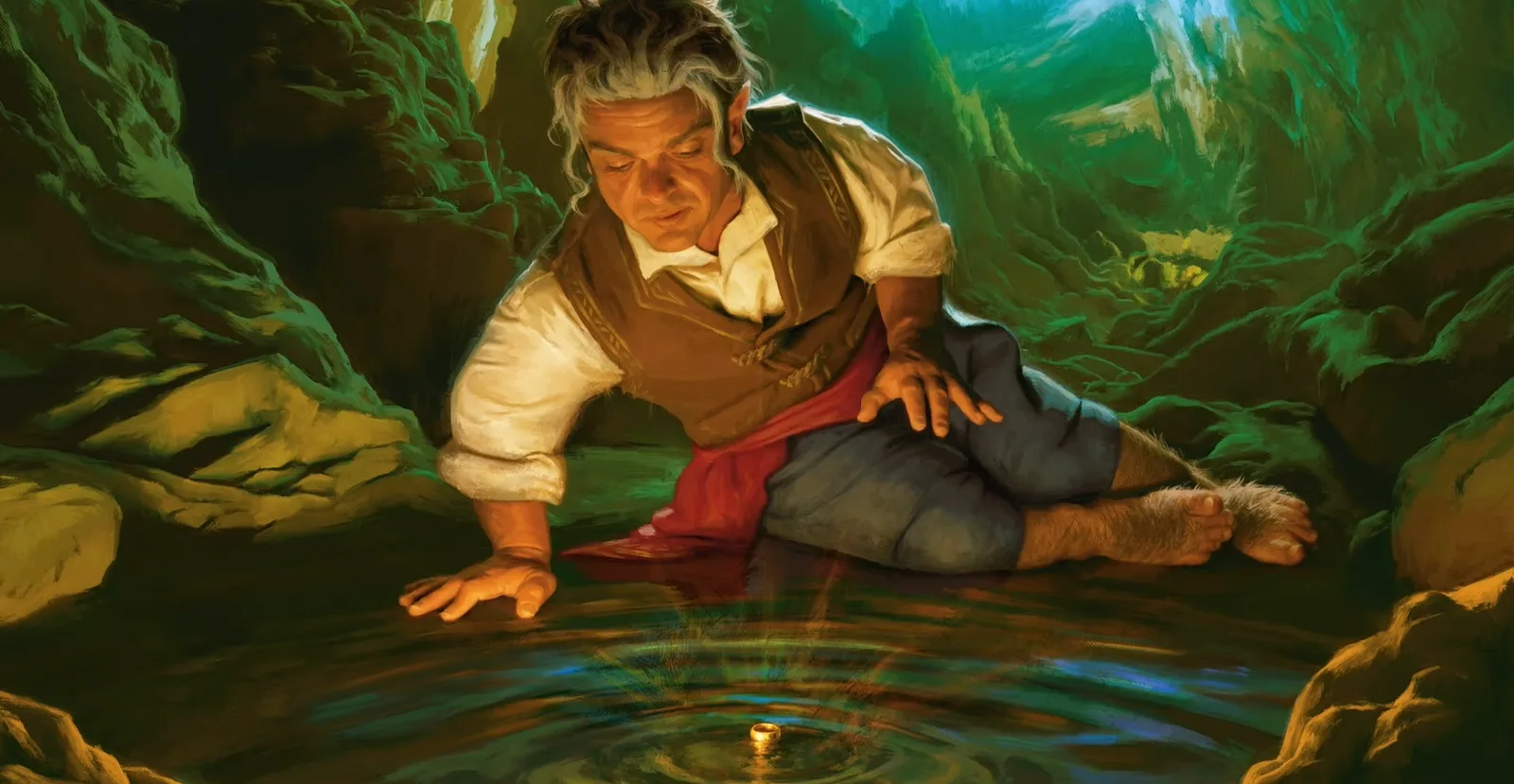
Gavin Verhey, another key designer, emphasized that The Lord of the Rings and The Hobbit are “such a natural fit” for Magic, tracing the game’s lineage directly to Tolkien. He revealed that internal testing for the upcoming Hobbit set showed fans wanted “Magic house style” art rather than stills from the movies. That attention to aesthetic continuity is the heart of this pivot: it is not about stepping away from crossovers, but about choosing crossovers that feel like they belong.
The Numbers That Make the Pivot Possible (and Also Limit It)
The fantasy pivot is possible only because the numbers justify a change. Universes Beyond has been a key driver of Magic’s revenue, which hit a record $1.7 billion in Hasbro’s 2024, 2025 fiscal year, a figure the company publicly touted. The Lord of the Rings: Tales of Middle-earth was one of the best-selling sets in Magic history, propelled in part by the serialized One Ring card that sold for over $2 million. The financial upside of a fantasy-adjacent IP is proven.
But those same numbers also limit how far the pivot can go. Starting with the Final Fantasy set in June 2025, all future Universes Beyond booster sets are being designed as Standard-legal mainline releases, a forward-looking policy that integrates crossovers directly into competitive play. Final Fantasy is the first UB set built from the ground up for the format, marking a shift from the previous approach where UB products like The Lord of the Rings existed outside Standard’s borders. By 2026, Universes Beyond will account for roughly half of all annual set releases, four of seven products, including The Hobbit and the previously announced Star Trek expansion. The volume is not decreasing. Only the thematic focus is shifting.
In other words, Wizards is not retreating from crossovers. It is replacing Spider-Man with The Hobbit and calling it a win for fans. For many players, that is a genuine improvement. For others, it is still a reminder that Magic’s creative identity is now for sale to the highest bidder.
The Designer’s Dilemma: Mark Rosewater’s Uncomfortable Honesty
No one has been more central to the Universes Beyond conversation than Mark Rosewater, and no one has been more blunt about its permanence. He famously compared the introduction of external IPs to “toothpaste out of the tube,” arguing that once the change was made, it could never be reversed. “Universes Beyond has fundamentally changed Magic,” he said.
When confronted with unhappy players, Rosewater offered three paths: accept the change, form a “bubble” of like-minded players, or “walk away” from the game. The statement divided the community. Some praised his honesty; others found it dismissive. Regardless of interpretation, it made one thing clear: Wizards sees Universes Beyond not as a temporary experiment but as the future of Magic’s monetization model.
Rosewater has also been candid about his own initial resistance. He compared his early skepticism toward Universes Beyond to his “dark night of the soul” over Commander’s rise in popularity, a format he initially disliked but eventually embraced after its success became undeniable. The implication is that he came around to crossovers for the same reason: because the players voted with their wallets, and they voted overwhelmingly in favor.
What This Means for Magic’s Identity and Its Players
The 50/50 split between in-universe and Universes Beyond sets raises a fundamental question: What does “Magic” even mean anymore? For decades, the answer was clear, a fantasy multiverse with its own lore, characters, and mechanical identity. Now, the game’s identity is permanently plural. Some Standard seasons will feature elves and dragons alongside space marines and time-traveling scientists.
For players who love high fantasy and hate the mechanical asymmetry that crossovers introduce, this pivot offers a measure of relief. If Wizards chooses IPs that fit the game’s creative center, the immersion-breaking shock of a Fallout Power Armor or a Stranger Things Demogorgon may become the exception rather than the rule. But only if those IPs are treated with the same care that The Lord of the Rings received, with Magic-style art, thoughtful mechanical integration, and respect for the setting.
The broader message from Wizards is clear. Universes Beyond is not a passing fad. It is the new mainstream, and the fantasy pivot is a way to keep core fans engaged while sustaining explosive growth. The coming years will test whether this balance between artistic integrity and commercial ambition can hold, or whether the pendulum will swing again, back toward something that feels more like Magic, or further into a world where anything is a card.
The Pendulum’s New Center
Magic’s return to fantasy-adjacent Universes Beyond is a savvy move. It acknowledges fan pain points without sacrificing the revenue that crossovers generate. But it is not a reversal. The game’s identity is now permanently plural: part high fantasy, part IP blender. For players, the takeaway is that Wizards will listen, just not as far as abandoning the strategy that made Magic a billion-dollar brand. The pendulum has found a new center, and it is not going back to where it started.