Kingdom Come: Deliverance 2: How 5.4 Million Drunk Kills Reveal the Game's Unique RPG Philosophy
In the meticulously researched world of Kingdom Come: Deliverance 2 , where the rust on a pauldron is historically accurate and the political intrigue of 1403 Bohemia is rendered in painstaking...

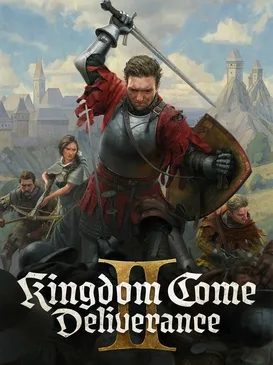
In the meticulously researched world of Kingdom Come: Deliverance 2, where the rust on a pauldron is historically accurate and the political intrigue of 1403 Bohemia is rendered in painstaking detail, players have collectively authored a staggering act of anachronistic chaos. According to a one-year anniversary infographic from developer Warhorse Studios, the citizens of this digital Holy Roman Empire have slain a jaw-dropping 5.4 million enemies while their character, Henry, was intoxicated.
On its face, this is a hilarious community in-joke—a testament to players’ love for virtual ale. But this statistic is more than a punchline. It is a glowing data point that illuminates the core tension and ingenious design philosophy at the heart of Warhorse’s acclaimed RPG: how do you create a world revered for its immersive, punishing authenticity and still make it fun? The story of these millions of drunken combat sprees is the story of a developer making deliberate, player-friendly compromises without breaking the illusion of a living, breathing history.
The Stats Sheet of Bohemia: A Data-Driven Look at a Medieval Sim
Released on February 4, 2025, Kingdom Come: Deliverance 2 quickly proved its appeal, selling two million copies within its first two weeks. The recent anniversary data shows that player investment went far beyond a simple purchase. The community has logged 667 million miles traveled across the Bohemian countryside, performed 1.6 billion perfect blocks in the game’s nuanced combat system, and made 97.5 million merciful decisions to spare enemies.
This provides crucial context for our boozy headline figure. With 452.8 million total kills recorded, the 5.4 million kills made while drunk represent a significant, dedicated subset of player behavior—roughly one in every 84 dispatched foes met their end while Henry was under the influence. This isn’t a fringe activity; it’s a mainstream playstyle, evidenced on a scale that only big data can reveal. These numbers collectively paint a picture of a player base deeply engaged with every facet of the game’s world, from its chivalrous ideals to its tavern-based debauchery.
Why Drunk Henry is a Feature, Not a Bug: The Drinking Skill Deconstructed
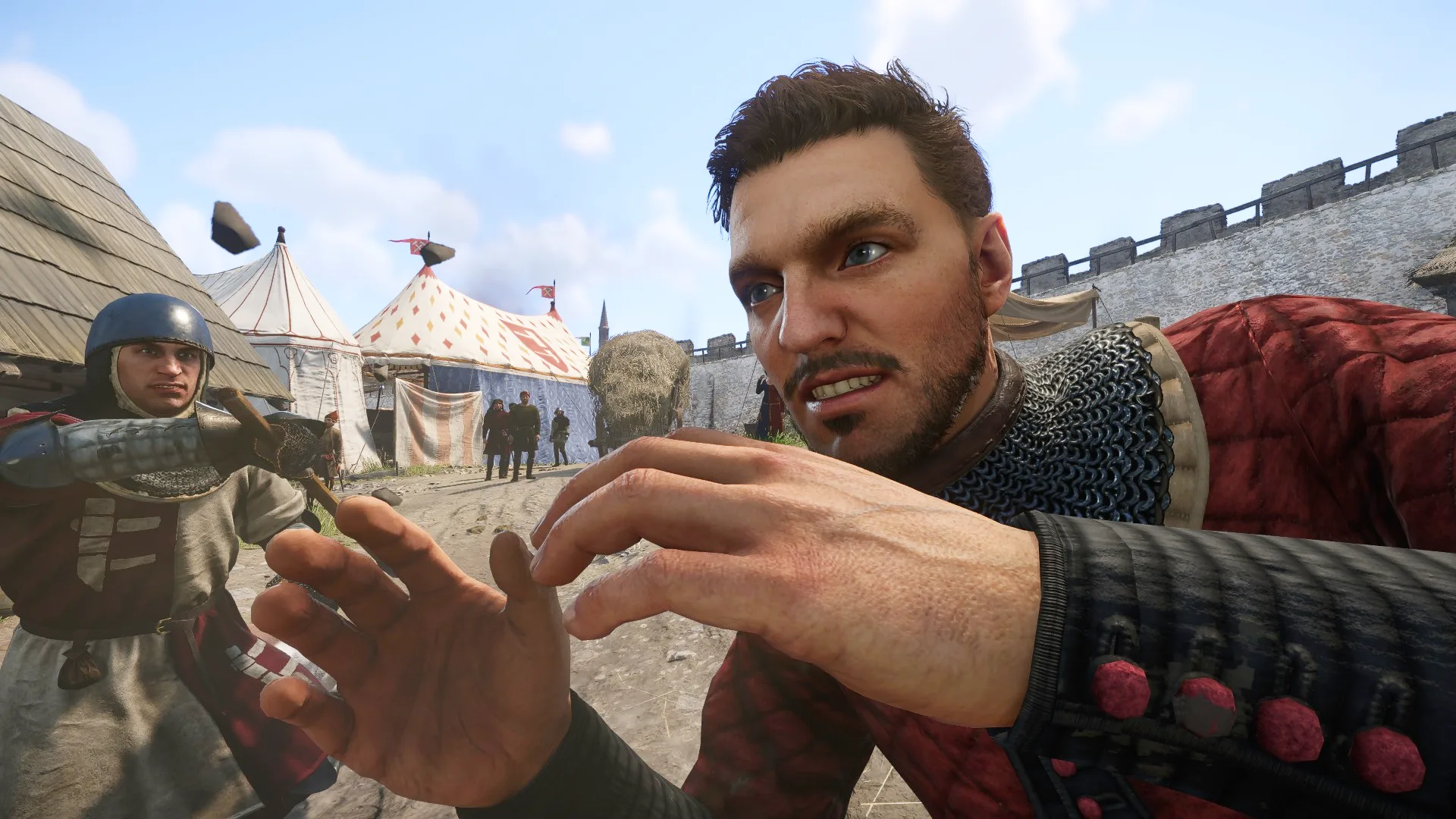
This phenomenon isn’t accidental. It is the direct result of Warhorse Studios formalizing inebriation into a viable character build. Kingdom Come: Deliverance 2 features a dedicated Drinking skill complete with 13 distinct perks, transforming intoxication from a debilitating status effect into a strategic toolkit.
The perks offer tangible, combat-useful benefits: buffs to Strength and Vitality, reduced fear in battle, increased resistance to persuasion, and even unique dialogue options. Want to pick a fight with a guarded knight? A few tankards of ale might give you the liquid courage to provoke him. Need to swing a heavy mace with more oomph? The “Berserker” perk has you covered. The high number of drunken kills strongly suggests players are not merely role-playing as a medieval lush; they are strategically leveraging a game system to gain an edge, embodying the community sentiment that “Drinking is the best skill.”
But this strategic tool raises a critical question: in a game famed for its historical harshness, why is Henry allowed to get away with such violent, drunken mayhem without facing crippling consequences?
Selective Realism: The Design Choice Behind the Drunken Spree
This is where Warhorse’s masterful balancing act becomes clear. The game is famously set in a gritty, authentic 1403 Bohemia, a world where filth, hardship, and historical fidelity are paramount. Yet, the studio made a conscious and revealing decision to depart from strict realism in one key area: crime and punishment.
Lead Designer Prokop Jirsa explicitly stated that the team avoided a historically accurate crime system because it “would be too harsh” for a peasant like Henry. Historically, “any crime would be punished very severely,” often with mutilation or execution. Implementing such a system would make the emergent, playful stories players naturally create—like going on a drunken bandit-slaying spree—virtually impossible without ending the game prematurely.
The permissive attitude towards drunken violence (and other petty crimes) is thus a deliberate, player-friendly compromise. It acknowledges that while the setting must feel credible, the gameplay must allow for freedom, experimentation, and fun. The 5.4 million drunken kills are a direct product of this philosophy: the game provides the historically rich sandbox and the mechanical tools (the Drinking skill), then steps back to let players write their own often-chaotic stories.
What Player Behavior Tells Us: Emergent Stories vs. Historical Narrative
The anniversary statistics ultimately tell a story of two parallel Bohemias. One is the crafted, historical narrative of Henry of Skalitz’s conclusion, full of scripted quests and period-accurate drama. The other is the emergent, collective narrative authored by millions of players, revealed through data.
The 5.4 million drunken kills represent a monumental, player-driven subplot of chaotic medieval life that exists outside the main quest logs. Juxtaposed with the 97.5 million enemies spared, it reveals the full spectrum of player morality and approach. One player is the merciful knight, the other is the belligerent drunkard—and the game supports both wholeheartedly. This is the genius of Warhorse’s design. The historical framework is the compelling backdrop, but the space within that framework is reserved for the player’s personal, often anachronistic, and always fun-focused story.
The 5.4 million drunken kill sprees are far more than a silly statistic. They are a vibrant testament to a successful and nuanced RPG design philosophy. Warhorse Studios built a world credible enough to satisfy history buffs, then populated it with flexible, game-friendly systems—like a powerful Drinking skill and a forgiving crime model—that empower players to truly live in it, for better or (often intoxicated) worse. In Kingdom Come: Deliverance 2, history provides the stage, the costumes, and the script. The legacy of the game, therefore, may not be its perfect historical re-creation, but its masterful demonstration that the most believable worlds are those smart enough to sometimes let realism slide—so that players can truly live, and occasionally stumble drunkenly, within them.
Tags: Kingdom Come: Deliverance 2, Warhorse Studios, RPG Design, Player Statistics, Medieval Games