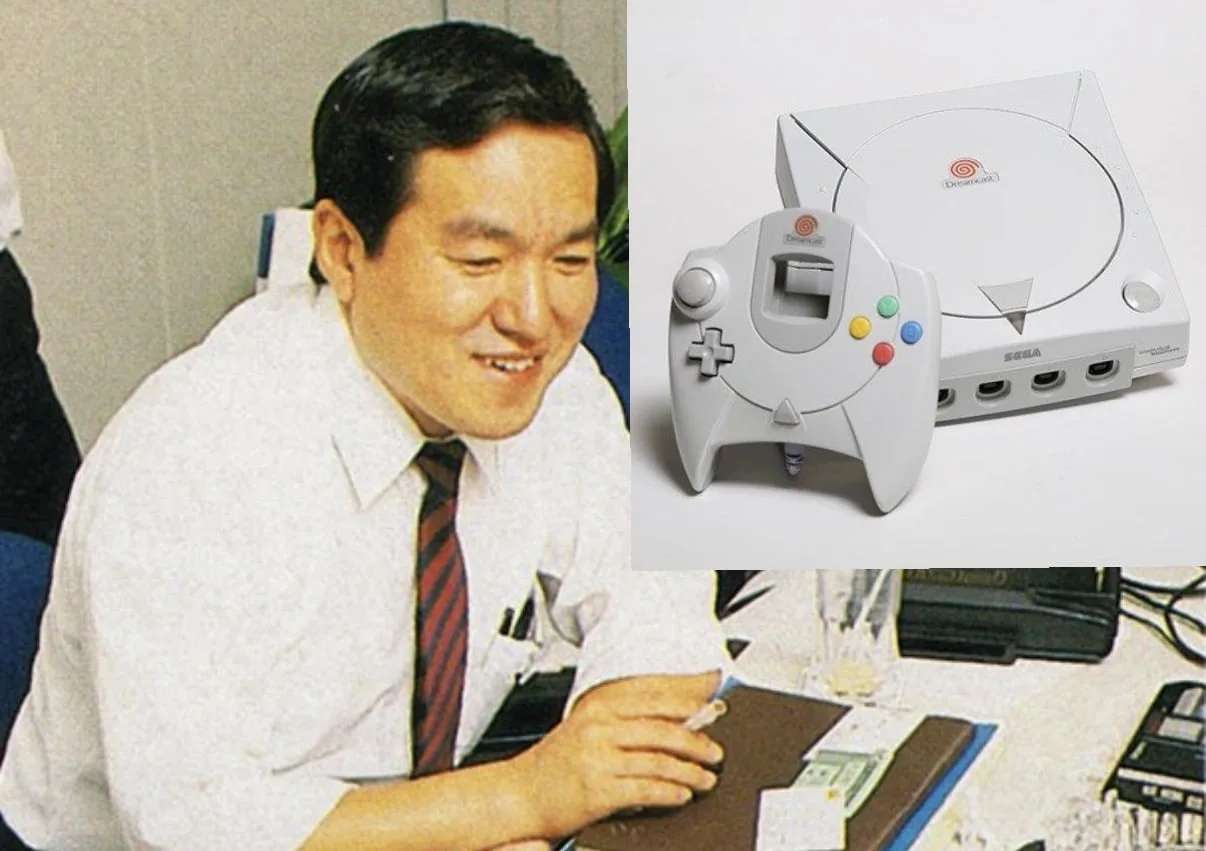
Hideki Sato: The Engineering Visionary Behind Sega's Console Legacy
The passing of Hideki Sato on February 13, 2026, marked the quiet end of an era for the architects of the great console wars. For a generation of gamers, Sato was the engineering visionary behind the...

The passing of Hideki Sato on February 13, 2026, marked the quiet end of an era for the architects of the great console wars. For a generation of gamers, Sato was the engineering visionary behind the Sega machines that defined their childhood rivalries.
More than an engineer, he was a philosopher of play. His single, driving principle—that a home console should be an extension of the arcade—shaped Sega's identity for decades. This relentless pursuit birthed the hardware that transformed Sega from an arcade giant into Nintendo's first true competitor, leaving an indelible mark on the industry's landscape.
From Arcade Roots to Console Architect
Hideki Sato’s journey with Sega began in 1971, a time when the company’s expertise was firmly rooted in the glowing cabinets of amusement arcades. He emerged from a culture defined by technological spectacle—the roaring hydraulic cabinets of After Burner and the pioneering sprite-scaling of Out Run. This was the visceral, cutting-edge experience he sought to replicate.
His rise through the technical ranks was steady, culminating in his promotion to director of Sega’s Research & Development department in 1989. This position placed him at the helm of Sega’s entire home console destiny, a responsibility he would bear from the humble SG-1000 in 1983 all the way to the ambitious Dreamcast in 1999.
His foundational philosophy was simple yet revolutionary for its time. In an industry where Nintendo focused on accessible, living-room fun, Sato saw the living room as a potential arcade. "Home consoles are an extension of arcade technology," he believed. This wasn’t just marketing jargon; it was a design mandate. Every chipset, every piece of hardware he oversaw was engineered with one goal: to shrink the thrill of the arcade and deliver it to a player’s television at home.

Building a Contender: The Genesis/Mega Drive Era
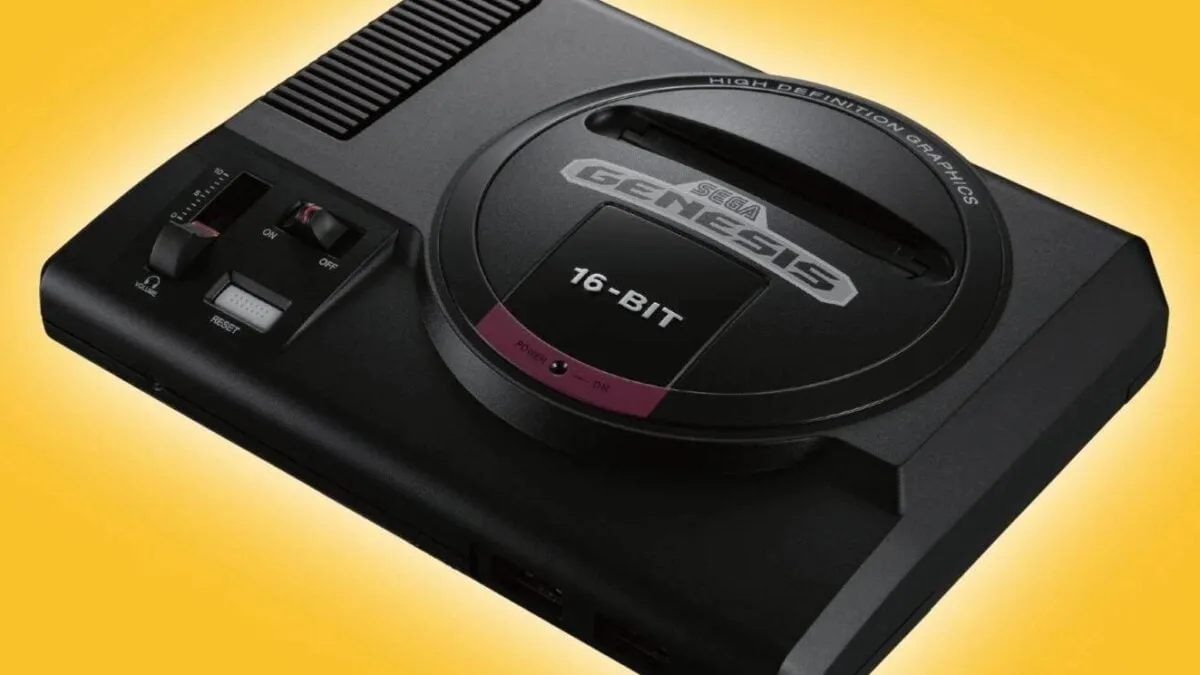
The purest early execution of this philosophy arrived in 1989 with the Sega Genesis, known as the Mega Drive outside North America. Tasked with challenging Nintendo’s seemingly unassailable 8-bit dominance, Sato’s team made a critical decision: they leveraged the powerful Motorola 68000 processor to leapfrog into the 16-bit era. The goal was raw power to enable faster, more visually impressive games that could mimic arcade sensations.
Sato’s influence extended beyond the circuit boards. He personally steered the console’s iconic aesthetic, mandating a sleek, black design with sharp angles and gold lettering. He wanted it to resemble high-end audio equipment—a statement piece that conveyed sophistication and power, a stark contrast to the toy-like appearance of its competitors. The strategy worked. With development completed, as Sato noted, "two years after we started," the Genesis became a phenomenon. It established Sega as a legitimate contender and gave the industry its first real taste of a console war, a conflict defined by attitude and technological ambition.
Ambition and Complexity: The Saturn and Its Lessons
Flush with the Genesis’s success, Sato’s team aimed for the stars with its successor. The 1994 Sega Saturn was an engineering marvel of ambition, designed explicitly to outperform the incoming Sony PlayStation. Its weapon of choice was a complex dual-CPU architecture, a technical powerhouse on paper intended to deliver unparalleled graphical fidelity.
However, this ambition came with a significant cost. The Saturn’s intricate design created a steep learning curve for developers, making it notoriously difficult to program for, especially compared to the more developer-friendly PlayStation. This hindered the breadth and consistency of its software library. Yet, in the arena that mattered most to Sato—arcade perfection—the Saturn shone. It became renowned for near-flawless ports of arcade classics like Virtua Fighter and Daytona USA. In later years, Sato reflected on the Saturn’s place in history, calling it a machine that was "ahead of its time," acknowledging that "the market wasn't ready for such a steep learning curve." It was a painful lesson in the balance between raw power and accessible design.

The Final Vision: Dreamcast and a Lasting Legacy
If the Saturn was an ambitious but flawed experiment, the 1999 Dreamcast was the crystalline expression of Sato’s lifelong philosophy. It was engineered from the ground up for synergy, sharing its core architecture with Sega’s NAOMI arcade system. This allowed for effortless, perfect ports, finally achieving the seamless arcade-to-home pipeline Sato had always envisioned.
But the Dreamcast was more than just an arcade box; it was a prophet. Sato’s team packed it with innovations that defined the future: a built-in 56K modem in most regions for online play, pioneering console internet gaming years before its rivals, and the ingenious Visual Memory Unit (VMU)—a memory card with its own LCD screen for secondary gameplay. These features laid the groundwork for modern services like Xbox Live and PlayStation Network. Despite its commercial failure and Sega’s subsequent exit from the hardware business, the Dreamcast’s cult status is a testament to its visionary design. It was Hideki Sato’s purest, most complete vision, released just as the market dynamics shifted irrevocably.
The Executive and His Enduring Impact
Sato’s role at Sega evolved from engineer to steward. Serving as acting President from 2001 to 2003, he helmed the company during its most turbulent period, navigating the painful but necessary transition away from hardware manufacturing to become a successful third-party publisher. This move, though ending an era, ensured Sega’s survival and continued influence in the industry.
His broader legacy is foundational. The consoles he architected—the Genesis, Saturn, and Dreamcast—comprised the first serious, sustained challenge to Nintendo’s market dominance. This competition fundamentally changed the industry, proving that the console space could be a battlefield of technological one-upmanship and aggressive marketing, pushing innovation forward at a breakneck pace. His passing, following that of Sega co-founder David Rosen in December 2025, feels like the closing of a seminal chapter. The fact that publications like Beep21 were compiling a book on Sato and Sega’s hardware legacy prior to his death underscores his enduring importance.
Hideki Sato’s journey from hardware engineer to company president was charted by a single, unwavering star: the belief that the thrill of the arcade belonged in every home. That philosophy materialized as the sleek Genesis, the complex Saturn, and the prophetic Dreamcast—machines that defined competitive gaming for a generation. While these consoles now sit on collectors’ shelves, the competitive spirit and innovative DNA Sato baked into Sega’s hardware continue to resonate. He helped shape an industry where power, ambition, and the relentless pursuit of a better player experience are the currencies of progress. The arcade may have faded, but the home experience he fought to elevate is now the center of the gaming universe, a legacy built one revolutionary circuit board at a time.