Glen Schofield Retires: End of an Era for a Gaming Legend - and a Stark Industry Reflection
The video is only four minutes long, but it speaks volumes. Glen Schofield stands outside, the camera framing him against a backdrop of green leaves and blue sky. Birds chirp in the background. It is...

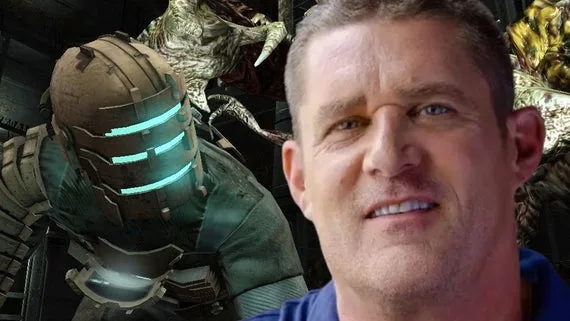
The video is only four minutes long, but it speaks volumes. Glen Schofield stands outside, the camera framing him against a backdrop of green leaves and blue sky. Birds chirp in the background. It is a serene, almost pastoral scene, a deliberate choice for a man who has spent 35 years inside the chaotic, high-pressure machine of AAA game development. On July 14, 2025, Schofield posted this emotional farewell to LinkedIn, announcing his retirement from the day-to-day work of making games.
For the millions who played Dead Space, who grinded through Call of Duty campaigns, who marveled at the icy terror of The Callisto Protocol, this is a moment of reckoning. One of the industry's most influential creators is stepping away. But Schofield's retirement is not just a personal milestone. It is a mirror held up to an industry that, as of 2025, has increasingly made it difficult for even its most celebrated veterans to keep making the games they love. His farewell is both a heartfelt tribute to a golden era and an unsentimental look at the headwinds that forced his hand.
The Farewell Video, A Retirement Announcement That Feels Different
There is no dramatic music, no montage of game clips, no polished studio lighting. Schofield's video is raw and intimate. He speaks directly to the camera, his voice steady but reflective.
"After 35 years of making games and directing them, running teams, it's time for me to officially retire from the day-to-day work," he says. The phrasing is careful, "day-to-day" leaves the door open for advisory roles or occasional consulting. But the intent is clear: the era of Schofield leading a studio, of helming a major franchise, is over.
He thanks EA for "letting me make Dead Space" and Activision for trusting him with three Call of Duty titles. There is no bitterness in his tone. Instead, he describes his career as having "a front row seat to one of the greatest creative explosions in history." It is a generous, look-back-with-wonder sentiment from a man who helped create that explosion.
Yet the most striking part of the video is its optimism. "Times are tough right now," he acknowledges, "but the future ahead is really, really bright." That line lands differently when you know the industry context, layoffs, budget cuts, risk aversion. It is not naivety. It is a final gift of hope from a veteran who refuses to let the present darkness overshadow the potential of the next generation.
A Legendary Career, From Dead Space to Call of Duty
Schofield's resume reads like a history of modern AAA gaming. He began his career in the early 1990s as an artist at Crystal Dynamics, working on titles as varied as The Ren & Stimpy Show: Buckeroo$!, Barbie: Game Girl, Gex, and the Legacy of Kain series. It was a diverse, low-stakes training ground that taught him the fundamentals of game creation.
His breakthrough came at Visceral Games (then EA Redwood Shores), where he co-created Dead Space in 2008. That game redefined survival horror with its strategic dismemberment, zero-gravity sequences, and an atmosphere so thick you could cut it with a plasma cutter. Schofield was the franchise's originator, the driving force behind its terrifying vision. The game remains a benchmark for the genre.
Activision soon recruited Schofield and Michael Condrey to co-found Sledgehammer Games. There, he led development on three blockbuster Call of Duty titles: Modern Warfare 3 (co-developed with Infinity Ward), Advanced Warfare, and WWII. These were not just games; they were cultural events, each selling millions of copies within days. Schofield proved he could handle the scale and pressure of the world's biggest shooter franchise.
His second act came when he founded Striking Distance Studios to create The Callisto Protocol (2022), a spiritual successor to Dead Space. The game was ambitious, beautiful, and brutally difficult. Reviews were mixed, and commercial performance fell short of expectations. Schofield left the studio in 2023. Reflecting on that project, he later called it "the hardest development in my life," as he told GamesBeat in 2025, a statement that hindsight reveals as the turning point that led him toward retirement.
The Industry Headwinds That Forced His Hand
Schofield did not retire because he ran out of ideas. He retired because the industry no longer had room for his kind of idea. In 2025, he revealed that he had pitched a Dead Space 4 to EA. The answer was no. He then tried to secure funding for a new horror game, a fresh IP that would have drawn on his decades of experience. He found that publisher budgets had shrunk from $10 million to a range of just $2 to $5 million. For a game of the scale and fidelity