From Pong to Doom: How Lab-Grown Brain Cells Are Learning to Play Video Games
The Doom-playing Dish: Cortical Labs' Biological Chip Imagine a clump of human brain cells, smaller than a pea, suspended in a dish. Now imagine that clump successfully navigating the demon-infested...


The Doom-playing Dish: Cortical Labs' Biological Chip
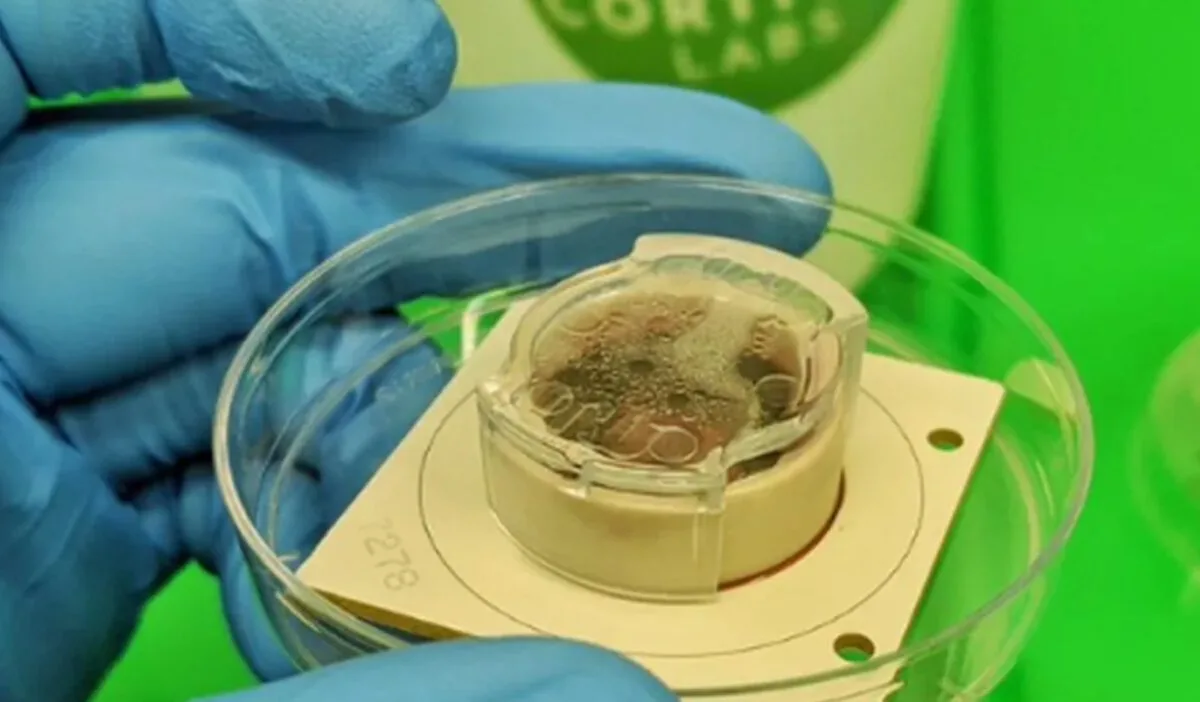
Imagine a clump of human brain cells, smaller than a pea, suspended in a dish. Now imagine that clump successfully navigating the demon-infested corridors of Doom, making real-time decisions to turn, shoot, and survive. This is not a scene from a cyberpunk novel; it is a landmark achievement in modern neuroscience. And it started with a game far simpler than Doom.
As artificial intelligence ascends, a parallel frontier is emerging—one built not on silicon, but on biology. Scientists are now coaxing lab-grown brain cells to master video games, from Pong to Doom. These experiments probe a fundamental question: Are we witnessing the birth of biocomputing, or have we finally created an unparalleled tool for deciphering the brain itself?
The journey from paddles to plasma guns began in 2021 when Australian company Cortical Labs first captured headlines. Their system, dubbed "DishBrain," used a cluster of human neurons grown on a microelectrode array to learn the basic mechanics of Pong. The cells received electrical feedback representing the paddle's position and the ball's location, and their neural activity was interpreted to move the paddle. It was a proof of concept that biological neural networks could interact with and adapt to a simulated environment.
That proof concept has evolved dramatically. In a 2024/2025 follow-up, Cortical Labs' researchers scaled up the ambition and complexity. A dense network of over 800,000 living human brain cells learned to play Doom, a game orders of magnitude more complex than Pong. While Pong involves one-dimensional movement, Doom requires navigating a 3D space, managing resources like ammunition and health, and making split-second decisions amid uncertainty and multiple objectives.
A critical enabler of this leap was a new Python-based interface for the system. This open framework allowed independent developer Sean Cole to program the Doom integration in about a week—a stark contrast to the years of specialized effort required for the initial Pong project. This accessibility marks a significant step toward broader experimentation with biological neural systems.
The performance, while groundbreaking, puts current capabilities in perspective. The biological chip played Doom "better than a random player but far below human skill levels," as noted by researchers. Remarkably, it achieved this using only about a quarter of the neurons employed in the Pong experiment and demonstrated a learning speed that, for this specific task, outpaced some traditional silicon-based machine learning approaches. The primary application Cortical Labs envisions is not entertainment, but practical biocomputing, such as controlling robotic limbs with unprecedented efficiency and adaptability.
The Cart-Pole Balancers: UC Santa Cruz's Learning Organoids
While Cortical Labs works with layered cell cultures, another approach is taking shape in California. In a study published in February 2026, a team from the University of California, Santa Cruz—led by Ph.D. student Ash Robbins and professors Mircea Teodorescu and David Haussler—trained lab-grown brain organoids to solve a classic AI benchmark: the "cart-pole" problem.
This task, familiar to AI researchers, is a foundational benchmark for testing learning algorithms because it requires continuous, precise adjustment to maintain stability. It involves balancing a vertical pole on a moving cart by applying left or right forces. The researchers used pea-sized brain organoids derived from mouse stem cells, placing them on a high-density microelectrode array. They created a "closed-loop" system—where the organoid's output directly influences the game, and the game's outcome is fed back as input, creating a cycle of interaction and learning. The organoid's electrical activity was decoded to move the cart, and its success or failure at balancing was fed back as patterned electrical stimulation.
The results were dramatic. Through this bioelectrical feedback alone, without any chemical rewards like dopamine, the organoids' success rate at the task skyrocketed from a baseline of 4.5% to 46%. This demonstrated that the capacity for adaptive, computational learning is an intrinsic property of organized brain tissue. However, a key limitation emerged: the learning was short-term. After about 45 minutes of inactivity, the organoids' performance returned to baseline, indicating they had not formed long-term memories.
This distinction is crucial to the team's goal. Unlike Cortical Labs' focus on practical computation, the UC Santa Cruz team explicitly states their research is aimed at understanding the fundamental mechanisms of neural plasticity. Their mission is to advance the study and potential treatment of neurological diseases like Alzheimer's and Parkinson's, not to build biological processors.
Beyond the Game: Diverging Goals and Potential Applications
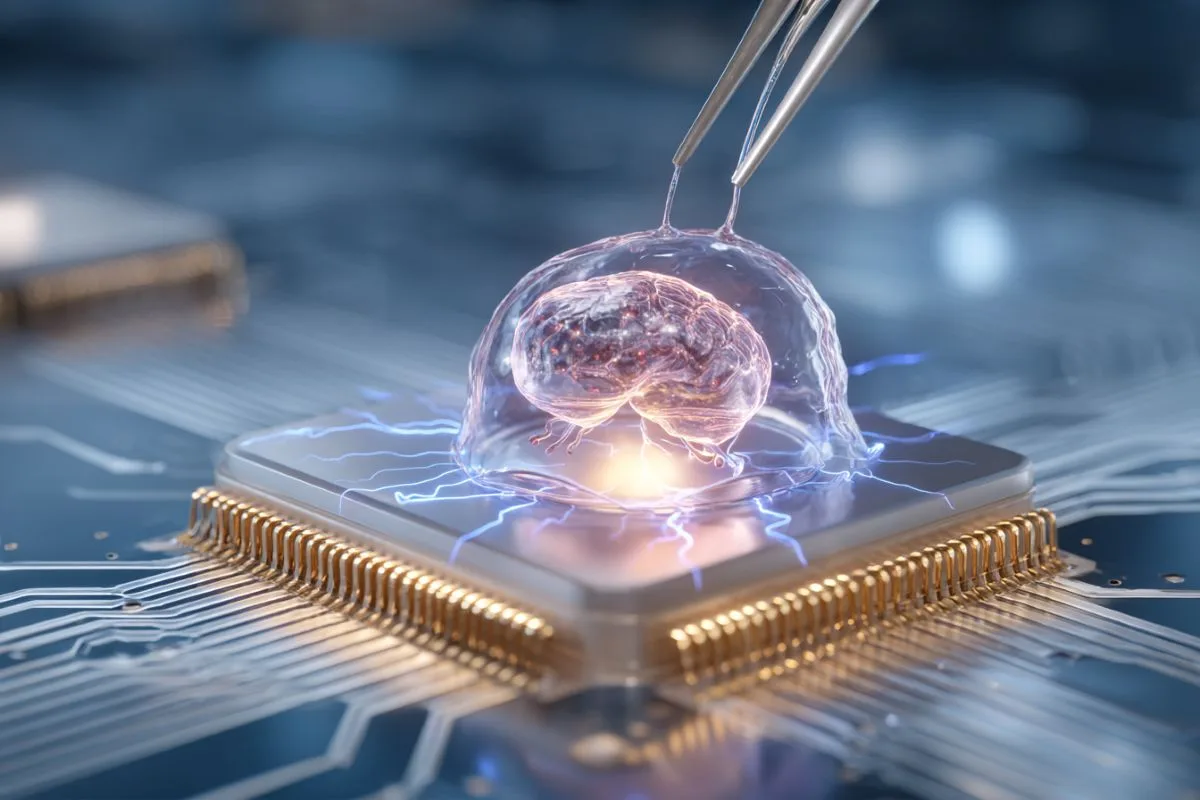
These two landmark studies represent diverging paths in a burgeoning field. Cortical Labs is pioneering a path toward biocomputing, exploring how biological neurons can perform efficient, low-power computation for specific control tasks. Their work sits at the intersection of neuroscience and engineering, with a clear view toward hybrid machines.
Conversely, the UC Santa Cruz team is firmly on a neuroscience research path. Their organoids are a revolutionary model system. As lead author Ash Robbins stated, the goal is to "study the learning rules of neural networks" in a controlled setting impossible in a living animal or human. The cart-pole task is merely a precise, measurable benchmark for plasticity.
Both approaches are fueled by advances in biointerfacing technology—hardware designed to connect with living tissue. For instance, work from institutions like Northwestern University on 3D flexible bioelectronics that can mesh with brain tissue is critical for the high-fidelity recording and stimulation these experiments require. Together, they are pushing the boundaries of hybrid AI systems that may one day combine the adaptive learning of biology with the processing power and memory of silicon.
The Ethical Frontier and Future of Brain Research
With such profound capability comes profound responsibility. The field, especially research involving human cells and complex organoids, navigates a stark ethical frontier. The core question is: At what level of complexity does a cluster of neurons warrant moral consideration? Could a sufficiently advanced, learning organoid experience something akin to suffering? These are not hypotheticals; they are active debates in neuroethics guiding research protocols.
Researchers like those at UC Santa Cruz are acutely aware of this "moral line," emphasizing their work is for healing, not for creating conscious hardware. This ethical caution is balanced by tremendous medical promise. The Salk Institute has designated 2026 as its "year of brain health research," signaling massive investment in organoid technology. These lab-grown brains are already being used to model and search for treatments for devastating conditions like Timothy syndrome, offering hope where traditional models have failed.
The image of brain cells playing Doom is a powerful emblem of a strange new era, but it may not be the most important story. The quieter, systematic success of a mouse organoid learning to balance a pole through pure electrical dialogue reveals something deeper: a direct window into the brain's fundamental mechanics of learning. The true legacy of this research will likely be measured not in frames per second, but in the breakthroughs it enables against dementia, neural injury, and psychiatric disease. The path forward is one of cautious, ethical stewardship, where the goal is not to build a brain in a vat, but to finally understand the one within our own skulls.
Tags: Biocomputing, Brain Organoids, Neuroscience, Artificial Intelligence, Neuroethics