Evo 2026 at a Crossroads: Attendance Drops, Games Change, Spirit Endures - A Complete Guide
The Hard Numbers, Why Attendance Fell So Far The headline figure is stark: Evo 2026 registered 5,774 unique competitors, down roughly 32% from 8,541 in 2025 and nearly 50% from the record 10,000-plus...

The Hard Numbers, Why Attendance Fell So Far
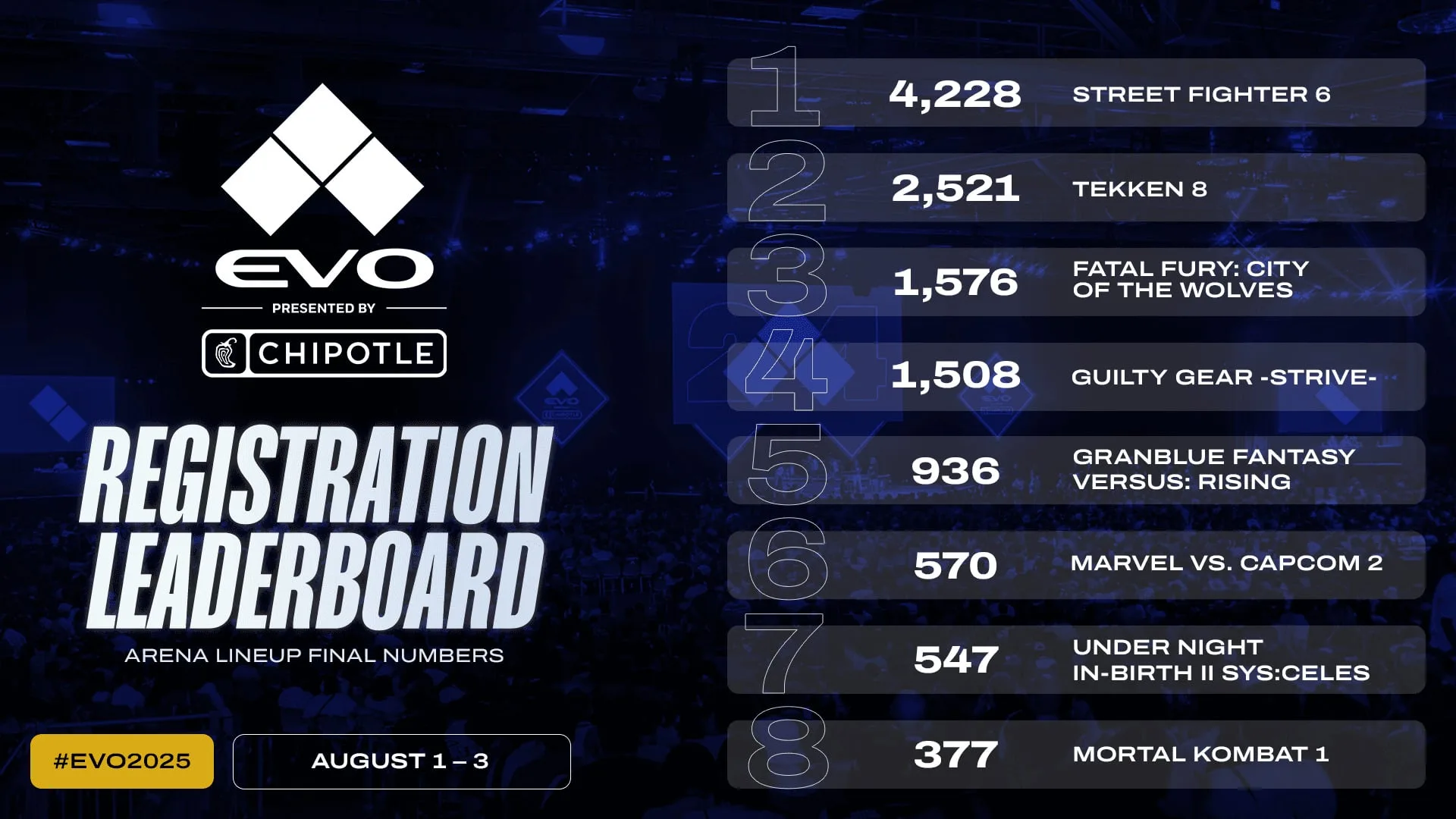
The headline figure is stark: Evo 2026 registered 5,774 unique competitors, down roughly 32% from 8,541 in 2025 and nearly 50% from the record 10,000-plus in 2024. Street Fighter 6 remains the flagship at 2,414 entrants, but that represents a 43% drop from 4,228 at Evo 2025. Only four games broke 1,000 entrants: Street Fighter 6, Tekken 8 (1,354), 2XKO (1,080), and Rivals of Aether II (1,022). The expanded 12-game lineup, the largest in Evo history, spreads the pool thin, leaving games like Granblue Fantasy Versus: Rising (466) and Guilty Gear Strive (912) to compete for the remaining slots.
Why the decline? Evo general manager Rick Thiher pointed to the June date change, which conflicts with many attendees’ annual summer plans, and rising travel costs as major dampeners. The FIFA World Cup group stages run the same weekend, competing for attention and wallets. The timing shift from the traditional August slot hit hard for a community that schedules vacation and time off around the event.
There is a counterpoint: Evo Japan 2026 set a Guinness World Record with 7,168 Street Fighter 6 entrants, proving international appetite remains strong. The Asian market’s enthusiasm suggests the Las Vegas decline is not a universal rejection of the brand, but a specific combination of logistics and disaffection.
The Saudi Ownership Schism, Community Backlash and Institutional Trust
Evo is now 100% owned by Saudi Arabia’s Qiddiya, a Public Investment Fund (PIF) megaproject, after parent company RTS acquired Nodwin Gaming’s co-ownership stake in February 2026. The acquisition completes a chain that began when Sony sold to Nodwin in 2024, then PIF-backed RTS bought the parent company in September 2025, and finally bought out Nodwin entirely. This places Evo squarely within Saudi Arabia’s broader gaming push, a campaign that included a reported $55 billion bid for Electronic Arts and billion-dollar acquisitions of ESL/FACEIT and Scopely.
The reaction from the fighting game community has been immediate and divided. Prominent commentators Sajam and Maximilian Dood both publicly withdrew from future Evo events, citing ethical concerns about associating with a sovereign wealth fund tied to human rights issues. Sajam stated it was “a pretty big deal for me as a human” to step away. Maximilian Dood echoed the sentiment, ending a long relationship with the event.
The schism splits the FGC. Some players boycott entirely, arguing institutional trust is irreplaceable. Others counter that Evo’s size, legacy, and competitive depth make it impossible to replicate. Despite the backlash, 50 countries are still represented at Evo 2026, showing the event’s gravitational pull. The question is not whether the FGC will fracture further, but how the institution navigates a future where its ownership is a political statement in itself.
A Shifting Lineup, New Blood, Missing Veterans, and 2XKO’s Shadow
The 12-game main lineup is the largest in Evo history, but it is also a lineup of gains and losses. Mortal Kombat is absent for the first time in years, a notable gap given its mainstream popularity. The expanded roster aims to showcase diversity, but some worry it dilutes focus and splits viewership across too many brackets.
The biggest newcomer is 2XKO, Riot Games’ 2v2 fighter, debuting with 1,080 entrants. Its Evo launch, however, was overshadowed by Riot laying off half the development team, roughly 80 people, shortly after console launch due to poorer-than-anticipated reception. The game’s competitive potential is clear, but its institutional support is now uncertain. The shadow of that workforce reduction hangs over 2XKO’s first major stage appearance.
Rivals of Aether II offers a more optimistic story. It more than doubled its entrants from 358 at Evo 2025 to 1,022 this year, a direct result of a controversial grassroots push. Publisher Ludwig Ahgren bought Evo passes for top players, effectively subsidizing the game’s competitive scene. The move sparked debate: is it legitimate marketing or rigging the numbers? For the Rivals community, it was a lifeline. The surge shows how publisher-funded tactics can reinvigorate a game’s presence, even if it bends the usual rules of tournament registration.
Other games round out the top six Arena Finals: Guilty Gear Strive (912) and Granblue Fantasy Versus: Rising (466). The remaining six titles, including Vampire Savior and BlazBlue Central Fiction, will have their own side brackets, ensuring no game is forgotten, but the main stage will feature fewer household names.
The Spirit Endures, Grassroots Resilience, Global Expansion, and Representation
Evo’s global expansion continues even as its Las Vegas flagship falters. Events are now scheduled in Tokyo (already record-breaking), Nice, France in 2027, and Singapore in 2027. This multi-continent strategy signals long-term ambition and reduces dependence on a single North American hub. The $500,000 minimum guaranteed prize pool, presented by Chipotle, keeps the stakes high across all titles.
Representation remains a core part of Evo’s DNA. SonicFox will compete in 2XKO duos under the trans flag, continuing a tradition of visible LGBTQ+ presence that has defined the FGC’s inclusive culture for years. Their participation is a deliberate act, a reminder that even under contested ownership, the community can still claim its own stage.
The FGC’s decentralized nature means side tournaments, community streams, and impromptu matches will thrive regardless of institutional drama. Players who cannot or will not attend Evo 2026 are organizing their own events at nearby venues and online. The spirit of the fighting game community was never solely dependent on one tournament’s brand.
Rivals of Aether II’s surge, SonicFox’s defiant presence, and the record-breaking Evo Japan all prove that passion for fighting games is not in decline, only the institution’s ability to channel it is being tested.
What the Future Holds After a Turbulent Weekend
Evo 2026 is a tournament of contradictions. Its numbers are down, its ownership is contested, its lineup is in flux, yet the passion of its players, the creativity of its organizers, and the global reach of its brand remain undimmed. The declining attendance may be a temporary correction or a sign of deeper fractures, but the fighting game community has always built its own stages. As Evo evolves, the spirit that made it, the love of the game, endures. The question is how the institution will keep up with its own community.