Crystal Dynamics' Tomb Raider AI Controversy: The Real Issue Isn't Just Generative Art - It's Trust
When a small disclaimer appeared on the Steam page for Tomb Raider: Legacy of Atlantis , "generative AI used during early development", forums erupted, social media lit up, and Crystal Dynamics'...

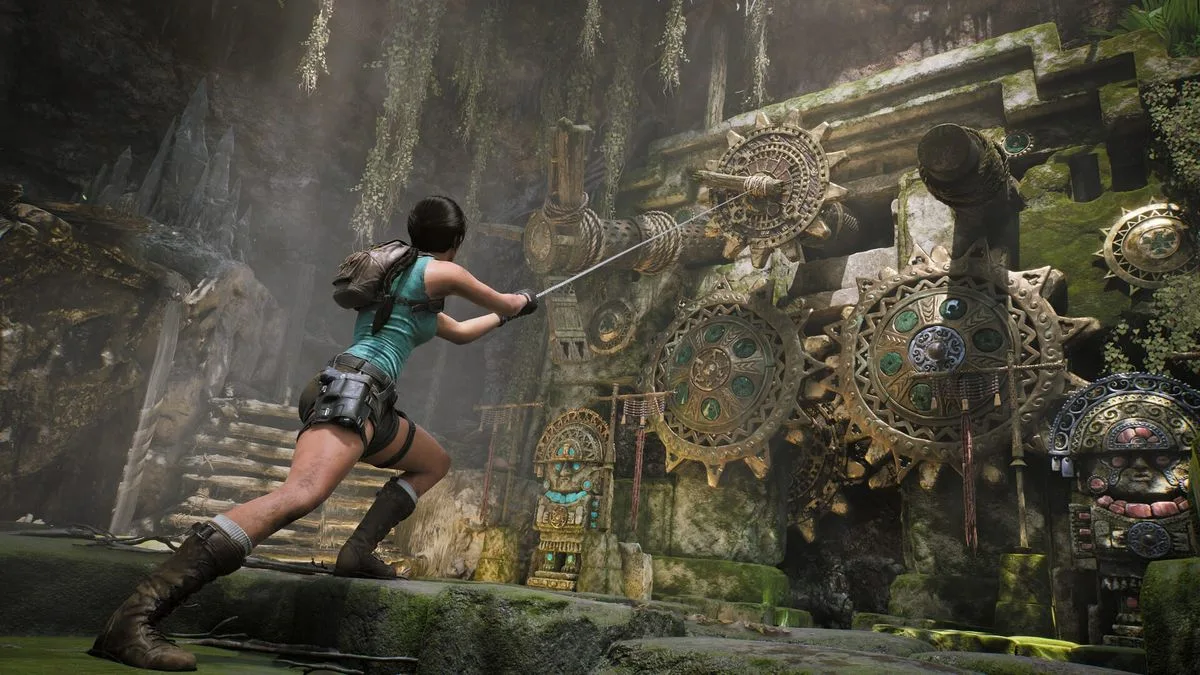
When a small disclaimer appeared on the Steam page for Tomb Raider: Legacy of Atlantis, "generative AI used during early development", forums erupted, social media lit up, and Crystal Dynamics' carefully managed PR operation began to unravel. What followed was not just a debate about AI in game development. It was a case study in how a studio's good intentions, mixed with inconsistent messaging and a single disastrous interview interruption, can turn a transparency effort into a full-blown trust crisis.
The controversy isn't really about whether AI can help designers "get to right answers faster." It's about a growing chasm between how studios talk about AI and what gamers actually hear. When a community already on edge over mass layoffs hears "we used generative AI," the immediate assumption is not "placeholder work", it is "replacement."
The Disclosure That Sparked a Firestorm
The trouble began with a single line on the game's Steam store page [cite: Steam page]. Crystal Dynamics had added a generative AI disclosure stating that the technology was used for "early exploration and temporary development content" and that any AI-assisted assets were "replaced or refined by humans." The studio was attempting to be upfront about its development process.
The reaction was immediate and hostile. Across communities like ResetEra and Threads [cite: forum threads], skepticism ran high. Many gamers pointed to other recent controversies, Clair Obscur: Expedition 33 had faced similar backlash, and argued that the disclaimer raised more questions than it answered. If AI was only used for placeholder work, why mention it at all? And if the finished game was entirely human-crafted, why not simply say that in plain language?
The timing made matters worse. The disclosure came against a backdrop of sweeping industry layoffs at studios like Bungie, Meta, and others [cite: industry layoff reports]. For a workforce already anxious about automation, the mere mention of AI in a development pipeline felt like an admission that the technology was creeping into creative roles. No amount of careful phrasing could prevent that emotional response.
What Crystal Dynamics Says vs. What Critics Hear
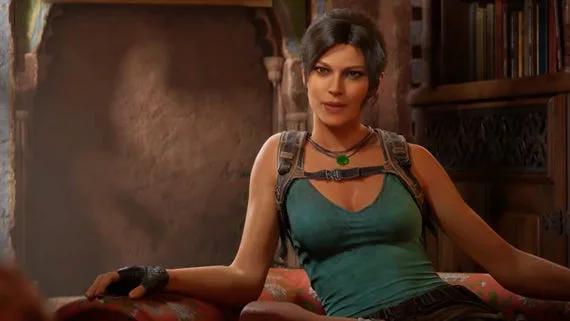
In interviews following the backlash, Crystal Dynamics experience director Jeff Adams described generative AI in relatively modest terms. He called it "a tool that can help our team get to right answers faster," used for early-level ideation and temporary concept visualization [cite: interview with Jeff Adams]. According to Adams, the team generated placeholder objects and environments to test ideas before moving to traditional pipelines. Lara Croft's character design, the studio emphasized, was absolutely not created by AI. All finished content was human-crafted.
On the surface, this sounds reasonable. Prototyping and iteration are standard parts of game development. Using AI to generate rough concept art or block out a level layout is not the same as replacing an artist. But the language left room for doubt. "Get to right answers faster", what does that mean? Which models were used? How were those assets validated? What percentage of the early exploration work involved AI?
The fact that different outlets received different levels of detail did not help. Some reporters got more specific responses about the scope of AI use; others were left with vague reassurances. This inconsistency fed a narrative that the studio was hiding something. For many gamers, the phrase "AI helped us iterate faster" translates directly to "AI did the creative work and we polished it." This divide is stark: outlets like Kotaku and Aftermath framed the technology critically, calling it "plagiarism machines," while others like Wccftech and KitGuru presented it as a straightforward productivity tool [cite: Kotaku, Aftermath, Wccftech, KitGuru]. Without concrete information, the worst interpretation fills the void.
The PR Misstep That Made Everything Worse
If the disclosure had been the end of the story, the controversy might have fizzled out. But it was not the end. A Game Informer interview with Jeff Adams went viral [cite: Game Informer clip], not because of what Adams said, but because of what happened when the interviewer pressed for more details. Midway through a question about the exact scope of AI use, a PR representative interrupted and shut down the line of inquiry with a firm "we can't discuss that." The clip spread rapidly across Twitter and Reddit. To many viewers, it looked like a studio caught off guard, unable or unwilling to answer straightforward questions about its own tools. The impression was that Crystal Dynamics had something to hide.
The optics could not have been worse. Amazon Games, the publisher, had previously stated it was "bullish" on AI [cite: Amazon Games statement]. That corporate-level enthusiasm, combined with a PR team that seemed to be pulling strings, created a picture of a studio under pressure to adopt technology while being less than transparent about it. Selective transparency, giving Polygon more detail while cutting off Game Informer, suggested a carefully controlled narrative rather than an open dialogue. The community's trust, already fragile, fractured further.
What This Means for Game Development and Community Trust
The Tomb Raider AI controversy is not really about generative AI itself. It is about the gap between developer messaging and public perception. When studios frame AI as a harmless iteration tool, but gamers see it as a threat to artistry and jobs, both sides talk past each other. The result is an impasse that no amount of carefully worded statements can bridge.
There are key lessons here for any studio navigating this territory. First, transparency must be consistent across all outlets, not just friendly ones. If you give one reporter a detailed breakdown of which assets were AI-generated and which were not, give the same information to everyone. Second, vagueness is the enemy. A clear, specific explanation, "we used Stable Diffusion to generate placeholder textures for level blocking during pre-production, and every asset was later recreated by our environment artists", would go much further than "we got the right answers faster."
Third, and perhaps most importantly, the industry's broader context cannot be ignored. Massive layoffs have made every mention of AI a potential lightning rod. Studios that claim AI is just a tool must prove it by being radically open about how it is used, what safeguards are in place, and how human jobs are protected. Failure to do so will be interpreted as an attempt to sneak automation in through the back door.
Tomb Raider: Legacy of Atlantis is a high-profile project, a ground-up Unreal Engine 5 reimagining of the 1996 original, co-developed by Crystal Dynamics and Flying Wild Hog, published by Amazon Games. It is a 30th-anniversary celebration meant to build goodwill, not erode it. The game's release date of February 12, 2027, on PS5, Xbox Series X|S, PC, and Switch 2 [cite: official announcement] gives the studio time to course-correct. But the damage to community trust has already been done.
Rebuilding After the PR Wreckage
This controversy is a case study in why good intentions and bad communication are a toxic mix. Crystal Dynamics likely used generative AI in a relatively benign way, for early prototyping, not final art. But by letting PR cut off hard questions, and by failing to offer specific, consistent details, the studio turned a routine disclosure into a trust crisis. For developers everywhere, the lesson is clear: if you want gamers to accept AI as a tool, you have to be transparent enough to prove it, not just say it. The question now is whether developers will learn from this case study, or repeat it.