Crimson Desert's Intel GPU Dilemma: Why It Doesn't Work and What's Being Done
The Black Screen Problem: Understanding the Compatibility Block The issue is both specific and broad. The error cleanly prevents Crimson Desert from launching on any system it detects is using Intel...

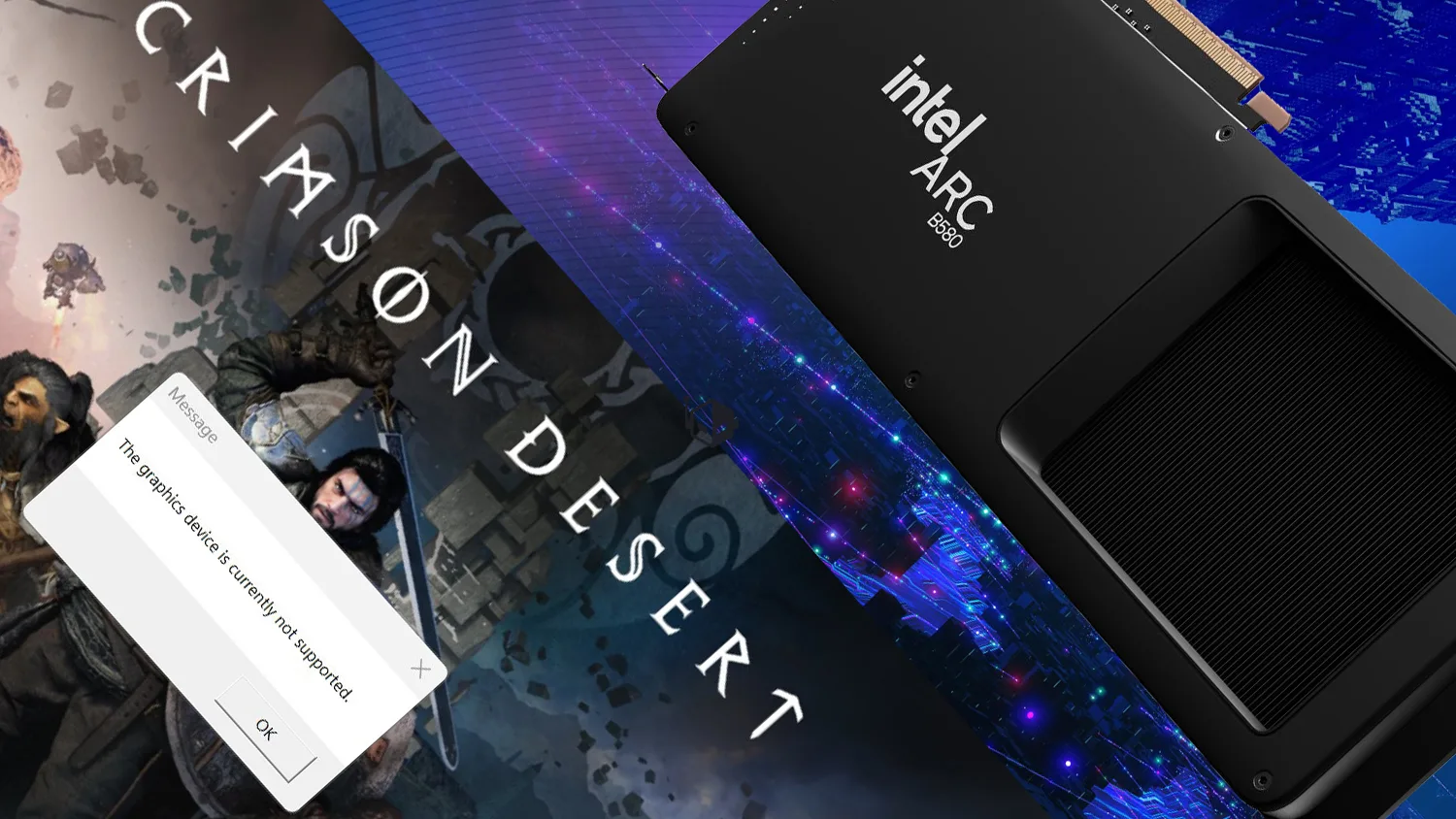
The Black Screen Problem: Understanding the Compatibility Block
The issue is both specific and broad. The error cleanly prevents Crimson Desert from launching on any system it detects is using Intel graphics hardware. This includes owners of discrete Intel Arc graphics cards from the Alchemist and Battlemage generations. Perhaps more consequentially, it also blocks players using the integrated graphics within Intel's latest CPU architectures: Meteor Lake, Lunar Lake, and the newly launched Panther Lake series.
The player experience was uniformly frustrating. After purchasing a top-tier, full-price game, users encountered an immediate crash or the support error, leading to forums and store pages flooding with confusion and refund requests. The situation was initially compounded by Pearl Abyss's own communication. The game's official FAQ originally addressed the problem by bluntly advising Intel GPU users to seek a refund, setting a tone that suggested support was not a priority, or even a future possibility. This directive framed the incompatibility not as a temporary setback, but as a definitive state of affairs.
Pearl Abyss's Pivot: From "Seek a Refund" to "We're Working On It"
The developer's public stance has undergone a significant, if carefully managed, evolution. Following the release of a major post-launch patch, Pearl Abyss retracted the refund-focused language from its FAQ. In its place, the studio issued an apology for the previous communication, acknowledging it "caused confusion."
Critically, the new statement included a commitment: the team is "currently working on compatibility and optimization support" for Intel Arc GPUs. This pivot was a necessary public relations move, likely in direct response to mounting community backlash and media scrutiny. It transformed the narrative from one of abandonment to one of delayed support. However, this retraction came with a glaring omission: any public timeline or estimated window for a fix. While the statement moves the goalposts from "never" to "someday," it leaves Intel GPU owners in a state of limbo, unsure if they should wait weeks, months, or longer to play a game that is currently a cultural talking point.
Intel's Disappointment and Accusations of Missed Opportunities
If Pearl Abyss's response has been one of gradual, quiet correction, Intel's has been one of public and pointed disappointment. The chipmaker released a statement expressing it was "hugely disappointed" by the lack of day-one support in Crimson Desert.
More importantly, Intel detailed its side of the story, making a claim that shifts significant responsibility onto the developer. The company asserts that it provided Pearl Abyss with early access to hardware, drivers, and dedicated engineering support "over several years," specifically to facilitate testing and optimization for multiple GPU generations, including the current Battlemage series. This framing positions Intel not as a passive bystander, but as a proactive partner that fulfilled its industry role. The implication is clear: Intel believes it handed Pearl Abyss the tools and opportunity to ensure compatibility, and the developer either declined to use them or failed to prioritize the task. Intel has reiterated that its engineers remain ready to assist, publicly placing the ball in Pearl Abyss's court.
Why This Matters: Market Competition and the Gamer's Choice
Beyond the immediate frustration for players, this compatibility block exposes a critical vulnerability in the modern PC gaming ecosystem. At a market level, the effective launch exclusivity to AMD and NVIDIA hardware reinforces the longstanding duopoly in the dedicated GPU space. For consumers, it actively punishes a hardware choice, stifling the very competition that drives innovation and value in the PC component market.
The impact is particularly acute in the growing segment of portable PC gaming. A wave of new laptops and handheld PCs are launching with Intel's latest Panther Lake processors, which rely solely on their integrated Xe2 graphics. For owners of these devices, there is no alternative GPU to switch to; they are completely locked out. This makes Crimson Desert’s incompatibility a critical flaw for an entire category of modern hardware and a primary example of how such technical failures can have punitive, real-world consequences for consumer choice.
Quantifying the affected audience, the March 2026 Steam Hardware Survey shows dedicated Intel Arc GPUs in approximately 1% to 1.5% of systems. While this may seem like a niche segment, it represents tens of thousands of paying customers for a top-selling title. The community criticism has been sharp, framing the issue as more than an oversight—it's viewed as a move that harms consumer choice and the fragile ecosystem of a three-horse GPU race. As one player noted on social media, "Telling people to get a refund instead of fixing support is how you kill competition before it even starts."
Conclusion: A Standoff Measured by Actions, Not Words
The current state of the Crimson Desert standoff is one of cautious promises versus public frustration. Pearl Abyss has committed to a fix but operates on an undisclosed internal schedule, while Intel waits, its assistance officially offered but seemingly unused. The resolution now hinges entirely on Pearl Abyss's internal priorities and the allocation of development resources to what it may deem a lower-priority platform.
This episode serves as a stark reminder of the importance of broad compatibility testing in an increasingly fragmented PC hardware ecosystem. However, the conclusion will not be written by statements of intent, but by tangible results. Pearl Abyss's commitment will be measured not by its apology, but by the speed, transparency, and efficacy of its actions. For Intel GPU owners, the wait continues, but the gaming community's attention remains fixed, watching for the patch notes that will finally grant access—and for the developer to demonstrate that supporting a competitive hardware landscape is a priority, not an afterthought.