Crimson Desert Time Management Guide: How to Advance Time and Why It Matters
In the vast, untamed lands of Pywel, time is more than just a backdrop—it’s a tangible, strategic resource. Crimson Desert presents a world that breathes on its own schedule, where the sun’s arc...

In the vast, untamed lands of Pywel, time is more than just a backdrop—it’s a tangible, strategic resource. Crimson Desert presents a world that breathes on its own schedule, where the sun’s arc dictates opportunity and the moon’s rise heralds hidden dangers. For the mercenary Kliff, survival isn’t just about mastering a blade; it’s about mastering the clock. A core challenge quickly emerges: pivotal quests, elusive vendors, and critical events are all gated by the relentless march of the in-game day. This transforms the simple act of waiting from a passive pause into an active, essential skill for progression. Understanding how to manipulate the day-night cycle is the key that unlocks the game’s full potential, turning you from a wanderer at the mercy of time into its deliberate architect.
The Core Mechanics: How to Make Kliff Sleep or Wait
To bend time to your will in Pywel, you must understand the two primary methods at your disposal: sanctioned rest and opportunistic waiting.
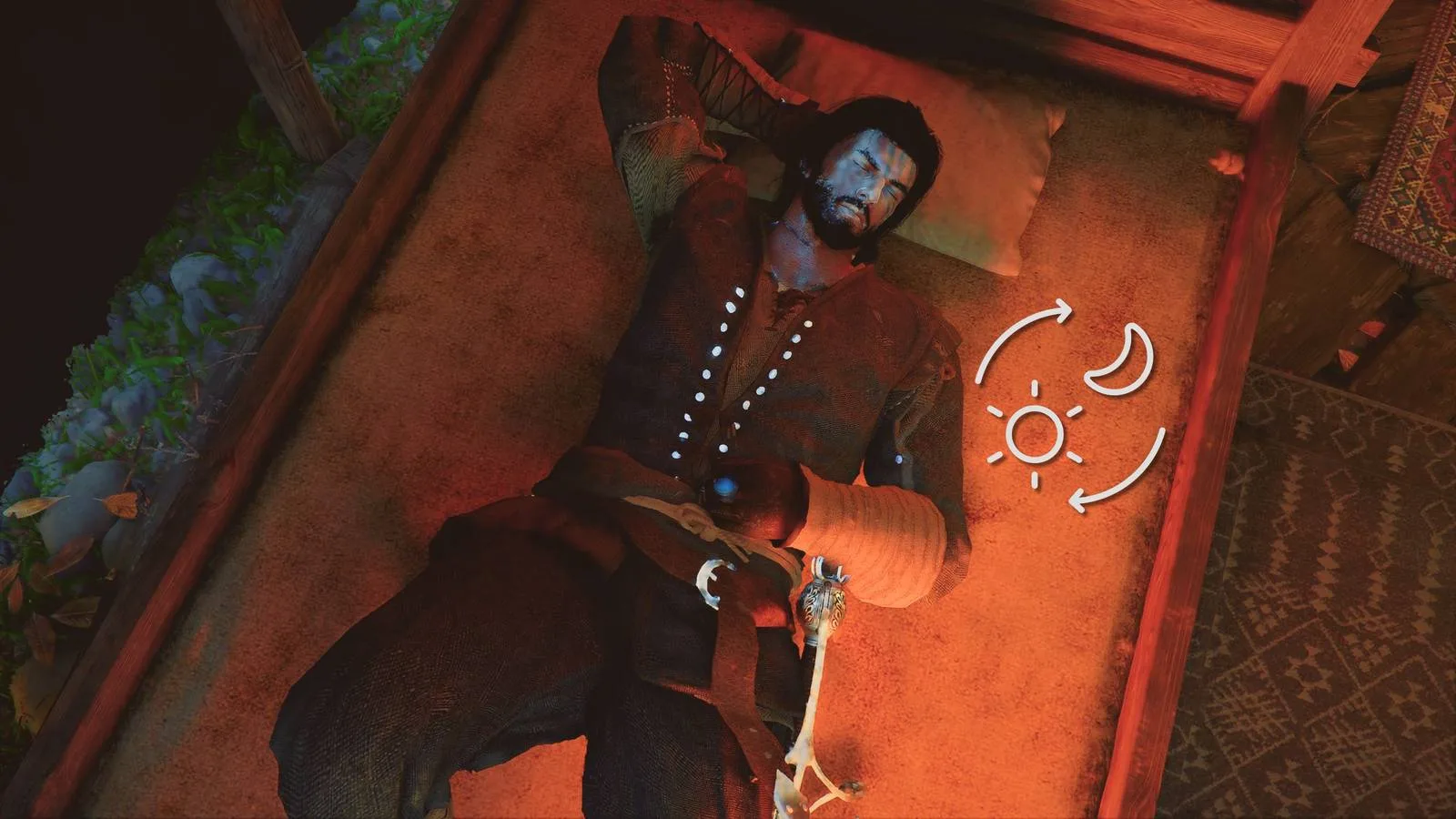
The most straightforward method is using a Bed. These safe havens become available as you progress, most notably in the main tent at Greymanes Camp (accessible from Chapter 3 onward) and within Kliff’s personal residence on Howling Hill. Interacting with a bed presents a clear menu for advancing time.
For flexibility in the field, seek out Bonfires or Cooking Fires. Scattered across the wilderness, these points require a specific interaction: you must focus your lantern on the fire to reveal the contextual "Wait" prompt. This immersive touch reinforces the game’s focus on survival and preparation.
Once engaged with either a bed or bonfire, you’ll be presented with a choice: advance time by 3, 6, or 12 hours. This granular control allows for precise planning, whether you need to wait for a shop to open or for the cover of darkness. A crucial quality-of-life tip: every bonfire you discover is permanently marked on your map with a fire icon, allowing for easy relocation and strategic route planning for future excursions.
Understanding the Rest Cooldown and Fatigue System
Crimson Desert prevents players from trivializing its dynamic world by implementing a clever rest cooldown mechanic. The fundamental rule is that Kliff can only rest when he is sufficiently fatigued. This cooldown is intrinsically tied to a fatigue system that governs Kliff’s physical state.
The cooldown is triggered after you rest. To be eligible to rest again, Kliff must first accumulate a meaningful level of fatigue. This fatigue builds naturally through engaging with the world: from the exertion of combat and the toll of extended travel to the simple, passive passage of time. One analysis of the game’s systems notes that this cooldown period—the time needed to become fatigued again—lasts approximately 12 in-game hours before the option to rest becomes available.
This system is a masterstroke of immersive game design. It prevents exploitation while encouraging organic play. Instead of waiting repeatedly in one spot, you are incentivized to venture out, tackle a side objective, gather resources, or simply explore until Kliff has legitimately "earned" his next period of rest. It seamlessly blends role-playing logic with strategic resource management.
Strategic Reasons to Advance Time: Beyond the Day/Night Cycle
Manipulating time is not merely for aesthetic change; it’s a core strategic tool with direct impacts on progression, economy, and combat efficacy.
- Quest and Activity Gating: Many of Pywel’s secrets are revealed only by the clock. Specific bounty targets may only stalk their territories at night, key story segments might require a dawn meeting, and entire quest chains can be locked behind a specific time of day. Advancing time is the direct key to accessing this content.
- Vendor Economy and Exploration: Every merchant’s stock refreshes daily. Need more arrows or healing salves? Resting can reset the marketplace. Furthermore, daytime visibility is vastly superior for charting unknown territories, uncovering points of interest, and avoiding ambushes.
- Progression Acceleration: The camp dispatch mission system, a pillar of resource gathering and clan management, often features timers ranging from hours to multiple in-game days. Strategically resting can expedite the completion of these missions, accelerating your overall progression and resource flow.
- Combat Utility: This ties directly back to the fatigue system. Sleeping completely removes Kliff’s accumulated fatigue, restoring his stamina and overall combat effectiveness. Entering a major battle while fatigued is a severe disadvantage, making planned rest a critical pre-combat ritual.
Pro Tips and Integrated Time Management Strategy
Mastering time requires foresight. Here’s how to integrate this mechanic into a holistic gameplay strategy:
- Plan Around Schedules: Don’t rest arbitrarily. Check your journal and map. Are you waiting for a vendor who opens at 8 AM? Need a night-only quest to activate? Plan your rest period to end precisely when you need it to, minimizing downtime.
- Choose Your Rest Site Wisely: Use bonfires for field flexibility when you’re deep in exploration and need a quick shift. Reserve beds for role-playing immersion, safety, or when you’re near a hub with multiple timed objectives.
- Manage the Fatigue Cycle Proactively: After resting, view the cooldown period as a designated activity window. Engage in light exploration, gathering, or clearing nearby points of interest to naturally build the fatigue needed to "unlock" your next rest opportunity.
- A Caution on Over-Reliance: While powerful, excessive time-skipping can have a cost. Pywel’s open world is filled with dynamic, random events that unfold in real-time. Constantly fast-forwarding may cause you to miss unique encounters, traveling NPCs, or emergent moments that enrich the adventure.
Time advancement is far more than a convenience feature in Crimson Desert; it is a fundamental pillar of strategic gameplay. It intertwines the immersive survival mechanics of fatigue with the practical demands of questing, economy, and exploration. By mastering the "how" of beds and bonfires and the "why" of cooldowns and gated content, you transform your role. You cease to be a passive observer of Pywel’s rhythms and become an active manipulator of its flow. This knowledge is the cornerstone of a smoother, more controlled, and profoundly more efficient adventure. Start your next session by checking your journal for time-sensitive objectives, and plan your first rest accordingly—you'll immediately feel the difference.
Tags: Crimson Desert Guide, Gameplay Mechanics, Time Management, Pywel, RPG Tips