'Claude Strife': DLSS 5 Has Escaped Into the Wild, and Things Are Immediately Weird
There is a picture circulating through the gaming community right now that captures the current moment in AI graphics perfectly. It shows Cloud Strife from Final Fantasy 7 Rebirth , rendered with a...

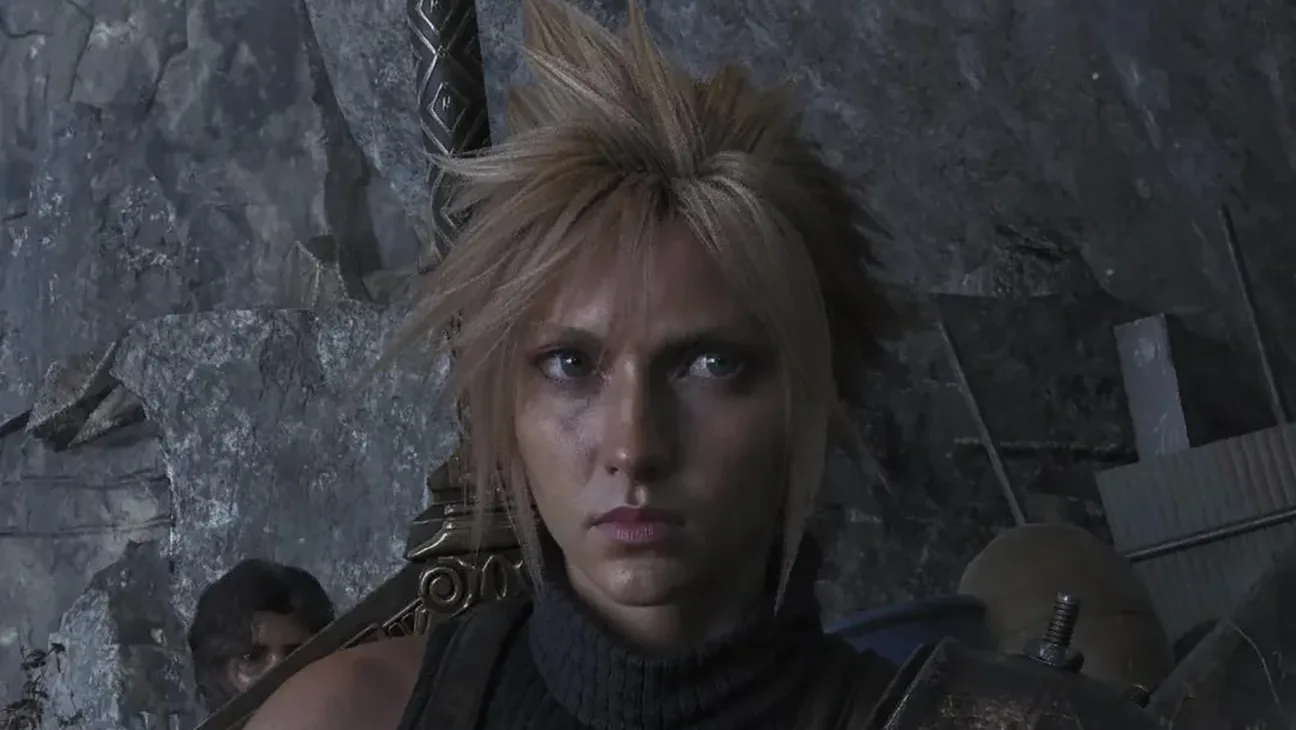
There is a picture circulating through the gaming community right now that captures the current moment in AI graphics perfectly. It shows Cloud Strife from Final Fantasy 7 Rebirth, rendered with a photorealistic level of detail that the original game never intended. His face has pores. His hair looks like actual hair. And he looks deeply, profoundly wrong. The modding community has already given this abomination a name: "Claude Strife."
This bizarre visual is not official Nvidia marketing. It is not a tech demo from a game developer. It is the result of a leaked, unreleased DLSS 5 neural rendering library that modders pried out of an NBA 2K27 early access build and forced into shipping games. Nvidia's most controversial AI technology has escaped containment, and the modding community is treating it like a playable preview, with weird, broken, and occasionally brilliant results.
The Leak: How DLSS 5 Got Out
The story begins with modder Renan Maniero, who was digging through the early access build of NBA 2K27 when he found something unexpected: a new Nvidia library called nvngx_dlssnr.dll, labeled "Nvidia DLSSNR." The "NR" stands for neural rendering, a technology that goes far beyond traditional upscaling. Where DLSS 4.5, the current stable version released in January 2026, uses AI to reconstruct higher-resolution images from lower-resolution inputs, DLSS-NR alters rendered output at a more fundamental level. It is an AI filter that can change how light interacts with surfaces, how textures appear, and how characters look on a frame-by-frame basis.
The implications of this discovery are significant. The presence of the library inside NBA 2K27 strongly suggests the game will be among the first to officially support DLSS 5 when it launches. Nvidia has not confirmed the technology's existence, let alone its name. The "DLSS 5" designation is inferred from the leaked DLL naming and the technology's position in Nvidia's product roadmap. The company has remained silent throughout this entire episode.
A note on sourcing: the initial discovery was documented by Maniero on public modding forums, and the subsequent porting efforts have been chronicled across multiple modding communities. The "Claude Strife" image was first reported by PC Gamer, and its authenticity has been corroborated by the broader modding coverage. However, Nvidia has not commented on any of these reports, and performance data remains limited to early community testing rather than official benchmarks.
The Modding Community Strikes: RenoDX and Control
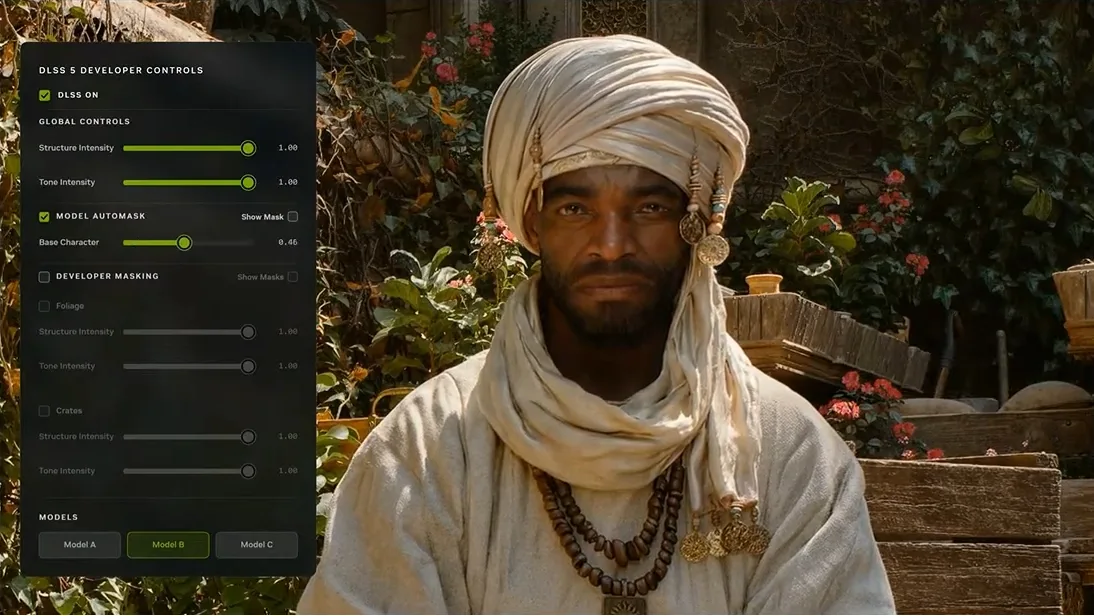
Within days of the leak, modders using the RenoDX toolchain had already gotten DLSS 5 neural rendering running in Control, Remedy Entertainment's 2019 supernatural action game. The initial implementation was limited, working on character models only rather than full scenes, but the speed of the effort was remarkable. This is bleeding-edge technology that Nvidia has not even announced, and the modding community had it running in shipping games within days.
The attitude among modders is clear: this is a playable preview ahead of Nvidia's official launch. The community has effectively turned themselves into beta testers for unreleased corporate technology, and they are having a wonderful time with it. Having proven the technology could run at all, modders immediately turned to the question of who could run it. The porting effort has been particularly impressive. Modders have already patched the incompatible CUDA instructions that prevent DLSS 5 from running on previous-gen hardware, meaning the technology now works on RTX 4000 series cards, not just the Blackwell-era RTX 5000 series it was designed for. This expansion of compatibility suggests a broader goal: democratizing access to a technology Nvidia intended to keep exclusive to its newest hardware.
'Claude Strife' and the Uncanny Valley
The headline result of this experimentation is the "realistic" Cloud from Final Fantasy 7 Rebirth that PC Gamer dubbed "Claude Strife." The image is genuinely unsettling. Neural rendering produces these uncanny results because it is doing something fundamentally different from traditional upscaling. It is not simply sharpening an image or adding detail; it is altering the rendered output in ways that the game's original art direction never accounted for.
This creates a new form of uncanny valley. We are used to seeing game characters that look stylized or obviously computer-generated. When neural rendering suddenly imposes photorealism on top of that stylization, the result is a character who looks almost human but not quite. The eyes are slightly off. The skin texture is too perfect. The hair moves in ways that real hair does not. It is the visual equivalent of hearing a familiar song played slightly off-key.
The "Claude Strife" nickname and the specific FF7 Rebirth result come from PC Gamer's reporting, but the broader pattern of immediately weird results is corroborated across the modding coverage. This is not an isolated incident; it is a pattern. AI-generated realism that does not quite land, creating a new aesthetic category that sits somewhere between impressive technical achievement and nightmare fuel.
The Performance Cost: Is It Worth It?
Early testing on Blackwell hardware reveals a dramatic performance cost. An RTX 5070 Ti running Control at 4K resolution dropped from 71 frames per second to 35 frames per second when DLSS 5 neural rendering was enabled. That is roughly a 50 percent performance hit, a significant price to pay for visual fidelity that, at least in its current state, often makes games look worse rather than better.
It is important to note that this is a single early test, not a general performance characteristic. This is bleeding-edge technology running outside its intended hardware and software environment, with no optimization, no driver support, and no developer tuning. The RTX 4000 porting effort is about compatibility rather than performance parity, and the performance implications on older hardware remain unverified. A fuller picture of DLSS 5's performance landscape will require testing across multiple resolutions, game engines, and hardware tiers, work that will likely only happen if the modding community continues its efforts or Nvidia issues an official response.
The trade-off is clear, though. Neural rendering promises better visual fidelity, but it demands significant compute resources to achieve it. The question is whether the visual improvement justifies the cost. Based on the "Claude Strife" image, the answer is not obviously yes.
What This Means: Nvidia's Control Problem
The leak raises uncomfortable questions for Nvidia. The company has built DLSS into a major selling point for its graphics cards, and DLSS 5 was presumably intended to be a flagship feature for the Blackwell generation. Now modders are effectively beta-testing the technology in public, without Nvidia's blessing, and the results are mixed at best.
There is also a creative dimension that has received little attention: game developers. Neural rendering changes output in ways that may not always be desirable, and it imposes a particular aesthetic on games that developers did not choose. A developer who spent years crafting a specific art direction may find their work visually reinterpreted by an AI filter they never approved, with no recourse. This is a significant ethical question that the modding community's enthusiasm has largely overshadowed, and it is one Nvidia will eventually have to address as neural rendering becomes more widespread.
The controversy around DLSS 5 is not unfounded. The modding community has historically pried open Nvidia technology before, from DLSS swaps between games to frame generation hacks, but this leak is different. This is unreleased technology that has escaped into the wild, and the community is treating it as a public experiment.
Nvidia has not issued any official statement about the leak. That silence is telling. The company may be scrambling to contain the damage, or it may be waiting to see how the community responds before deciding how to position DLSS 5 at its official launch. Either way, the narrative is no longer entirely in Nvidia's control.
The Wild West Continues
The "Claude Strife" image is simultaneously a joke, a technical achievement, and a warning. It shows that DLSS 5 has real potential and real problems. The modding community has turned Nvidia's unreleased, controversial technology into a public experiment, forcing the question of whether neural rendering is the future of gaming graphics or a well-marketed detour.
The performance costs are steep, the visual results are inconsistent, and the technology is running in environments it was never designed for. But the fact that modders got it working at all, within days of the leak, on hardware Nvidia did not intend to support, is a testament to the community's ingenuity. In a strange way, the modding community has become an unofficial research and development arm for Nvidia, testing the technology, finding its limits, and demonstrating its potential in ways the company itself has not.
What happens next is anyone's guess. Nvidia could issue a takedown notice, an official statement, or nothing at all. More games could get the treatment, with results ranging from the sublime to the absurd. Legal action remains a possibility, though Nvidia has historically been tolerant of modding efforts that don't directly harm its business. For now, until Nvidia officially speaks, the wild west of DLSS 5 modding continues, and things will only get weirder.