**"Bungie Was 'Very Close' to Collapse Before Sony's Emergency Acquisition," Ex-Employee Reveals - as Destiny 2 Surges and Marathon Stumbles**
The dominant narrative among the Destiny community has long been that Sony ruined Bungie. That the Japanese giant swooped in, paid $3.6 billion, and then mismanaged the legendary studio into layoffs,...


The dominant narrative among the Destiny community has long been that Sony ruined Bungie. That the Japanese giant swooped in, paid $3.6 billion, and then mismanaged the legendary studio into layoffs, canceled projects, and a slow funeral for Destiny 2.
But a former Bungie community manager has just flipped that story on its head. Liana Ruppert, who served as accessibility co-lead until she was laid off in October 2023, stated publicly that Bungie was not struggling under Sony, it was on the verge of shutting down entirely before Sony stepped in. Her claim lands during a bitterly ironic moment. Destiny 2's final update, Monument of Triumph, just drew its highest Steam player count in two years. Meanwhile, Marathon, Bungie's new hope, struggles to crack 16,000 concurrent players. The revelation forces the community to ask: who really saved the studio, and has the anger been misdirected all along?
The Claim: Bungie Was "Below the Red Line"
On June 12, 2026, Ruppert posted on X that Bungie was "below the red line" and "very close to shutting its doors" before Sony's acquisition in 2022. She explicitly called the deal an "emergency acquisition" and pushed back against fans blaming Sony for Destiny 2's end.
"It wasn't Sony though, this fight was pre-Sony," Ruppert wrote.
Her testimony carries weight because she is a former employee who lost her job in the October 2023 layoff wave. Most fired workers would have every reason to vilify the parent company. Instead, Ruppert defended Sony's role, insisting the studio's financial crisis had deep roots that predated the buyout.
Ruppert's claim aligns with public statements made by former Bungie CEO Pete Parsons. In 2023, Parsons admitted the studio was "running in the red" and 45% below revenue projections after the critical and commercial failure of the Lightfall expansion. A $100 million investment from NetEase in 2018 and the 2019 split from Activision had proved insufficient to stabilize the studio's finances.
The Pre-Sony Financial Crisis: Ambition Meets Overreach
After breaking free from Activision, Bungie took on the full risk of self-publishing Destiny 2. The studio believed that direct-to-player revenue would fund rapid expansion into multiple projects, Destiny 2, Marathon, and a new, unannounced IP.
That bet collapsed when Lightfall arrived in 2023. The expansion was critically panned, and the revenue shortfall exposed a fragile financial foundation. Bungie had over-hired aggressively, building a staff size that the studio's actual earnings could not support.
The first layoff wave hit in October 2023, cutting 8% of the workforce. A second wave in July 2024 removed 17%, roughly 220 jobs. A third wave is reportedly in the planning stages, all occurring after Sony's acquisition but stemming from structural problems that were already baked in long before the deal closed.
Bungie's situation before Sony was not unique in the games industry. Many studios have chased growth on the back of a single live-service title, only to discover that one bad expansion can wipe out years of goodwill and revenue.
The Sony Acquisition: Rescue at a Premium?
Sony paid $3.6 billion for Bungie in 2022. At the time, the price seemed extraordinary for a studio with one major franchise. In the context of a bidding war for live-service talent, triggered by Microsoft's acquisition of Activision Blizzard, Sony saw Bungie's expertise as critical to PlayStation's ambitions in games-as-a-service.
Ruppert's account reframes the deal not as a predatory corporate takeover but as a last-resort lifeline. However, the acquisition has not been without consequences. Sony disclosed a $765 million impairment loss on Bungie in its FY2025 financial results in May 2026. The writedown explicitly cited Marathon's underperformance and Destiny 2's end-of-life struggles.
Skeptics question why Sony paid such a premium for a studio "below the red line" and whether the unusual independence granted to Bungie in the deal prevented timely intervention. Did Sony overpay out of desperation, or did it secure a valuable IP portfolio at a time when Bungie had few other options? The answer likely lies somewhere in between.

Current State: Destiny 2's Final Hurrah, Marathon's Struggle, and the Fork in the Road
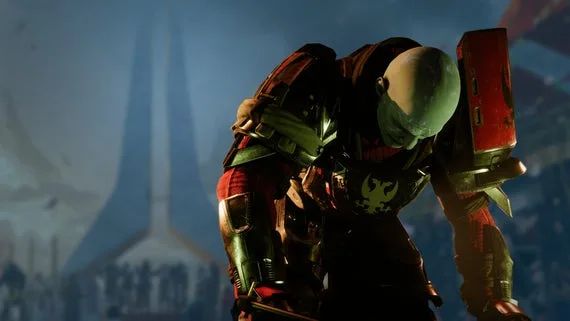
Destiny 2's Monument of Triumph update, released on June 9, 2026, pushed concurrent Steam players past 167,000, the highest count in two years. That figure is more than double Marathon's all-time peak of approximately 88,337 players on SteamDB. Those numbers help explain why Sony took a $765 million writedown on its investment. As of this week, Marathon's 24-hour peak sits below 16,000 players.
Ruppert was clear that Marathon was never designed to compete with Destiny 2's player numbers. It targets the extraction shooter niche, games like Escape from Tarkov, where success is measured by dedicated, highly engaged audiences rather than massive scale. Yet she also acknowledged the stakes: "The only way to keep Bungie alive right now is to support Marathon."
Bungie has ended active development on Destiny 2. No Destiny 3 has been greenlit. Bloomberg reports the studio is now pitching a new game to investors, seeking a way forward after a decade of live-service dominance.
Reframing the Narrative: Whose Fault Is Bungie's Decline?
The gaming community's reflexive blame of Sony for Bungie's woes now appears contradicted by evidence that financial trouble long predated the acquisition. Ruppert's testimony is particularly credible because she had nothing to gain by defending Sony. If anything, she risked backlash from fans who have invested years of anger in the "Sony ruined Bungie" story.
But important questions remain. Why did Sony, during due diligence, not foresee the depth of Bungie's problems? And did the deal's structure, granting Bungie unusual independence, prevent timely intervention that could have saved Destiny 2 and made Marathon's launch stronger? Of course, many fans will still point to the layoffs under Sony's watch, but Ruppert's account suggests those job cuts were consequences of pre-existing overreach, not corporate cruelty.
The broader lesson is sobering. In an industry where live-service games live or die by player retention, even legendary studios can be one bad expansion away from collapse. Bungie's story is not simply one of corporate greed or mismanagement. It is a cautionary tale about the razor-thin margins of game development.
The Second Chance Bungie Nearly Squandered
As Destiny 2 enjoys a nostalgic farewell and Marathon fights for relevance, the truth may be that Sony's acquisition did not ruin Bungie. It gave the studio a second chance it had nearly squandered through overreach and misjudgment. If Marathon fails, even an emergency acquisition may not be enough to save the studio a second time.
Tags: Bungie, Sony, Destiny 2, Marathon, Acquisition, Layoffs, Live Service, Game Industry, Extraction Shooter, Destiny 2