Beyond the Loop: How Exit 8's Director Rewrote the Rules of Video Game Adaptation
The universal dread of the daily commute—the fluorescent lights, the repetitive tiles, the unsettling feeling of being a cog in a vast, impersonal machine. In 2023, indie developer Kotake Create...


The universal dread of the daily commute—the fluorescent lights, the repetitive tiles, the unsettling feeling of being a cog in a vast, impersonal machine. In 2023, indie developer Kotake Create weaponized this modern anxiety into a viral horror sensation with The Exit 8, a breakout hit on Steam. Its premise was brutally simple: walk a seemingly endless subway corridor. Spot an anomaly—a flickering light, a misplaced poster—and turn back. See nothing wrong, proceed. Find Exit 8, and escape. It was a game of observation, a single terrifying rule rendered interactive.
This presented a unique paradox for adaptation: how do you make a movie out of a game with almost no characters, no dialogue, and a narrative that is, by design, a loop? For director Genki Kawamura—the prolific producer behind anime titans like Your Name and Suzume—the answer was not to follow the established playbook for video game movies, but to tear it up entirely. His 2025 film Exit 8, which premiered at Cannes and arrives in U.S. theaters via NEON on April 10, 2026, succeeds by breaking every conventional rule. It blurs the lines between player, viewer, and character, creating a cinematic experience that is both a faithful echo of the game and a profound expansion of its lonely, watching heart.
The Rulebook: From Game Mechanics to Cinematic Theme
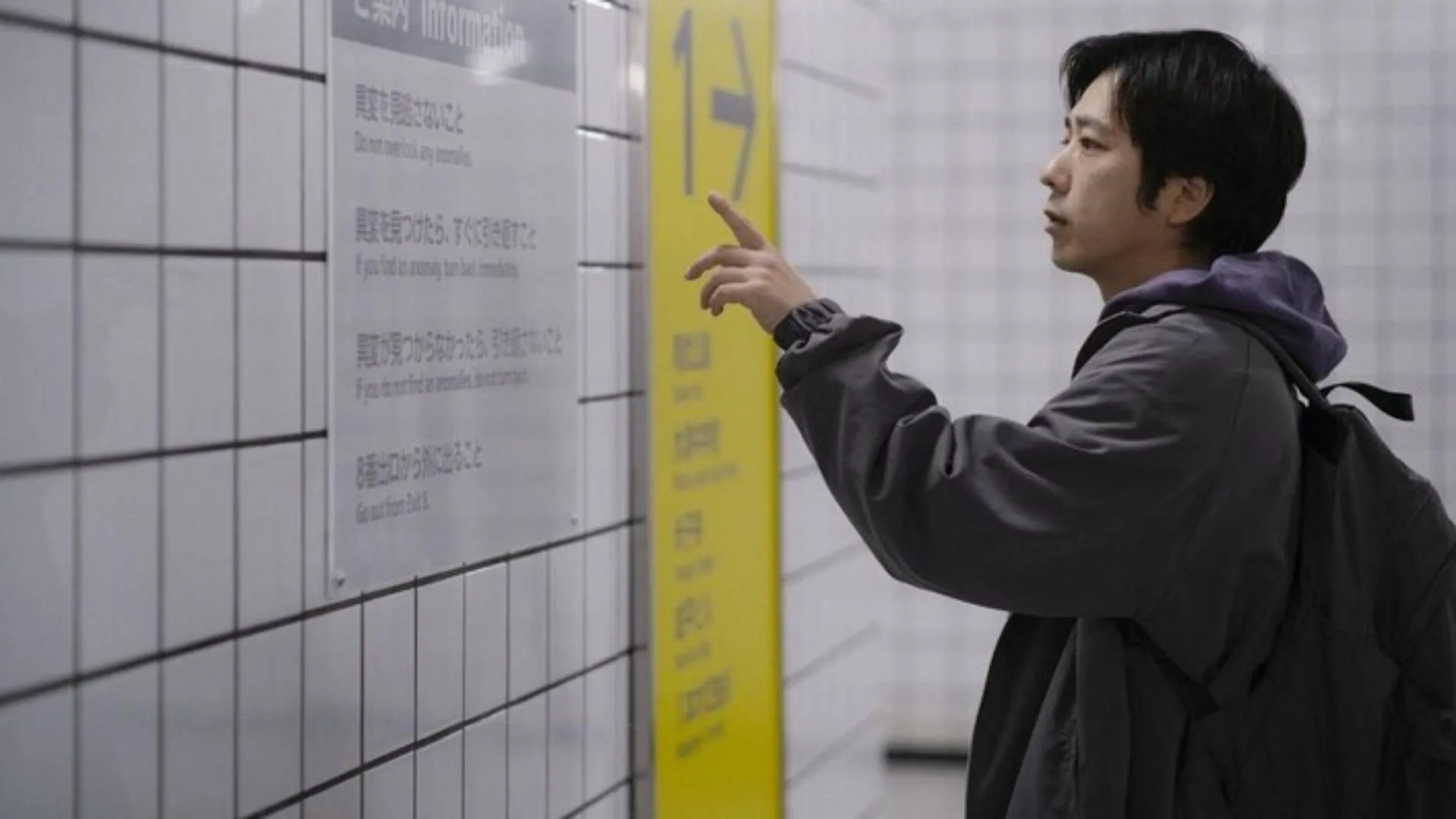
"Do not overlook anything out of the ordinary. If you discover an anomaly, turn back immediately. If you don’t, carry on. Then leave from Exit 8."
The game’s core rule is its entire architecture. A straight, literal adaptation would be a short, repetitive film. Kawamura’s goal, co-writing with Kentaro Hirase, was never to replicate the gameplay, but to dissect its emotional core. He aimed to "blur the lines" between film and video game, creating a new kind of participatory dread.
His key inspiration came not from other films, but from watching "many, many streams" of the game. He saw how the tension translated to an audience, citing advice from Nintendo legend Shigeru Miyamoto that a great game is fun for both the player and those watching. This shifted the creative mission. The film wouldn’t be about playing the loop; it would be about capturing the observational dread of being trapped within it, making the cinema audience complicit in the act of scanning, judging, and fearing the mundane.
Building the Maze: Practical Filmmaking Meets Digital Horror
In a digital age, Kawamura’s first monumental decision was defiantly analog. To achieve the game’s specific, unnervingly glossy aesthetic—often reminiscent of an Unreal Engine render—he ordered the construction of a practical, physical set of the iconic corridor. This wasn’t just for authenticity; it was for immersion and seamlessness.
The production engineered an ingenious system: two identical physical corridors, nicknamed "Hitchcock" and "Kubrick," built back-to-back. This allowed for seamless, long-take loops, a physical manifestation of the game’s digital code. The filming process embraced this analog philosophy. To maintain a continuous shot as the protagonist looped, actor Kochi Yamato would walk the length of one corridor, then literally bike to the start of the other to pick up the action, all in a single take. This tactile, human effort—the sweat and mechanics behind the horror—stands in stark, fascinating contrast to the sterile digital fear of the source material.
The cinematic influences here are palpable. The oppressive, symmetrical geometry draws directly from Stanley Kubrick’s The Shining, while the atmospheric, ghostly tension nods to the classic Japanese horror of Kenji Mizoguchi’s Ugetsu. Kawamura built a real maze to explore a psychological one.

Anomalies of the Heart: Injecting a Human Narrative
This is where Kawamura’s adaptation makes its boldest leap. The film introduces a protagonist, "The Lost Man," played with haunted intensity by Kazunari Ninomiya. To the game’s abstract loop, Kawamura added a powerful, human stakes: the character’s anxiety about becoming a father.
This single narrative addition transforms everything. The corridor’s anomalies cease to be mere visual glitches. They become metaphors for the societal pressures, personal guilt, and terrifying responsibilities the protagonist is scrolling past in his own life—the "anomalies" we all ignore daily. The maze becomes a monstrous reflection of his psyche, a purgatory of his own making. Kawamura has explicitly cited Dante’s Divine Comedy as inspiration, framing the corridor as a sentient Purgatory and the "Exit 8" sign itself as a character to be confronted.
This thematic expansion also deepens the game’s other sole entity: the "Walking Man" (Kochi Yamato). No longer just a looping NPC, he becomes a crucial foil. His perspective raises existential questions: In the maze of life, who is the main character, and who is merely an NPC in someone else’s story? The film uses the game’s minimal framework to ask maximal questions about isolation, perspective, and the stories we tell ourselves to survive our routines.
A New Blueprint: The Future of Adaptation
The film’s journey from niche Steam game to Cannes premiere and international release signals its resonant power. More importantly, it establishes a new, exciting blueprint for video game adaptation. Exit 8 succeeds not through slavish recreation of gameplay mechanics, but through a deep, philosophical engagement with the source material’s core premise: observation, routine, and the anxiety of the mundane.
Kawamura’s vision for the property is tellingly expansive. He has discussed plans for an English-language remake and even potential country-specific versions, intrigued by the concept of an "Exit 8 universe" tailored to the subway anxieties of different global cities like London or New York. This aligns with his broader fascination—evident in his expressed interest in analog horror concepts like the Backrooms—with the spaces where reality, narrative, and digital folklore intersect.
Exit 8 represents a paradigm shift. Kawamura deconstructed the game’s single rule and rebuilt it with the tools of cinema—practical sets, human drama, and thematic depth. The film’s greatest achievement is making the audience feel the visceral weight of that rule, turning passive viewers into active participants, anxiously scanning the screen for the anomalies they’ve learned to overlook. By proving that fidelity to a game’s feeling is more important than replicating its actions, Exit 8 doesn't just escape its own loop—it might just show other filmmakers the exit from a stagnant genre.
Tags: video game adaptation, horror film, indie games, practical effects, Genki Kawamura