Assassin's Creed Black Flag Resynced PS5 Pro Trailer: A Lesson in Why YouTube Compression Ruins Visual Showcases
Ubisoft published the PS5 Pro Immersion Trailer for Assassin's Creed Black Flag Resynced on June 29, 2026, aiming to sell players on the high-end console's enhanced visuals. The trailer promised...


Ubisoft published the PS5 Pro Immersion Trailer for Assassin's Creed Black Flag Resynced on June 29, 2026, aiming to sell players on the high-end console's enhanced visuals. The trailer promised ray-traced lighting, PSSR upscaling, and a ground-up engine rebuild. Instead, viewers were met with blurred tree leaves at 0:12, mushy sand textures at 0:30, and macroblocking that turned the Caribbean ocean into a digital Jackson Pollock. The irony is almost painful: a trailer meant to showcase cutting-edge technology was made to look inferior to a 1080p upload from 2015, all because of YouTube's ruthless compression.
A Trailer That Can't Sell Itself
The PS5 Pro Immersion Trailer was uploaded to YouTube in 1080p resolution. On that platform, 1080p receives the lowest bitrate tier at just 12 megabits per second, according to YouTube's encoding guide. For a game that features a micropolygon geometry pipeline, strand-based hair, and a real-time atmospheric weather system, that bitrate is a death sentence. High-motion scenes become a blocky mess, fine details like foliage and fabric dissolve into artifacts, and the overall image looks soft and washed out.
The purpose of such a trailer is to demonstrate why players should invest in a PS5 Pro. Yet the compressed footage actively works against that goal. According to Polygon's analysis, which observed the same compression artifacts at specific timestamps, the trailer's visual quality is so degraded that it fails to convey the very graphical fidelity it is supposed to sell. This is not an isolated incident for Ubisoft, but rather a systemic failure in how game trailers are prepared and distributed online. When a publisher uploads a sub-4K file to YouTube, they are essentially handing the platform permission to destroy their work.
The Tech the Trailer Failed to Show
The trailer may be a visual disaster, but the game itself is a technical leap forward. Assassin's Creed Black Flag Resynced is not a remaster, it is a full remake built from the ground up on the latest Anvil engine with zero legacy code from the 2013 original. The PS5 Pro version brings several enhancements that are genuinely meaningful.
Ray-traced global illumination and ray-traced specular reflections are enabled across all three graphics modes: Performance, Balanced, and Fidelity. On the base PS5, ray-traced reflections are limited to Balanced and Fidelity modes only. The Pro's additional GPU horsepower allows Ubisoft to keep RT active even in Performance mode, which targets higher frame rates without sacrificing lighting quality.
The game also uses the latest version of PlayStation Spectral Super Resolution (PSSR) for image reconstruction and upscaling to 2160p. According to the official PlayStation Blog, PSSR 2.0 "reduces the visual gap between performance and fidelity modes," meaning players can enjoy near-native 4K quality while maintaining smooth performance. The micropolygon geometry pipeline streams detail seamlessly via the PS5's SSD, eliminating noticeable LOD transitions that often plague open-world games.
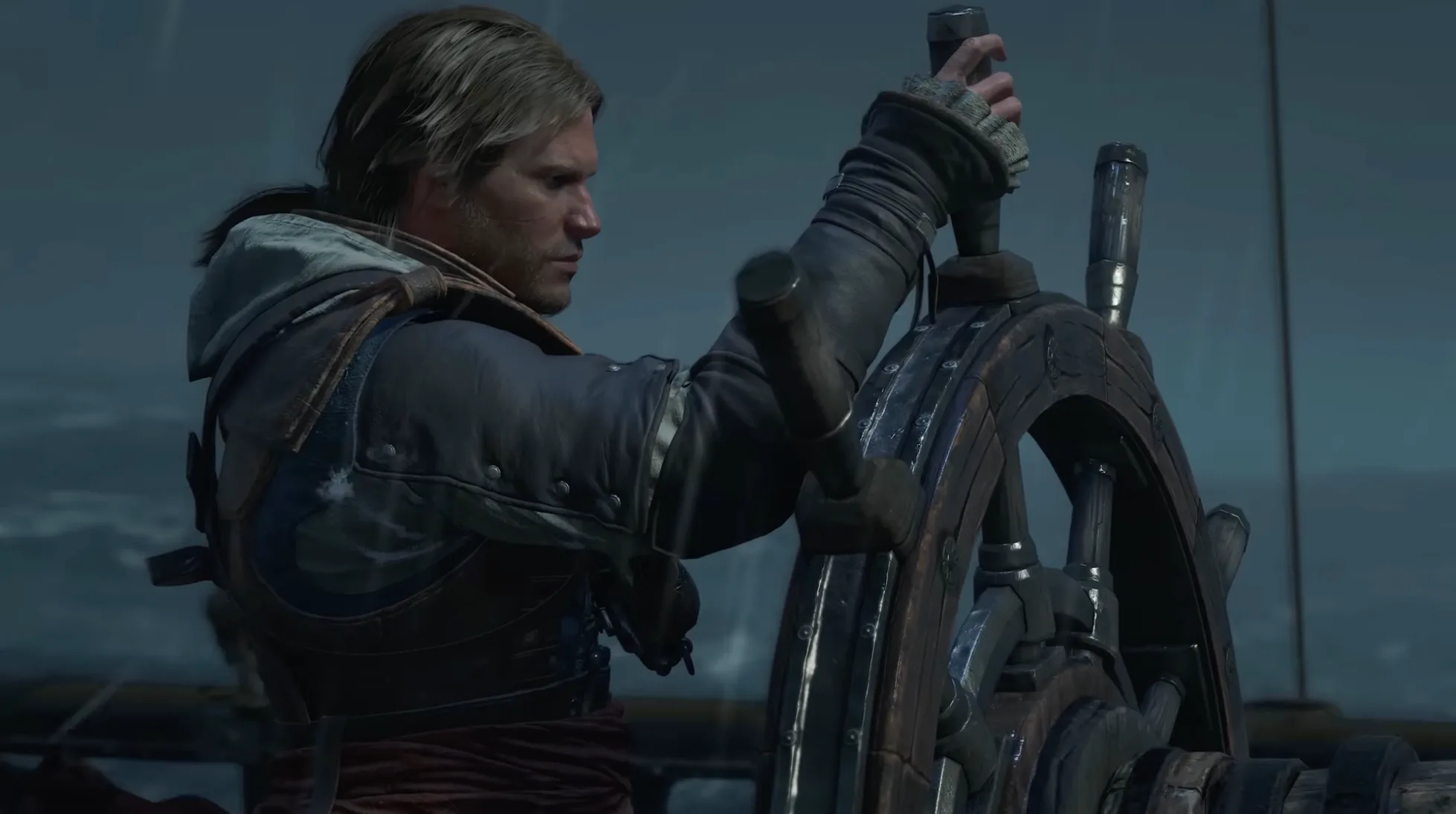
Character fidelity receives a major boost as well. Strand-based hair is available for protagonist Edward Kenway in all graphics modes on PS5 Pro. Crowd characters get it in Fidelity mode, and cinematics use strand-based hair for all characters regardless of the player's chosen mode. Combined with the Atmos weather system, which simulates temperature, humidity, wind, and vapor density in real time, the visual world of Black Flag Resynced is far more alive than its compressed trailer suggests.

Why YouTube Kills 4K Game Footage, and How to Fix It
The root of the problem lies in YouTube's bitrate allocation. The platform allocates 53 to 68 megabits per second for 4K uploads at 48 to 60 frames per second, but only 12 megabits for 1080p. When high-motion, detail-rich game footage is uploaded at 1080p, the encoder simply cannot preserve fine details. The result is the blocky, smeary mess that plagued the Black Flag Resynced trailer.
There is a simple workaround. As Polygon notes, upscaling 1080p source footage to 4K before upload would trick YouTube into allocating the higher bitrate. This technique is already used by some outlets to force better encoding for their videos. It is not a perfect solution, the upscaling process itself adds some blur, but it is far better than starving the footage of bandwidth.
The broader issue is that the entire industry relies on YouTube as the primary distribution platform for graphical showcases, even though the platform's compression fundamentally undermines the purpose. Alternatives like Gamersyde, which offers direct high-bitrate downloads, have long argued that "YouTube's subpar video compression has become the norm." Until publishers adopt better distribution strategies, players will continue to judge games by their pixelated covers.
A Broader Industry Problem, Who's to Blame?
This is not just about one trailer. It is a recurring pattern in which publishers upload sub-4K footage to YouTube and