Inside Ubisoft's Leadership Shakeup: CEO Defends Son's Promotion Amid Layoffs and Studio Transformation
In February 2026, Ubisoft delivered a corporate update that perfectly encapsulated the modern gaming industry's contradictions. On one hand, the publisher announced the formation of Vantage Studios ,...

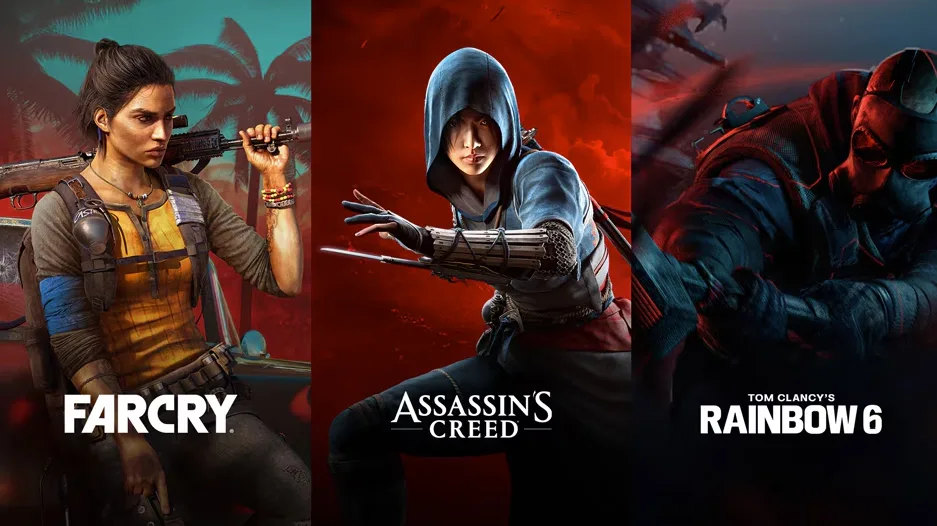
In February 2026, Ubisoft delivered a corporate update that perfectly encapsulated the modern gaming industry's contradictions. On one hand, the publisher announced the formation of Vantage Studios, a new, Tencent-backed division entrusted with steering its three crown jewel franchises: Assassin’s Creed, Rainbow Six, and Far Cry. On the other, it confirmed another round of staff layoffs. At the center of this tension, where ambition meets austerity, sits a single, controversial appointment: CEO Yves Guillemot’s son, Charlie Guillemot, named as co-CEO of this critical new venture.
This move has ignited a fierce debate about nepotism, corporate legacy, and leadership merit within a company undergoing painful transformation. As Ubisoft attempts to pivot its strategy and secure its future, the promotion of the CEO’s son to a top-tier role, concurrent with job cuts, has become a lightning rod for employee discontent and industry scrutiny. This is the story of a gaming giant navigating accusations, deep restructuring, and an uncertain technological future, all at once.
The Vantage Studios Appointment and the Nepotism Firestorm
The announcement was clear in its structure. Vantage Studios would be led by two co-CEOs. Charlie Guillemot, 30, would focus on "vision, direction, content development, and marketing." His partner, industry veteran Christophe Derennes, would handle production and technology. The official rationale framed it as a complementary partnership: creative vision paired with operational expertise.
The immediate reaction, however, focused less on structure and more on lineage. With Ubisoft in the midst of a cost-cutting drive that has seen repeated layoffs—including around 40 roles confirmed cut around the time of this announcement—the elevation of the CEO’s son was perceived by many as a stark display of poor optics, if not outright nepotism.
In response, both Guillemots have publicly defended the decision. Yves Guillemot stated the appointment was based solely on "skills, track record, and fit for the role," emphasizing Ubisoft’s origins as a "family company" that takes a long-term view. Charlie acknowledged the concerns head-on, telling Bloomberg, "I understand that it can be seen from the outside as something that is not necessarily deserved… This is about what Ubisoft needs at this moment." The defense is built on meritocracy within a familial framework, an argument that now faces its ultimate stress test.
Weighing the Credentials: Experience vs. Perception
The central, unresolved question is whether Charlie Guillemot’s specific experience justifies this pivotal role, or if the timing and family relation irrevocably taint the decision.
Charlie’s career path is distinct from the typical studio-head trajectory. He started in gaming at Owlient in 2014, a mobile and online game developer later acquired by Ubisoft. He held a post-acquisition role before departing Ubisoft in 2021, only to return in 2025 in a leadership capacity that swiftly led to the Vantage Studios promotion. His advocates point to this mix of experience inside and outside the corporate behemoth as valuable for a role demanding fresh vision.
This stands in sharp contrast to his co-CEO, Christophe Derennes. A co-founder of the seminal Ubisoft Montreal studio in 1997 and former managing director for Ubisoft’s North American operations, Derennes embodies deep institutional knowledge and a proven track record of production leadership. The partnership is ostensibly a bridge between new perspective and seasoned execution. Yet, for a workforce experiencing instability, the rapid ascent of the CEO’s son can feel less like a strategic bridge and more like a bypass of conventional corporate ladders.
This debate over merit and perception is not academic; it unfolds against a backdrop of profound instability within Ubisoft itself.
A Company in Turbulent Transformation
The nepotism controversy cannot be divorced from the broader, painful context at Ubisoft. The company is in the throes of a major strategic overhaul, including a new 'Creative House' operational model and plans for over $200 million in cost reductions.
The human cost of this transformation is immediate and visceral. Beyond the recent layoffs, there have been staff strikes and calls from union leaders for Yves Guillemot to resign—calls he did not directly address in recent interviews. Instead, he has focused on the necessity of the shift, stating his priority is the company’s "long-term financial sustainability."
This turbulent climate is fueled by past stumbles. The high-profile failure of the Prince of Persia: Sands of Time remake—scrapped after roughly five years of work across various teams, leaving contributors like one actress claiming to have "lost three years" of work—serves as a potent example of the costly missteps Ubisoft is now trying to eliminate. Against this backdrop of cuts, cancellations, and employee unrest, a leadership appointment perceived as preferential naturally fuels deeper cynicism.
The Road Ahead: Franchise Futures and AI Ambitions
The success or failure of this controversial leadership team will be judged on the output of Vantage Studios. The portfolio is immense. For Far Cry, which hasn’t seen a mainline title since 2021’s Far Cry 6, two new projects are in development. The Assassin’s Creed pipeline remains crowded, with the single-player Hexe, the multiplayer Invictus, and a widely anticipated remake of Assassin’s Creed IV: Black Flag all in the works. These high-stakes projects will be the primary arena for testing the new leadership's strategy.
Charlie Guillemot’s vision for steering these franchises is inextricably linked to technology. He has stated he expects generative AI and cloud technologies to "revolutionize" game development and player experiences, even suggesting it could enable shorter content formats. This bullish, forward-looking stance, however, creates another point of tension with a workforce already concerned about job security. In an industry where AI is often viewed with anxiety over potential job displacement, the executive championing it is the same one whose promotion has become a symbol of top-down decision-making during a period of layoffs.
Ubisoft is attempting a precarious high-wire act. It is betting its most valuable intellectual property on a new, family-linked leadership structure, while simultaneously asking a shaken and skeptical workforce to trust in a transformative, cost-cutting strategy anchored by an AI-driven vision. The future of Vantage Studios, and perhaps Ubisoft itself, hinges not merely on the quality of the next Assassin’s Creed or Far Cry. It depends on whether the company can bridge the growing chasm between its executive vision for a streamlined, high-tech future and the present reality of its employees, who seek stability, transparency, and faith that meritocracy extends all the way to the top. Ultimately, the success of Vantage Studios may depend less on the specs of its games and more on whether Ubisoft can convince both players and its own developers that its future is being built on a foundation of merit, not just legacy.